Penny Bender Sebring – författare
Visar alla böcker från författaren . Handla med fri frakt och snabb leverans.
6 produkter
6 produkter
Häftad, Engelska, 2010
260 kr
Skickas inom 5-8 vardagar
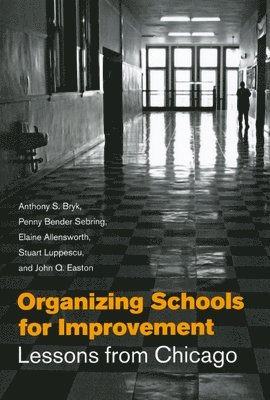
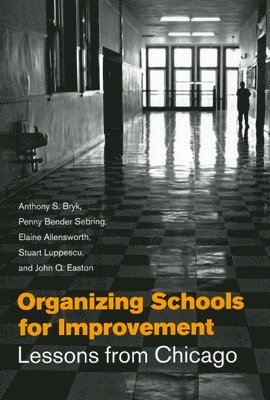
In 1988 the Chicago public school system decentralized, granting parents and communities significant resources and authority to reform their schools in dramatic ways. To track the effects of this bold experiment, the authors of "Organizing Schools for Improvement" collected a wealth of data on elementary schools in Chicago. They identified one hundred elementary schools that had substantially improved, and one hundred that had not, over a seven-year period. What had the successful schools done to accelerate student learning? The authors of this illuminating book identify a comprehensive set of practices and conditions that were key factors for improvement, including school leadership, the professional capacity of the faculty and staff, and a student-centered learning climate. In addition, they analyze the impact of social dynamics, including crime, critically examining the inextricable link between schools and their communities. Putting their data onto a more human scale, they also chronicle the stories of two neighboring schools with very different trajectories. The lessons gleaned from this groundbreaking study will be invaluable for anyone involved with urban education.
Inbunden, Engelska, 2019
2 332 kr
Skickas inom 10-15 vardagar
In 1989, Chicago began an experiment with radical decentralization of power and authority. This book tells the story of what happened to Chicago's elementary schools in the first four years of this reform. Implicit in this reform is the theory that expanded local democratic participation would stimulate organizational change within schools, which i
E-bok
PDF, Engelska, 2018913 kr
Läs direkt efter köp
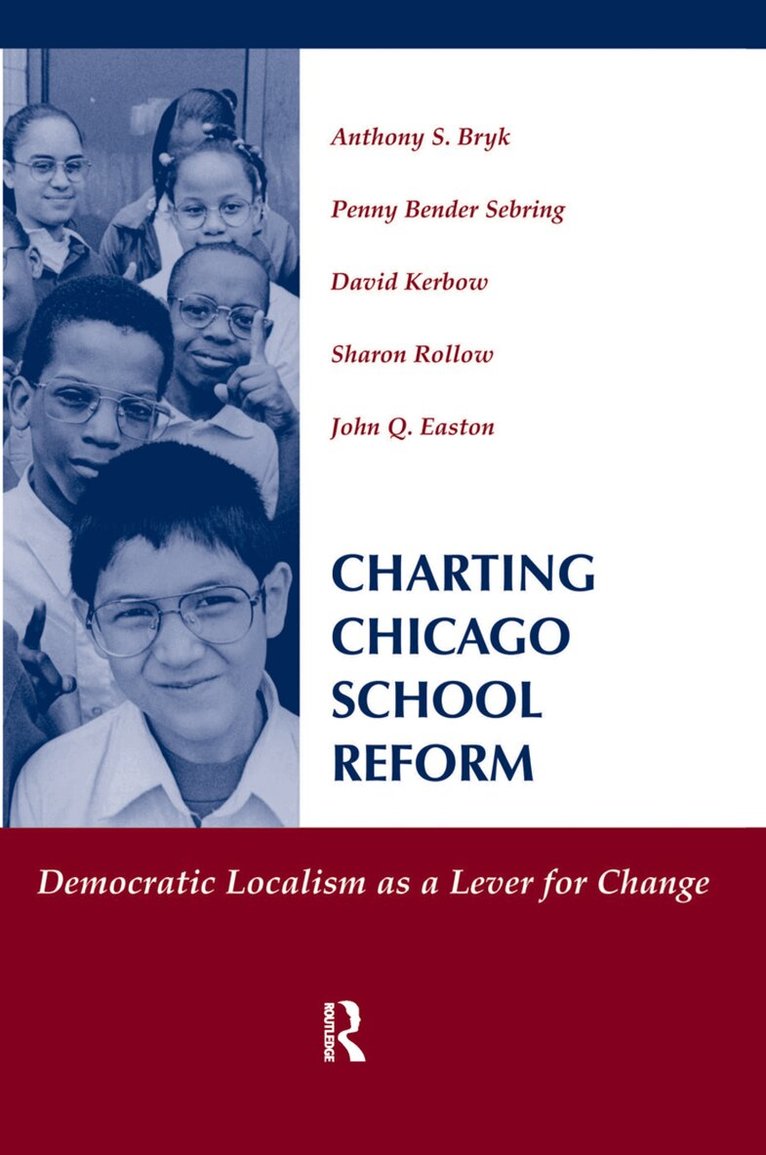
In 1989, Chicago began an experiment with radical decentralization of power and authority. Intertwining extensive narratives and rigorous quantitative analyses, this book tells the story of what happened to Chicagos elementary schools in the first four years of this reform. }In 1989, Chicago began an experiment with radical decentralization of power and authority. This book tells the story of what happened to Chicagos elementary schools in the first four years of this reform. Implicit in this reform is the theory that expanded local democratic participation would stimulate organizational change within schools, which in turn would foster improved teaching and learning. Using this theory as a framework, the authors marshal massive quantitative and qualitative data to examine how the reform actually unfolded at the school level.With longitudinal case study data on 22 schools, survey responses from principals and teachers in 269 schools, and supplementary system-wide administrative data, the authors identify four types of school politics: strong democracy, consolidated principal power, maintenance, and adversarial. In addition, they classify school change efforts as either systemic or unfocused. Bringing these strands together, the authors determine that, in about a third of the schools, expanded local democratic participation served as a strong lever for introducing systemic change focused on improved instruction. Finally, case studies of six actively restructuring schools illustrate how under decentralization the principals role is recast, social support for change can grow, and ideas and information from external sources are brought to bear on school change initiatives. Few studies intertwine so completely extensive narratives and rigorous quantitative analyses. The result is a complex picture of the Chicago reform that joins the politics of local control to school change.This volume is intended for scholars in the fields of urban education, public policy, sociology of education, anthropology of education, and politics of education. Comprehensive and descriptive, it is an engaging text for graduate students and upper-level undergraduates. Local, state, and federal policymakers who are concerned with urban education will find new and insightful material. The book should be on reading lists and in professional development seminars for school principals who want to garner community support for change and for school community leaders who want more responsive local institutions. Finally, educators, administrators, and activists in Chicago will appreciate this detailed analysis of the early years of reform.
E-bok
Engelska, 2018913 kr
Läs direkt efter köp
In 1989, Chicago began an experiment with radical decentralization of power and authority. Intertwining extensive narratives and rigorous quantitative analyses, this book tells the story of what happened to Chicagos elementary schools in the first four years of this reform. }In 1989, Chicago began an experiment with radical decentralization of power and authority. This book tells the story of what happened to Chicagos elementary schools in the first four years of this reform. Implicit in this reform is the theory that expanded local democratic participation would stimulate organizational change within schools, which in turn would foster improved teaching and learning. Using this theory as a framework, the authors marshal massive quantitative and qualitative data to examine how the reform actually unfolded at the school level.With longitudinal case study data on 22 schools, survey responses from principals and teachers in 269 schools, and supplementary system-wide administrative data, the authors identify four types of school politics: strong democracy, consolidated principal power, maintenance, and adversarial. In addition, they classify school change efforts as either systemic or unfocused. Bringing these strands together, the authors determine that, in about a third of the schools, expanded local democratic participation served as a strong lever for introducing systemic change focused on improved instruction. Finally, case studies of six actively restructuring schools illustrate how under decentralization the principals role is recast, social support for change can grow, and ideas and information from external sources are brought to bear on school change initiatives. Few studies intertwine so completely extensive narratives and rigorous quantitative analyses. The result is a complex picture of the Chicago reform that joins the politics of local control to school change.This volume is intended for scholars in the fields of urban education, public policy, sociology of education, anthropology of education, and politics of education. Comprehensive and descriptive, it is an engaging text for graduate students and upper-level undergraduates. Local, state, and federal policymakers who are concerned with urban education will find new and insightful material. The book should be on reading lists and in professional development seminars for school principals who want to garner community support for change and for school community leaders who want more responsive local institutions. Finally, educators, administrators, and activists in Chicago will appreciate this detailed analysis of the early years of reform.
249 kr
Skickas inom 3-6 vardagar
Häftad, Engelska
251 kr
Skickas inom 3-6 vardagar