Penny Roberts – författare
Visar alla böcker från författaren . Handla med fri frakt och snabb leverans.
5 produkter
5 produkter
Häftad, Engelska, 2012
172 kr
Skickas inom 5-8 vardagar
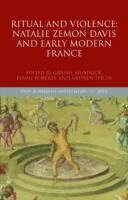
This collection of essays, edited by Graeme Murdock, Penny Roberts, and Andrew Spicer, developed from a one-day conference 'Religion and Violence in Early Modern France: The Work of Natalie Zemon Davis' which was held in June 2008 at the Shakespeare Institute, Stratford-upon-Avon. Five of the papers published here were initially delivered on that occasion, but the conference also sought to learn from the differing perspectives of violence outside sixteenth-century France. This concern is also reflected in this collection, which seeks to offer new insights and approaches to the relationship and significance of religion and violence as well as paying tribute to the immense contribution made in this field by the writings of Natalie Zemon Davis.
Inbunden, Engelska, 2025
1 323 kr
Skickas inom 7-10 vardagar
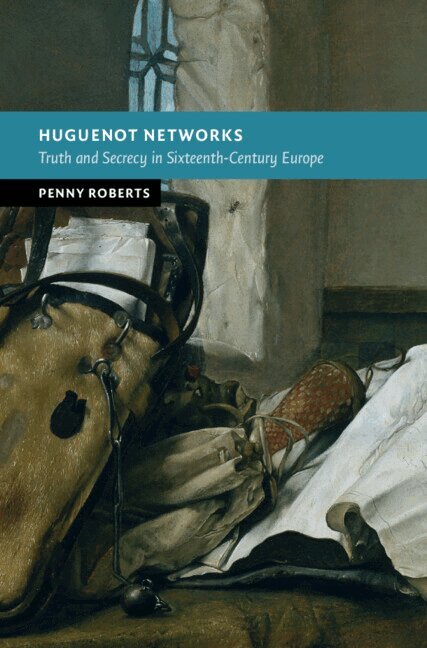
How did Huguenots stay connected in the 16th-century? And how did they maintain clandestine religious and political networks across Europe? Beginning with the chance discovery of an intriguing interrogation document smuggled from France to England in a basket of cheese, this study explores the importance of truth and secrecy within Huguenot information networks. Penny Roberts provides new insights into the transnational operation of agents: fanning out from confessional conflicts in Normandy to incorporate exiles in England, scholars and diplomats in Germany, the Swiss cantons and the Netherlands, and spy networks operating between France and Scotland. Above all, this study uncovers the primary role played by Huguenot ministers in maintaining and nurturing these connections at considerable danger to themselves, mobilising secrecy in the service of truth. As a result, Huguenot Networks provides greater understanding of confessional connections within Reformation Europe, demonstrating how these networks were sustained through the efforts of those whose contribution often remains hidden.
Inbunden, Engelska, 1999
2 058 kr
Skickas inom 3-6 vardagar
The role of massacre in history has been given little focused attention either by historians or academics in related fields. This is surprising as its prevalence and persistence surely demands that it should be a subject of serious and systematic exploration. What exactly is a massacre? When - and why - does it happen? Is there a cultural, as well as political framework within which it occurs? How do human societies respond to it? What are its social and economic repercussions? Are massacres catalysts for change or are they part of the continuity of the human saga? These are just some of the questions the authors address in this important volume.Chronologically and geographically broad in scope, The Massacre in History provides in-depth analysis of particular massacres and themes associated with them from the 11th century to the present. Specific attention is paid to 15th century Christian-Jewish relations in Spain, the St. Batholemew's Day massacre, England and Ireland in the civil war era, the 19th century Caucasus, the rape of Nanking in 1937 and the Second World War origins of the Serb-Croat conflict. The book explores the subject of massacre from a variety of perspectives - its relationship to politics, culture, religion and society, its connection to ethnic cleansing and genocide, and its role in gender terms and in relation to the extermination of animals. The historians provide evidence to suggest that the "massacre" is often central to the course of human development and societal change.
Häftad, Engelska, 1999
594 kr
Skickas inom 3-6 vardagar
The role of massacre in history has been given little focused attention either by historians or academics in related fields. This is surprising as its prevalence and persistence surely demands that it should be a subject of serious and systematic exploration. What exactly is a massacre? When - and why - does it happen? Is there a cultural, as well as political framework within which it occurs? How do human societies respond to it? What are its social and economic repercussions? Are massacres catalysts for change or are they part of the continuity of the human saga? These are just some of the questions the authors address in this important volume.Chronologically and geographically broad in scope, The Massacre in History provides in-depth analysis of particular massacres and themes associated with them from the 11th century to the present. Specific attention is paid to 15th century Christian-Jewish relations in Spain, the St. Batholemew's Day massacre, England and Ireland in the civil war era, the 19th century Caucasus, the rape of Nanking in 1937 and the Second World War origins of the Serb-Croat conflict. The book explores the subject of massacre from a variety of perspectives - its relationship to politics, culture, religion and society, its connection to ethnic cleansing and genocide, and its role in gender terms and in relation to the extermination of animals. The historians provide evidence to suggest that the "massacre" is often central to the course of human development and societal change.
Häftad, Engelska, 2010
228 kr
Skickas inom 5-8 vardagar