Per Ahlberg - Böcker
Visar alla böcker från författaren Per Ahlberg. Handla med fri frakt och snabb leverans.
4 produkter
4 produkter
1 063 kr
Skickas
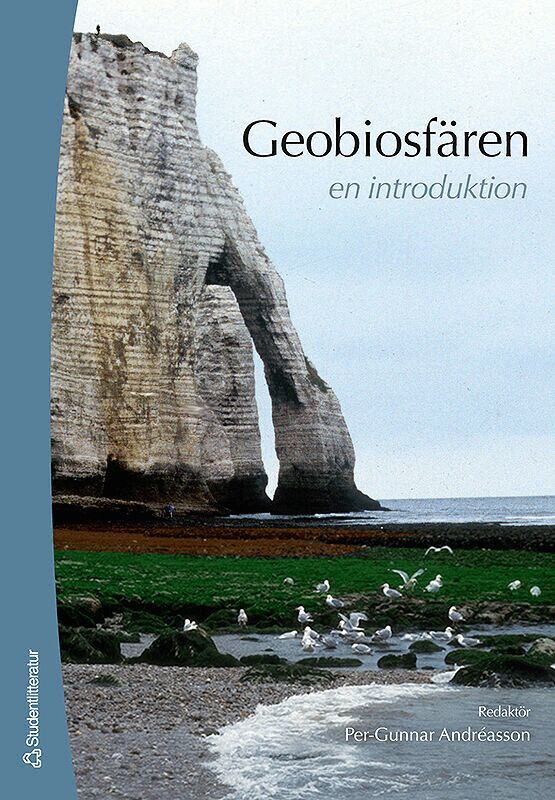
Bokens första del om Den levande planeten rekonstruerar hur Jorden och förutsättningar för liv uppkom. Geobiosfären kallas samspelet mellan Jordens yttre sfärer, litosfären, hydrosfären, atmosfären och biosfären, som kan avspeglas i global klimatförändring såväl som lokal algblomning. Plattornas rörelser reglerar långsiktigt livsmiljön på jordytan men orsakar även plötsliga vulkanutbrott, jordskalv, tsunami. Livets utveckling beskrivs, liksom dess motgångar: massutdöenden. Tiden är en viktig dimension; dateringmetoder lämpade för olika material från äldsta urberg till stockar i fäbodstugor beskrivs. I Geobiosfärens processer och produkter lär vi basfakta om mineral, bergarter, malmer och sediment; om bergets omvandling, deformation och vittring; kunskaper vi sedan tillämpar under en resa från bergstoppar till djuphavsbottnar i delen Landskapets processer och produkter. Kapitel om inlandsisens landskap, sjöar och torvmarker följs upp i delen om Sveriges geologi med rekonstruktioner av senaste istidsscykeln, Östersjöns utveckling samt florans och faunans invandring. Delen inleds med vår variationsrika berggrund, dess ytformer, angränsande havsbottnar samt, ur ett EU-perspektiv, viktiga malmer. I Jordens resurser och deras utnyttjande diskuteras bl.a. global försörjning med energiråvaror och metaller respektive regional försörjning med grus. Vilka krav ställs på stenen i berget där vårt kärnavfall skall förvaras i 100 000 år eller på fasadstenen på Nordens kulturhus? Andra kapitel belyser geologiska grundorsaker till problem vid byggande i mark samt odlingslandskapets framväxt och förändring.Boken är skriven för grundkurser i geovetenskapliga ämnen men även för studenter eller yrkesverksamma inom miljöteknik, landskaps- och byggplanering samt för lekmän, som vill skapa sig en egen uppfattning om orsaker till förändringar i markens, havens och atmosfärens tillstånd, naturliga eller orsakade av våra ingrepp.Den nya upplagan av Geobiosfären innebär en förstärkning av inlärningen i form av en interaktiv webbplats från vilken du kan läsa boken digitalt med möjlighet att markera och anteckna. Här finns även sammanfattningar, ordlista samt övningar och tester så att du kan kontrollera dina kunskaper. Instruktioner för hur du kommer åt det digitala materialet finns på pärmens insida.
315 kr
Skickas inom 5-8 vardagar
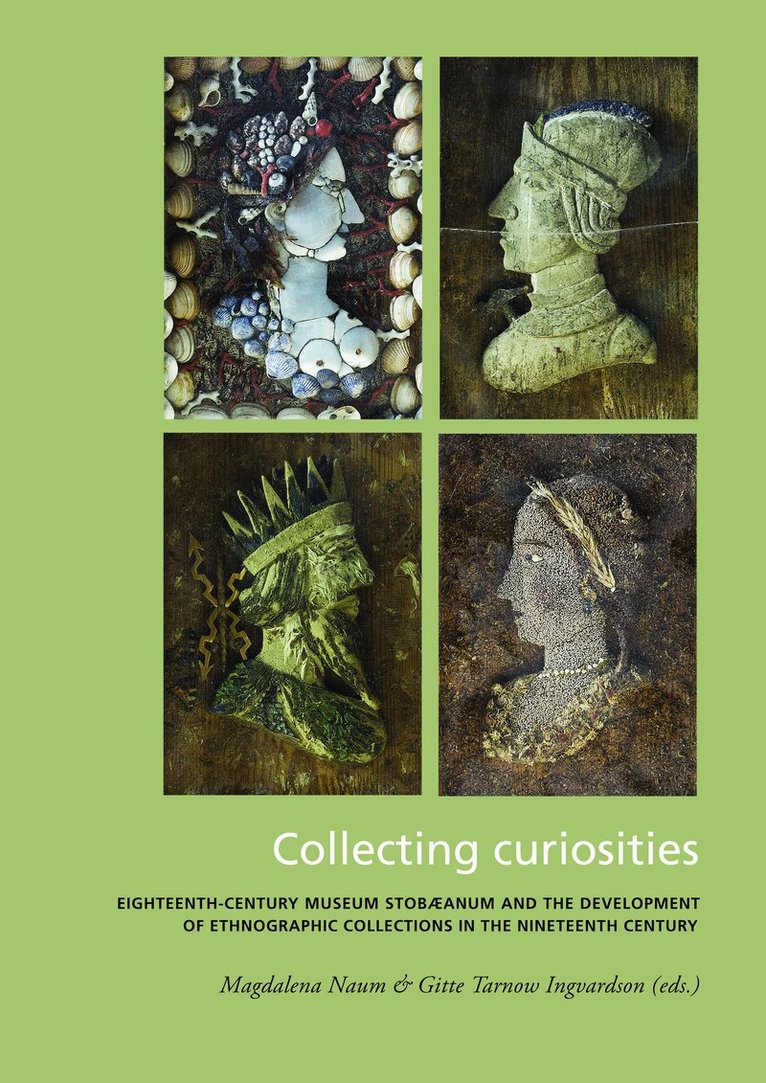
In 1735, professor Kilian Stobæus donated his collections to Lund University laying the foundation for the university’s first museum. The ‘Museum Stobæanum’ contained over 3000 natural history, historical and ethnographic objects typical of the cabinets of curiosity. This richly illustrated book is the first comprehensive history of these collections. Eighteen chapters, written by an interdisciplinary group of scholars, explore Stobæus as a researcher and collector; the concept, organization and development of the museum through time; as well as the culture of collecting, including its scientific and symbolic meaning. The authors also investigate specific examples of museum objects: fossils, plants enclosed in a herbarium, a crocodile, seashells and insects, North American artefacts, an Egyptian mummy, coins and medals, the skull of Descartes, Guyana war clubs and ethnographic objects from the South Pacific. The book contributes to a better understanding of Stobæus and his peers in their pursuit of knowledge through collecting as well as the complex processes that enabled early modern museums. On a broader level, it illuminates the global connections and intellectual environment of eighteenth-century Lund and Sweden.
1 381 kr
Tillfälligt slut
This volume is a collection of the Nobel Lectures delivered by the prizewinners, together with their biographies and the presentation speeches at the award ceremonies in Stockholm for the period 2001 - 2005. Each Nobel Lecture is based on the work for which the laureate was awarded the prize. This volume of inspiring lectures by outstanding chemists and biochemists should be on the bookshelf of every keen student, teacher and professor of chemistry as well as of those in related fields. Below is a list of the prizewinners during the period 2001 - 2005 with a description of the works which won them their prizes.(2001) William S Knowles, Ryoji Noyori — for their work on chirally catalyzed hydrogenation reactions & K Barry Sharpless — for his work on chirally catalyzed oxidation reactions; (2002) John B Fenn, Koichi Tanaka — for their development of soft desorption ionization methods for mass spectrometric analyses of biological macromolecules & Kurt Wüthrich — for his development of nuclear magnetic resonance spectroscopy for determining the three-dimensional structure of biological macromolecules in solution; (2003) Peter Agre — for the discovery of water channels & Roderick MacKinnon — for structural and mechanistic studies of ion channels; (2004) Aaron Ciechanover, Avram Hershko & Irwin Rose — for the discovery of ubiquitin-mediated protein degradation; (2005) Yves Chauvin, Robert H Grubbs & Richard R Schrock — for the development of the metathesis method in organic synthesis.
411 kr
Skickas inom 5-8 vardagar
This volume is a collection of the Nobel Lectures delivered by the prizewinners, together with their biographies and the presentation speeches at the award ceremonies in Stockholm for the period 2001 - 2005. Each Nobel Lecture is based on the work for which the laureate was awarded the prize. This volume of inspiring lectures by outstanding chemists and biochemists should be on the bookshelf of every keen student, teacher and professor of chemistry as well as of those in related fields. Below is a list of the prizewinners during the period 2001 - 2005 with a description of the works which won them their prizes.(2001) William S Knowles, Ryoji Noyori — for their work on chirally catalyzed hydrogenation reactions & K Barry Sharpless — for his work on chirally catalyzed oxidation reactions; (2002) John B Fenn, Koichi Tanaka — for their development of soft desorption ionization methods for mass spectrometric analyses of biological macromolecules & Kurt Wüthrich — for his development of nuclear magnetic resonance spectroscopy for determining the three-dimensional structure of biological macromolecules in solution; (2003) Peter Agre — for the discovery of water channels & Roderick MacKinnon — for structural and mechanistic studies of ion channels; (2004) Aaron Ciechanover, Avram Hershko & Irwin Rose — for the discovery of ubiquitin-mediated protein degradation; (2005) Yves Chauvin, Robert H Grubbs & Richard R Schrock — for the development of the metathesis method in organic synthesis.