Per-Olof H. Wikstrom – författare
Visar alla böcker från författaren Per-Olof H. Wikstrom. Handla med fri frakt och snabb leverans.
10 produkter
Adolescent Crime
Av Per-Olof H. Wikstrom, David Butterworth
Häftad, 2007
594 kr
Lägg i varukorg
This book examines young people's involvement in crime (including crimes of violence, vandalism, shoplifting, burglary and car crime) as both victims and offenders. Although adolescence is the time when involvement in crime peaks, few previous UK-based studies have attempted to provide a methodical …
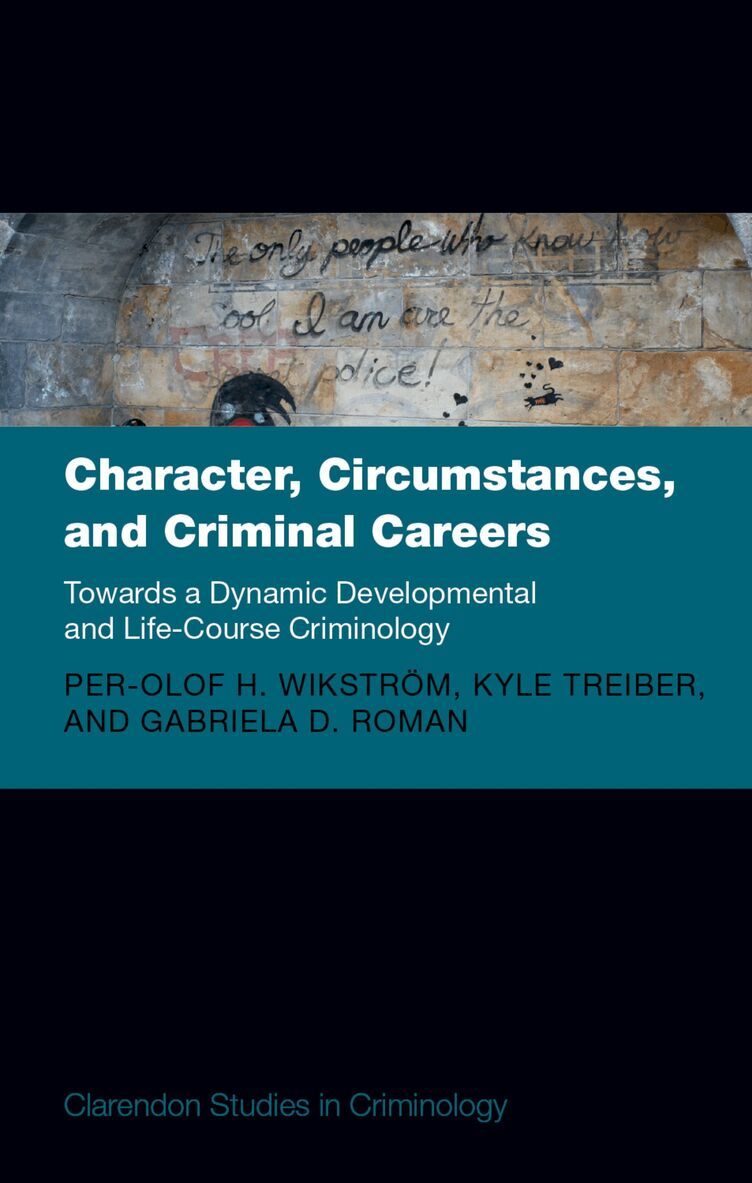
Character, Circumstances, and Criminal Careers
Towards a Dynamic Developmental and Life-Course Criminology
Av Per-Olof H. Wikstrom, Kyle Treiber m. fl.
Inbunden, 2024
2754 kr
Lägg i varukorg
Why do young people engage in acts of crime and what is it that drives their criminal careers? These are the key questions addressed in Character, Circumstances, and Criminal Careers which explores and explains people's criminal careers through adolescence into young adulthood. Guided by …
Breaking Rules: The Social and Situational Dynamics of Young People's Urban Crime
Av Beth Hardie, Kyle Treiber m. fl.
E-bok, 2012
1036 kr
Lägg i varukorg
Why do certain people commit acts of crime? Why does crime happen in certain places? Presenting an ambitious new study designed to test a pioneering new theory of the causes of crime, Breaking Rules: The Social and Situational Dynamics of Young People''s Urban Crime demonstrates that these …
Breaking Rules: The Social and Situational Dynamics of Young People's Urban Crime
Av Beth Hardie, Kyle Treiber m. fl.
E-bok, 2012
792 kr
Lägg i varukorg
Why do certain people commit acts of crime? Why does crime happen in certain places? Presenting an ambitious new study designed to test a pioneering new theory of the causes of crime, Breaking Rules: The Social and Situational Dynamics of Young People''s Urban Crime demonstrates that these …
Character, Circumstances, and Criminal Careers
Towards a Dynamic Developmental and Life-Course Criminology
Av Gabriela Roman, Kyle Treiber m. fl.
E-bok, 2024
1736 kr
Lägg i varukorg
Why do young people engage in acts of crime and what is it that drives their criminal careers? These are the key questions addressed in Character, Circumstances, and Criminal Careers which explores and explains people''s criminal careers through adolescence into young adulthood. Guided by …
Character, Circumstances, and Criminal Careers
Towards a Dynamic Developmental and Life-Course Criminology
Av Gabriela Roman, Kyle Treiber m. fl.
E-bok, 2024
1864 kr
Lägg i varukorg
Why do young people engage in acts of crime and what is it that drives their criminal careers? These are the key questions addressed in Character, Circumstances, and Criminal Careers which explores and explains people''s criminal careers through adolescence into young adulthood. Guided by …
Adolescent Crime
Av David Butterworth, Per-Olof H. Wikstrom
E-bok, 2013
762 kr
Lägg i varukorg
This book examines young people''s involvement in crime (including crimes of violence, vandalism, shoplifting, burglary and car crime) as both victims and offenders. Although adolescence is the time when involvement in crime peaks, few previous UK-based studies have attempted to provide a …
Adolescent Crime
Av David Butterworth, Per-Olof H. Wikstrom
E-bok, 2013
762 kr
Lägg i varukorg
This book examines young people''s involvement in crime (including crimes of violence, vandalism, shoplifting, burglary and car crime) as both victims and offenders. Although adolescence is the time when involvement in crime peaks, few previous UK-based studies have attempted to provide a …
Urban Crime, Criminals, and Victims
The Swedish Experience in an Anglo-American Comparative Perspective
E-bok, 2012
698 kr
Lägg i varukorg
Crime is largely an urban phenomenon, but the specifically urban and area dimen sions of the social processes that are connected with crime have been seriously understated in much recent criminological work ... Such a claim could not have been made forty years ago. (Baldwin & Bottoms, 1976, p. 1). …
Adolescent Crime
Av Per-Olof H. Wikstrom, David Butterworth
Inbunden, 2006
2303 kr
Lägg i varukorg
This book examines young people's involvement in crime (including crimes of violence, vandalism, shoplifting, burglary and car crime) as both victims and offenders. Although adolescence is the time when involvement in crime peaks, few previous UK-based studies have attempted to provide a methodical …