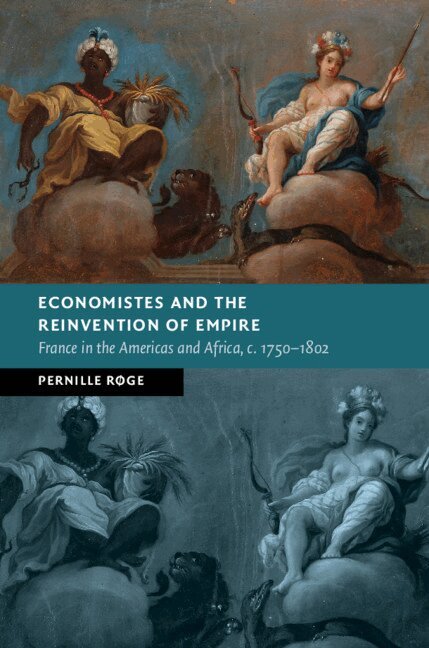
Exploring the myriad efforts to strengthen colonial empire that unfolded in response to France's imperial crisis in the second half of the eighteenth century, Pernille Røge examines how political economists, colonial administrators, planters, and entrepreneurs shaped the recalibration of empire in the Americas and in Africa alongside the intensification of the French Caribbean plantation complex. Emphasising the intellectual contributions of the Economistes (also known as the Physiocrats) to formulate a new colonial doctrine, the book highlights the advent of an imperial discourse of commercial liberalisation, free labour, agricultural development, and civilisation. With her careful documentation of the reciprocal impacts of economic ideas, colonial policy and practices, Røge also details key connections between Ancien Régime colonial innovation and the French Revolution's republican imperial agenda. The result is a novel perspective on the struggles to reinvent colonial empire in the final decades of the Ancien Régime and its influences on the French Revolution and beyond.
Del 27 - International Review of Social History Supplements
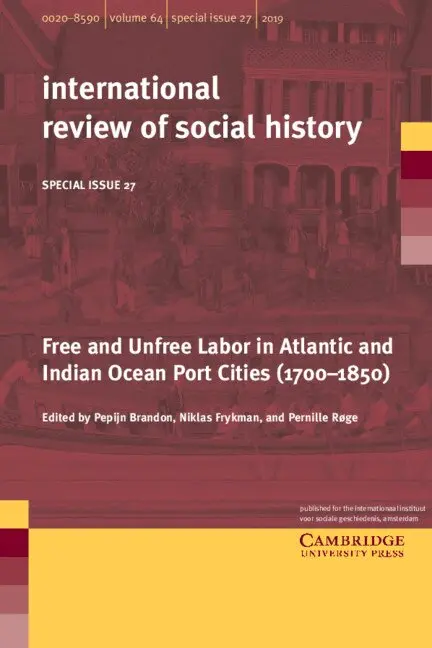
Colonial and post-colonial port cities in the Atlantic and Indian Ocean regions brought together laboring populations of many different backgrounds and statuses - legally free or semi-free wage-laborers, soldiers, sailors, and the self-employed, indentured servants, convicts, and slaves. From the seventeenth to the nineteenth century the labor of these 'motley crews' made port cities crucial hubs of the emerging capitalist world market and centers of imperial infrastructure. The nine chapters in this volume investigate the interaction between different groups of laborers around the docks and the neighborhoods that stretched behind them. How did the mixture of many different groups of laborers shape patterns of work and life, authority and control, exclusion and inclusion, group-competition and joint resistance? What roles did gender, race and status play in maintaining divisions or enabling solidarities? Together, the nine case studies present a vibrant picture of social relations and working-class cultures in port cities.
Exploring the myriad efforts to strengthen colonial empire that unfolded in response to France's imperial crisis in the second half of the eighteenth century, Pernille Røge examines how political economists, colonial administrators, planters, and entrepreneurs shaped the recalibration of empire in the Americas and in Africa alongside the intensification of the French Caribbean plantation complex. Emphasising the intellectual contributions of the Economistes (also known as the Physiocrats) to formulate a new colonial doctrine, the book highlights the advent of an imperial discourse of commercial liberalisation, free labour, agricultural development, and civilisation. With her careful documentation of the reciprocal impacts of economic ideas, colonial policy and practices, Røge also details key connections between Ancien Régime colonial innovation and the French Revolution's republican imperial agenda. The result is a novel perspective on the struggles to reinvent colonial empire in the final decades of the Ancien Régime and its influences on the French Revolution and beyond.
Del 27 - International Review of Social History Supplements
Colonial and post-colonial port cities in the Atlantic and Indian Ocean regions brought together laboring populations of many different backgrounds and statuses - legally free or semi-free wage-laborers, soldiers, sailors, and the self-employed, indentured servants, convicts, and slaves. From the seventeenth to the nineteenth century the labor of these 'motley crews' made port cities crucial hubs of the emerging capitalist world market and centers of imperial infrastructure. The nine chapters in this volume investigate the interaction between different groups of laborers around the docks and the neighborhoods that stretched behind them. How did the mixture of many different groups of laborers shape patterns of work and life, authority and control, exclusion and inclusion, group-competition and joint resistance? What roles did gender, race and status play in maintaining divisions or enabling solidarities? Together, the nine case studies present a vibrant picture of social relations and working-class cultures in port cities.