Pertti Heinonen – författare
Visar alla böcker från författaren Pertti Heinonen. Handla med fri frakt och snabb leverans.
2 produkter
2 produkter
13 048 kr
Tillfälligt slut
Water is a fundamental constituent of life and is essential to a wide range of economic activities. It is also a limited resource, as we are frequently reminded by the tragic effects of drought in certain parts of the world. Even in areas with high precipitation, and in major river basins, overuse and mismanagement of water have created severe constraints on availability. Such problems are widespread and will be made more acute by the accelerating demand on freshwater arising from trends in economic development.Despite the fact that water-resource management is essentially a local, river-basin-based activity, there are a number of areas of action that are relevant to all or significant parts of the European Union and for which it is advisable to pool efforts for the purpose of understanding relevant phenomena (e.g. pollutions, geochemical studies), developing technical solutions and/or defining management procedures. One of the keys for successful cooperation aimed at studying hydrology, water monitoring, biological activities and so on is to achieve and ensure good water quality measurements.Quality measurements are essential to demonstrate the comparability of data obtained world-wide and they form the basis for correct decisions related to management of water resources, monitoring issues, biological quality and so on. Besides the necessary quality control tools developed for various types of physical, chemical and biological measurements, there is a strong need for education and training related to water quality measurements. This need has been recognized by the European Commission, which has funded a series of training courses on this topic, covering aspects such as monitoring and measurements of lake recipients, measurements of heavy metals and organic compounds in drinking and surface water, use of biotic indexes, and methods to analyse algae, protozoa and helminths. This was the initial input for launching the Water Quality Measurement series in the year 2000, which aims to cover monitoring features of various aquatic environments with focus on freshwater resources. It also includes marine considerations to complete the overall discussions about water quality measurements.This book series includes the topics of the above-mentioned courses and the outcome of recent scientific advances, as well as other aspects related to quality control tools (e.g. certified reference materials for the quality control of water analysis) and monitoring of various types of water (river, wastewater, groundwater, seawater).Titles in this SetHydrological and Limnological Aspects of Lake MonitoringQuality Assurance for Water AnalysisDetection Methods for Algae, Protozoa and Helminths in Fresh and Drinking WaterAnalytical Methods for Drinking Water: Advances in Sampling and AnalysisBiological Monitoring of Rivers: Applications and PerspectivesWastewater Quality Monitoring and Treatment
Del 14 - Water Quality Measurements
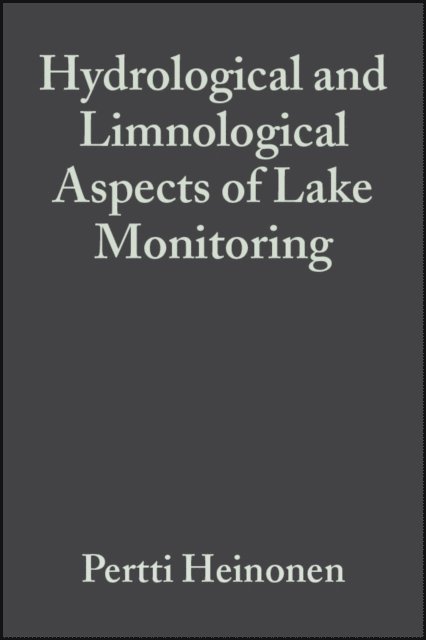
Hydrological and Limnological Aspects of Lake Monitoring
Inbunden, Engelska, 2000
4 325 kr
Skickas inom 5-8 vardagar
Provides an extensive overview of all the most important aspects oflake monitoring studies describing methods of water sampling,analytical determination and data interpretation. Now that all EC countries must receive the EC Directive on WaterQuality, there is a greater need to improve the quality ofmeasurements, both in chemical and biological fields and this bookdescribes the best practices in measuring water, quality, standardprocedures and quality assurance in relation to current legislationand guidelines. The book provides coverage of: ? Abiotic processes and harmful substances in lakes ? Biocoenosis in evaluating the ecological status of lakes ? New lake monitoring techniques ? Quality assessment ? Managing of results The book also addresses the most important problems currentlyimpacting lake resources: ? Eutrophication ? Water acidification and its impact on biodiversity ? The presence of endocrine disrupters ? The bioaccumulation of mercury in the food chain This is an essential guide to the subject for postgraduate studentsin environmental science and analytical chemistry, laboratoriesinvolved in water analysis, industrial companies producing effluentand regional environmental agencies. 'Hydrological and Limnological Aspects of Lake Monitoring' is thefirst book in the Water Quality Measurement Series, which providesa comprehensive coverage of the analytical techniques used for themeasurement of substances in water, from sampling through tolaboratory analysis. The series aims to offer practical answers tospecific issues related to measurements of the water cycle quality,using a scientifically sound approach.