Perumal Pugazhendhi – författare
Visar alla böcker från författaren . Handla med fri frakt och snabb leverans.
16 produkter
16 produkter
190 kr
Läs direkt efter köp
Molten Salts: Applications, Challenges, and Future Prospects in Energy Systems provides a comprehensive exploration of one of the most important classes of high-temperature functional materials used in modern science and engineering. Combining fundamental principles with practical engineering applications, this book presents a clear and interdisciplinary treatment of molten salt technologies and their rapidly expanding role in sustainable energy systems.The book begins with the chemistry, classification, thermodynamic behavior, and physicochemical properties of molten salts before examining transport phenomena, heat transfer, electrochemistry, corrosion mechanisms, materials compatibility, and purification techniques. These foundational concepts are then connected to real-world engineering applications, enabling readers to understand how molten salts function in demanding industrial environments.A major focus of the book is the application of molten salts in thermal energy storage, concentrated solar power, advanced nuclear reactors, molten salt reactors, hydrogen production, industrial electrochemistry, high-temperature batteries, metallurgy, and chemical manufacturing. Each topic is supported by discussions of engineering design, operational principles, performance characteristics, safety considerations, and current technological developments. The book also examines economic challenges, commercialization pathways, environmental sustainability, and regulatory issues that influence the large-scale deployment of molten salt technologies.Recognizing the rapid evolution of the field, the book explores emerging innovations including artificial intelligence, machine learning, digital twins, autonomous monitoring, predictive maintenance, advanced computational modeling, and intelligent process optimization. These technologies are transforming the design, operation, and reliability of future molten salt systems while supporting the transition toward carbon-neutral energy infrastructure.Designed for graduate students, researchers, faculty members, practicing engineers, and industry professionals, this volume combines scientific rigor with practical insight. Numerous illustrations, engineering examples, review questions, references, and future research perspectives make it suitable as both a graduate-level textbook and a professional reference.By integrating chemistry, materials science, thermal engineering, electrochemistry, and energy systems into a unified framework, this book demonstrates how molten salts are becoming enabling materials for next-generation technologies. It offers readers a thorough understanding of both the scientific foundations and the engineering challenges of molten salt systems while highlighting their critical role in the future of sustainable energy, advanced manufacturing, and intelligent industrial infrastructure.

E-bok
Engelska, 2026190 kr
Läs direkt efter köp
PrefaceIonic liquids have emerged as one of the most important classes of materials in modern chemistry and materials science. Unlike conventional molecular solvents, ionic liquids consist entirely of ions and often remain liquid near room temperature. Their negligible vapor pressure, excellent thermal and electrochemical stability, broad liquid temperature range, high solvating ability, and highly tunable physicochemical properties have made them enabling materials for sustainable technologies, advanced manufacturing, energy storage, catalysis, separations, biotechnology, and environmental engineering. During the past three decades, ionic liquids have evolved from laboratory curiosities into versatile functional materials with growing academic and industrial significance.This book provides a comprehensive, interdisciplinary, and practical introduction to ionic liquid science and technology. It bridges the gap between fundamental chemistry and modern applications by integrating theoretical principles with current research and engineering practice. The text is intended for graduate students, researchers, educators, and professionals in chemistry, chemical engineering, materials science, electrochemistry, nanotechnology, biotechnology, pharmaceutical sciences, and related fields.The book begins with the history, molecular structures, synthesis methods, nomenclature, classification, and physicochemical properties of ionic liquids. Subsequent chapters discuss thermodynamics, transport properties, spectroscopy, computational modeling, toxicity, environmental considerations, and safety. Particular emphasis is placed on understanding how cation–anion combinations and molecular design influence viscosity, conductivity, thermal stability, electrochemical behavior, and application-specific performance, providing a foundation for the rational design of task-specific ionic liquids.A major focus of this volume is the expanding role of ionic liquids in emerging technologies. Applications covered include catalysis, organic synthesis, biomass processing, carbon capture, gas separations, batteries, supercapacitors, fuel cells, hydrogen technologies, lubricants, heat-transfer fluids, pharmaceuticals, drug delivery, biotechnology, analytical chemistry, nanomaterials, and advanced manufacturing. Recent developments involving deep eutectic solvents, bio-based ionic liquids, artificial intelligence, machine learning, and computational materials discovery are also introduced to illustrate future directions in the field.Throughout the book, complex concepts are explained using clear discussions supported by carefully prepared figures, tables, practical examples, and engineering perspectives. Recent scientific literature has been incorporated wherever appropriate to provide readers with an up-to-date understanding of both established knowledge and rapidly evolving research areas. Although every effort has been made to ensure scientific accuracy, ionic liquid research continues to advance rapidly, and readers are encouraged to consult current literature for the latest developments.The remarkable versatility of ionic liquids demonstrates how advances in molecular design can transform multiple scientific disciplines while supporting cleaner manufacturing, sustainable energy systems, and environmentally responsible chemical processes. It is my sincere hope that this book will serve as a valuable resource for education, research, and industrial innovation, while inspiring future scientists and engineers to explore the exciting opportunities that ionic liquids offer for solving important scientific and technological challenges.
Häftad, Engelska, 2026
617 kr
Skickas inom 5-8 vardagar
E-bok
Engelska, 2026190 kr
Läs direkt efter köp
PrefaceThe discovery of nanodiamond has transformed our understanding of carbon-based materials and opened exciting opportunities across science, engineering, medicine, and advanced manufacturing. Once regarded primarily as an industrial abrasive because of diamond's exceptional hardness, nanodiamond has evolved into one of the most versatile nanomaterials of the twenty-first century. With particle sizes typically ranging from a few to several hundred nanometers, nanodiamonds combine the extraordinary mechanical, thermal, optical, and chemical properties of diamond with the unique advantages of nanoscale materials. Their remarkable biocompatibility, large surface area, tunable surface chemistry, and ability to integrate with polymers, metals, ceramics, and biological systems have positioned them as enabling materials for next-generation technologies.Today, nanodiamonds are being investigated for applications in drug delivery, bioimaging, quantum sensing, biomedical engineering, electronics, energy storage, tribology, catalysis, coatings, composites, thermal management, environmental remediation, and quantum computing. Their nitrogen-vacancy (NV) centers have attracted worldwide attention for quantum information science, while surface-functionalized nanodiamonds continue to advance targeted therapeutics, regenerative medicine, and precision diagnostics. As research expands, nanodiamonds are increasingly becoming essential components of interdisciplinary scientific innovation.This book has been written to provide a comprehensive, interdisciplinary, and practical treatment of nanodiamond materials and hybrid systems. It bridges the gap between introductory texts and specialized research literature by integrating fundamental principles with recent scientific advances and emerging applications. The material is intended for graduate students, researchers, faculty members, scientists, engineers, and professionals working in materials science, nanotechnology, chemistry, chemical engineering, physics, biomedical engineering, mechanical engineering, energy technologies, and related disciplines.The chapters begin with the fundamental structure, synthesis, characterization, surface chemistry, defects, and interfaces of nanodiamonds before progressing to their mechanical, thermal, electrical, optical, and biological properties. The book then explores hybrid nanodiamond systems, composite materials, biomedical technologies, energy applications, quantum technologies, advanced manufacturing, environmental applications, artificial intelligence–assisted materials discovery, sustainability, commercialization, and future research directions. Throughout the text, emphasis is placed on connecting scientific theory with engineering practice and industrial applications.Special attention has been given to presenting complex concepts in a clear and systematic manner. Numerous figures, tables, workflows, case studies, and practical examples are included to help readers understand both the scientific foundations and technological significance of nanodiamond materials. Recent advances from academic research and industrial development have been incorporated wherever appropriate, providing readers with an up-to-date perspective on this rapidly evolving field.Nanodiamond research continues to expand at an extraordinary pace, driven by advances in nanotechnology, biotechnology, quantum engineering, and sustainable materials science. Future innovations will likely emerge from collaborations across multiple disciplines, making interdisciplinary education increasingly important. It is my hope that this book will serve as a valuable resource for learning, teaching, research, and innovation, while inspiring the next generation of scientists and engineers to explore the immense potential of nanodiamond materials.
E-bok
Engelska, 2026124 kr
Läs direkt efter köp
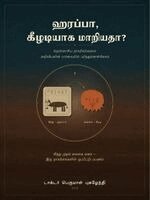
History is rarely a story of sudden beginnings or abrupt endings. Civilizations emerge over centuries, shaped by geography, climate, technology, trade, and the movement of people and ideas. One of the most intriguing questions in South Asian archaeology is whether the Indus (Harappan) Civilization and the later Tamil civilization represented by Keezhadi share a historical relationship. This book explores that question through the lens of modern science rather than speculation.The Indus Civilization, one of the world's earliest urban societies, flourished between about 2600 and 1900 BCE with remarkable achievements in city planning, engineering, craft production, and international trade. More than a thousand years later, the excavations at Keezhadi revealed an advanced urban settlement in the Vaigai Valley, providing strong archaeological evidence for an early literate Tamil society. The discoveries at Keezhadi have transformed our understanding of ancient South India and inspired renewed interest in its place within the broader history of the subcontinent.This book examines whether these two civilizations are connected through direct continuity, cultural exchange, shared ancestry, or independent development. To answer this question responsibly, it draws upon published research in archaeology, radiocarbon dating, ancient DNA, linguistics, environmental science, and comparative history. Every chapter distinguishes clearly between established evidence, reasonable interpretation, and questions that remain unresolved.The purpose of this work is neither to promote political narratives nor to defend cultural assumptions. Instead, it seeks to demonstrate how scientific investigation allows us to reconstruct the past with increasing clarity while acknowledging the limits of current knowledge. Where the evidence is strong, conclusions are presented confidently; where uncertainties remain, they are stated honestly.Written in accessible language for students, educators, researchers, and general readers, this book combines clear explanations with illustrations, maps, tables, and comparative analyses to make complex archaeological evidence understandable. It encourages readers to evaluate evidence critically and appreciate how new discoveries continue to reshape our understanding of South Asia's ancient civilizations.The relationship between Harappa and Keezhadi is not simply a question about two archaeological sites; it is a window into the long and complex story of human civilization. As future excavations, genetic studies, and the possible decipherment of the Indus script expand our knowledge, our understanding will continue to evolve. Until then, this book offers an evidence-based journey through one of archaeology's most fascinating and important questions.
Häftad, Engelska, 2026
852 kr
Skickas inom 5-8 vardagar
Häftad, Engelska, 2026
864 kr
Skickas inom 5-8 vardagar
Häftad, Tamil, 2026
499 kr
Skickas inom 5-8 vardagar
Häftad, Engelska, 2026
563 kr
Skickas inom 5-8 vardagar
Häftad, Engelska, 2026
293 kr
Skickas inom 5-8 vardagar
Häftad, Tamil, 2026
293 kr
Skickas inom 5-8 vardagar
Häftad, Engelska, 2026
263 kr
Skickas inom 5-8 vardagar
Häftad, Tamil, 2026
329 kr
Skickas inom 5-8 vardagar
Häftad, Engelska, 2026
345 kr
Skickas inom 5-8 vardagar
Häftad, Tamil, 2026
319 kr
Skickas inom 5-8 vardagar
Häftad, Tamil, 2026
329 kr
Skickas inom 5-8 vardagar