Pete Sigal - Böcker
Visar alla böcker från författaren Pete Sigal. Handla med fri frakt och snabb leverans.
6 produkter
6 produkter
711 kr
Tillfälligt slut
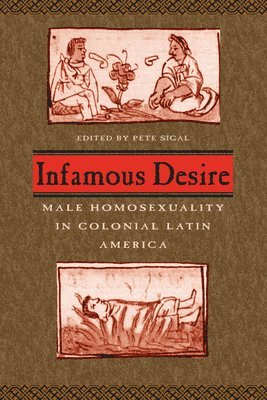
What did it mean to be a man in colonial Latin America? More specifically, what did indigenous and Iberian groups think of men who had sexual relations with other men? Providing comprehensive analyses of how male homosexualities were represented in areas under both Portuguese and Spanish control, "Infamous Desire" is the first book-length attempt to answer such questions. Each of the contributors connects male homosexual behaviour to broader gender systems - both indigenous and European - that defined masculinity and femininity, and relate sodomy to concepts of desire and power. But they sometimes draw very different conclusions. For instance, based on his study of the "berdache" (indigenous cross-dressers), Richard Trexler argues that homosexuality as we know it today did not exist in colonial Latin America, while Luiz Mott uses Inquisition documents to reveal a community of sodomites whom he believes shared a homosexual identity rooted in their common oppression. "Infamous Desire" should be valuable for anyone studying sexuality, gender or power relations in colonial Latin America.
282 kr
Skickas inom 7-10 vardagar
What did it mean to be a man in colonial Latin America? More specifically, what did indigenous and Iberian groups think of men who had sexual relations with other men? Providing comprehensive analyses of how male homosexualities were represented in areas under both Portuguese and Spanish control, "Infamous Desire" is the first book-length attempt to answer such questions. Each of the contributors connects male homosexual behaviour to broader gender systems - both indigenous and European - that defined masculinity and femininity, and relate sodomy to concepts of desire and power. But they sometimes draw very different conclusions. For instance, based on his study of the "berdache" (indigenous cross-dressers), Richard Trexler argues that homosexuality as we know it today did not exist in colonial Latin America, while Luiz Mott uses Inquisition documents to reveal a community of sodomites whom he believes shared a homosexual identity rooted in their common oppression. "Infamous Desire" should be valuable for anyone studying sexuality, gender or power relations in colonial Latin America.
From Moon Goddesses to Virgins
The Colonization of Yucatecan Maya Sexual Desire
Häftad, Engelska, 2000
351 kr
Skickas inom 10-15 vardagar
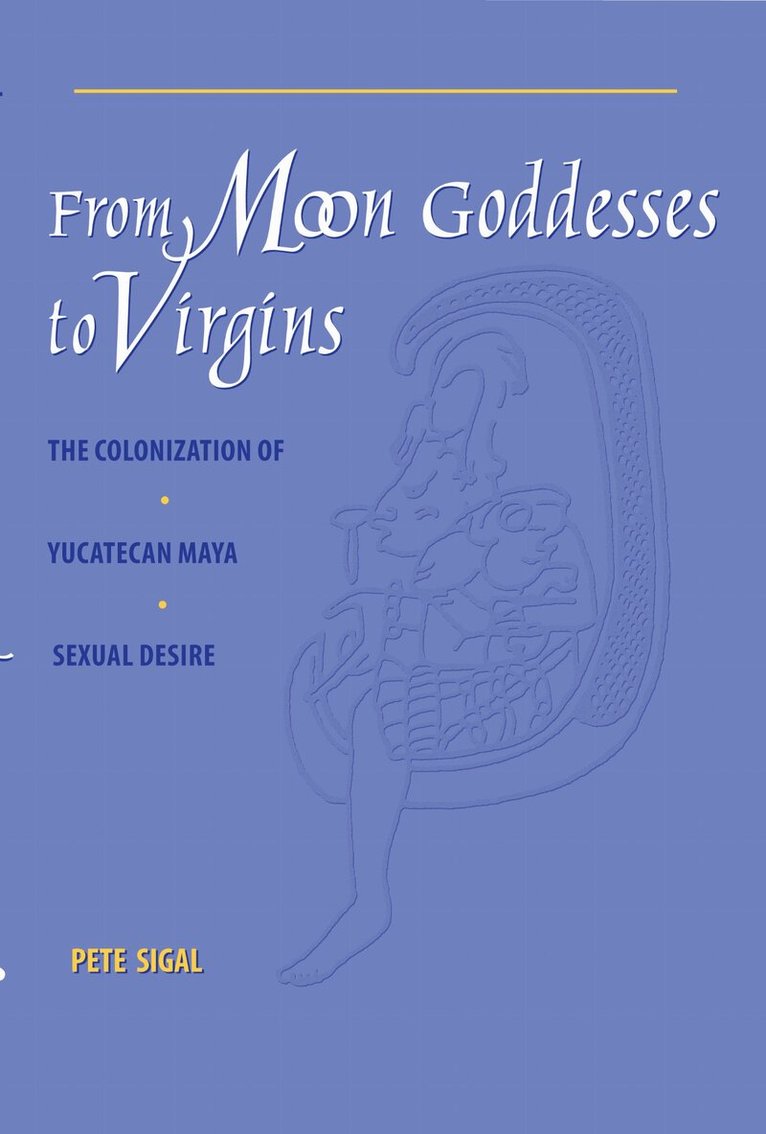
For the preconquest Maya, sexuality was a part of ritual discourse and performance, and all sex acts were understood in terms of their power to create, maintain, and destroy society. As postconquest Maya adapted to life under colonial rule, they neither fully abandoned these views nor completely adopted the formulation of sexuality prescribed by Spanish Catholicism. Instead, they evolved hybridized notions of sexual desire, represented in the figure of the Virgin Mary as a sexual goddess, whose sex acts embodied both creative and destructive components. This highly innovative book decodes the process through which this colonization of Yucatan Maya sexual desire occurred. Pete Sigal frames the discussion around a series of texts, including the Books of Chilam Balam and the Ritual of the Bacabs, that were written by seventeenth and eighteenth century Maya nobles to elucidate the history, religion, and philosophy of the Yucatecan Maya communities. Drawing on the insights of philology, discourse analysis, and deconstruction, he analyzes the sexual fantasies, fears, and desires that are presented, often unintentionally, in the "margins" of these texts and shows how they illuminate issues of colonialism, power, ritual, and gender.
403 kr
Skickas inom 7-10 vardagar
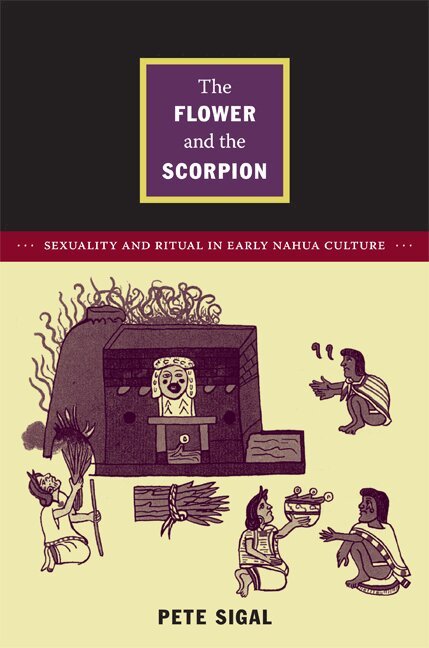
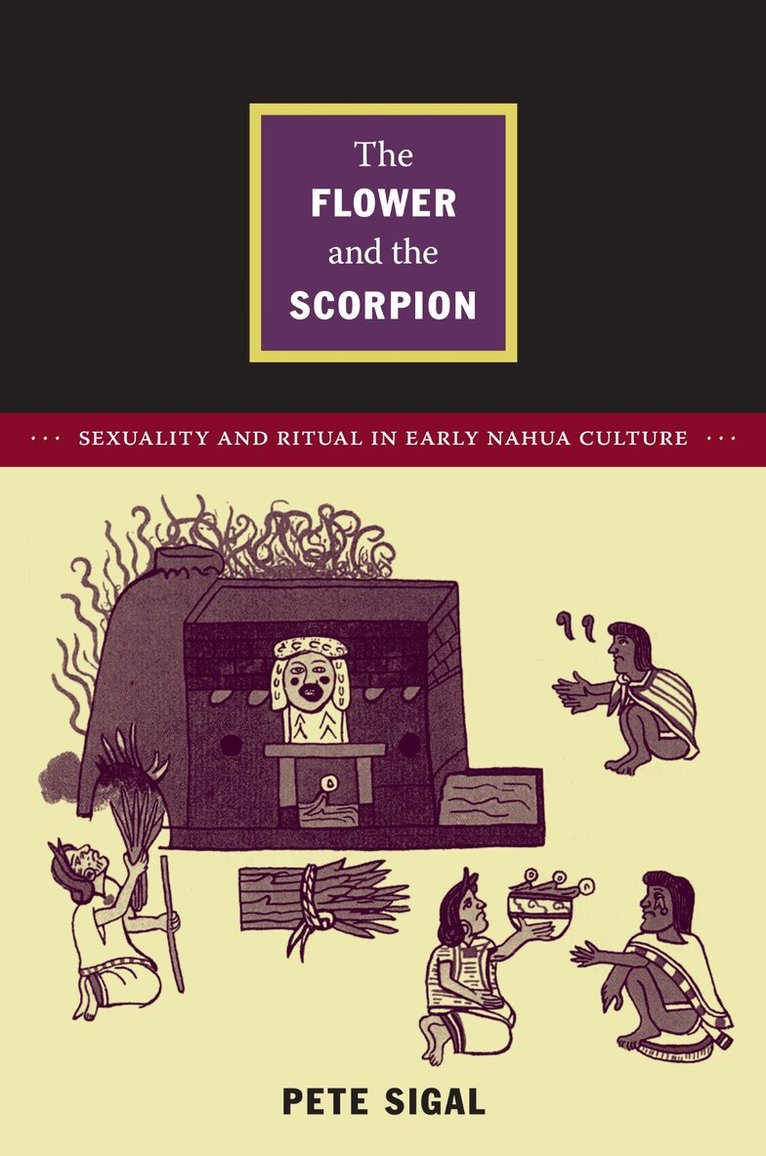
Prior to the Spanish conquest, the Nahua indigenous peoples of central Mexico did not have a notion of “sex” or “sexuality” equivalent to the sexual categories developed by colonial society or those promoted by modern Western peoples. In this innovative ethnohistory, Pete Sigal seeks to shed new light on Nahua concepts of the sexual without relying on the modern Western concept of sexuality. Along with clerical documents and other Spanish sources, he interprets the many texts produced by the Nahua. While colonial clerics worked to impose Catholic beliefs-particularly those equating sexuality and sin-on the indigenous people they encountered, the process of cultural assimilation was slower and less consistent than scholars have assumed. Sigal argues that modern researchers of sexuality have exaggerated the power of the Catholic sacrament of confession to change the ways that individuals understood themselves and their behaviors. At least until the mid-seventeenth century, when increased contact with the Spanish began to significantly change Nahua culture and society, indigenous peoples, particularly commoners, related their sexual lives and imaginations not just to concepts of sin and redemption but also to pleasure, seduction, and rituals of fertility and warfare.
1 118 kr
Skickas inom 7-10 vardagar
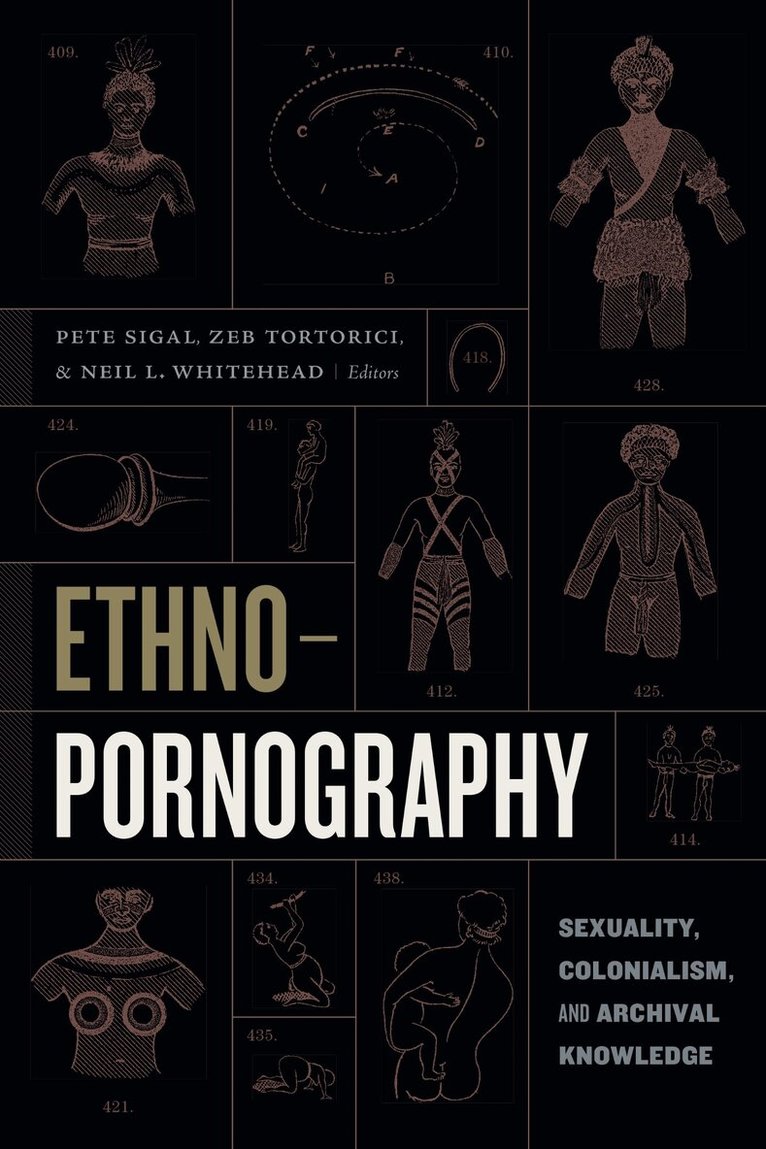
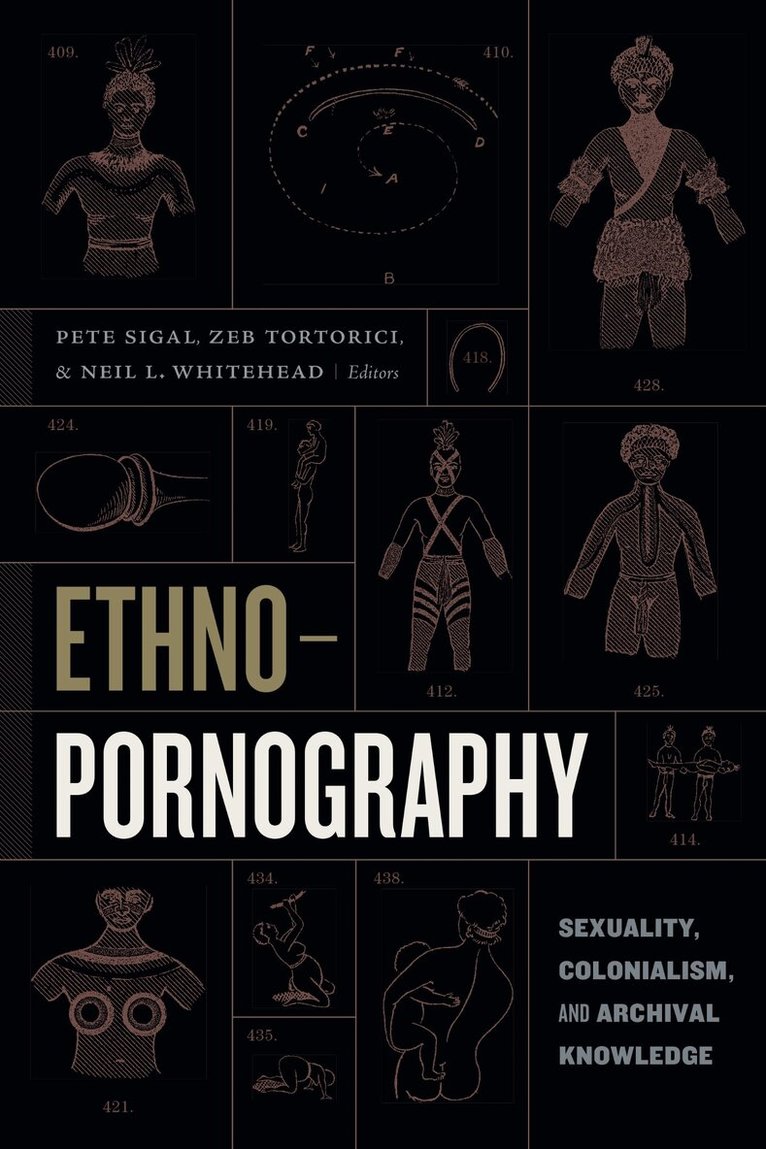
This volume's contributors explore the links among sexuality, ethnography, race, and colonial rule through an examination of ethnopornography-the eroticized observation of the Other for supposedly scientific or academic purposes. With topics that span the sixteenth century to the present in Latin America, the United States, Australia, the Middle East, and West Africa, the contributors show how ethnopornography is fundamental to the creation of race and colonialism as well as archival and ethnographic knowledge. Among other topics, they analyze eighteenth-century European travelogues, photography and the sexualization of African and African American women, representations of sodomy throughout the Ottoman empire, racialized representations in a Brazilian gay pornographic magazine, colonial desire in the 2007 pornographic film Gaytanamo, the relationship between sexual desire and ethnographic fieldwork in Africa and Australia, and Franciscan friars' voyeuristic accounts of indigenous people's “sinful” activities. Outlining how in the ethnopornographic encounter the reader or viewer imagines direct contact with the Other from a distance, the contributors trace ethnopornography's role in creating racial categories and its grounding in the relationship between colonialism and the erotic gaze. In so doing, they theorize ethnography as a form of pornography that is both motivated by the desire to render knowable the Other and invested with institutional power.Contributors. Joseph A. Boone, Pernille Ipsen, Sidra Lawrence, Beatrix McBride, Mireille Miller-Young, Bryan Pitts, Helen Pringle, Pete Sigal, Zeb Tortorici, Neil L. Whitehead
292 kr
Skickas inom 7-10 vardagar
This volume's contributors explore the links among sexuality, ethnography, race, and colonial rule through an examination of ethnopornography-the eroticized observation of the Other for supposedly scientific or academic purposes. With topics that span the sixteenth century to the present in Latin America, the United States, Australia, the Middle East, and West Africa, the contributors show how ethnopornography is fundamental to the creation of race and colonialism as well as archival and ethnographic knowledge. Among other topics, they analyze eighteenth-century European travelogues, photography and the sexualization of African and African American women, representations of sodomy throughout the Ottoman empire, racialized representations in a Brazilian gay pornographic magazine, colonial desire in the 2007 pornographic film Gaytanamo, the relationship between sexual desire and ethnographic fieldwork in Africa and Australia, and Franciscan friars' voyeuristic accounts of indigenous people's “sinful” activities. Outlining how in the ethnopornographic encounter the reader or viewer imagines direct contact with the Other from a distance, the contributors trace ethnopornography's role in creating racial categories and its grounding in the relationship between colonialism and the erotic gaze. In so doing, they theorize ethnography as a form of pornography that is both motivated by the desire to render knowable the Other and invested with institutional power.Contributors. Joseph A. Boone, Pernille Ipsen, Sidra Lawrence, Beatrix McBride, Mireille Miller-Young, Bryan Pitts, Helen Pringle, Pete Sigal, Zeb Tortorici, Neil L. Whitehead