Peter B. Lavelle – författare
Visar alla böcker från författaren Peter B. Lavelle. Handla med fri frakt och snabb leverans.
3 produkter
3 produkter
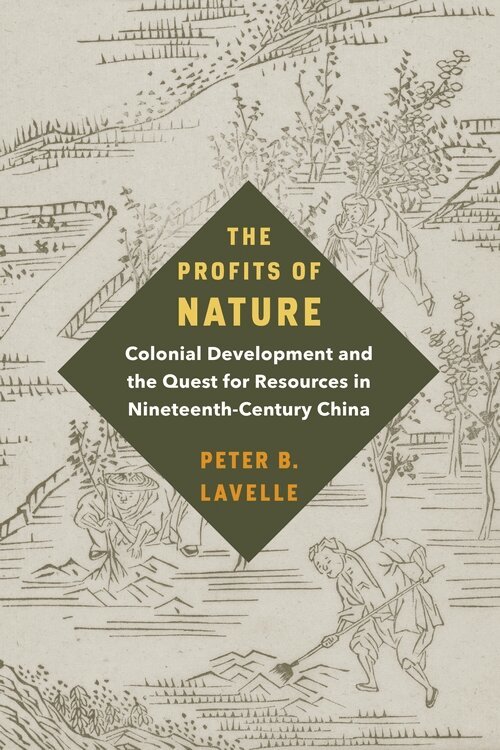
Profits of Nature
Colonial Development and the Quest for Resources in Nineteenth-Century China
Inbunden, Engelska, 2020
539 kr
Skickas inom 5-8 vardagar
In the nineteenth century, the Qing empire experienced a period of profound turmoil caused by an unprecedented conjunction of natural disasters, domestic rebellions, and foreign incursions. The imperial government responded to these calamities by introducing an array of new policies and institutions to bolster its power across its massive territories. In the process, Qing officials launched campaigns for natural resource development, seeking to take advantage of the unexploited lands, waters, and minerals of the empire’s vast hinterlands and borderlands.In this book, Peter B. Lavelle uses the life and career of Chinese statesman Zuo Zongtang (1812–1885) as a lens to explore the environmental history of this era. Although known for his pacification campaigns against rebel movements, Zuo was at the forefront of the nineteenth-century quest for natural resources. Influenced by his knowledge of nature, geography, and technology, he created government bureaus and oversaw state-funded projects to improve agriculture, sericulture, and other industries in territories across the empire. His work forged new patterns of colonial development in the Qing empire’s northwest borderlands, including Xinjiang, at a time when other empires were scrambling to secure access to resources around the globe. Weaving a narrative across the span of Zuo’s lifetime, The Profits of Nature offers a unique approach to understanding the dynamic relationship among social crises, colonialism, and the natural world during a critical juncture in Chinese history, between the high tide of imperial power in the eighteenth century and the challenges of modern state-building in the twentieth century.
2 337 kr
Kommande
China has a vast written history that records the countless ways people have observed, transformed, and preserved their environments over the centuries. This sourcebook, the first ever to document China’s environmental history, presents translations of hundreds of texts spanning more than three thousand years, displaying the diversity of how humans have related to the world around them.China’s Environmental History features texts translated from Chinese and eight other languages—most for the first time—in a wide variety of genres, including poetry, philosophy, official documents, religious tracts, travelogues, and oral histories. It has ninety-two short chapters, each containing primary source texts along with brief introductions and suggestions for further reading. Taken together, the chapters allow readers to study the many dimensions of environmental history in China, from the connections between resource exploitation and state power to the various forms of conservation and animal protection. Ideal for classroom use, this book shows how asking questions about the environment leads to new insights about the past and reveals the many threads of evidence waiting to be explored.
594 kr
Kommande
China has a vast written history that records the countless ways people have observed, transformed, and preserved their environments over the centuries. This sourcebook, the first ever to document China’s environmental history, presents translations of hundreds of texts spanning more than three thousand years, displaying the diversity of how humans have related to the world around them.China’s Environmental History features texts translated from Chinese and eight other languages—most for the first time—in a wide variety of genres, including poetry, philosophy, official documents, religious tracts, travelogues, and oral histories. It has ninety-two short chapters, each containing primary source texts along with brief introductions and suggestions for further reading. Taken together, the chapters allow readers to study the many dimensions of environmental history in China, from the connections between resource exploitation and state power to the various forms of conservation and animal protection. Ideal for classroom use, this book shows how asking questions about the environment leads to new insights about the past and reveals the many threads of evidence waiting to be explored.