Peter Bogh Anderson - Böcker
Visar alla böcker från författaren Peter Bogh Anderson. Handla med fri frakt och snabb leverans.
2 produkter
2 produkter
586 kr
Skickas inom 7-10 vardagar
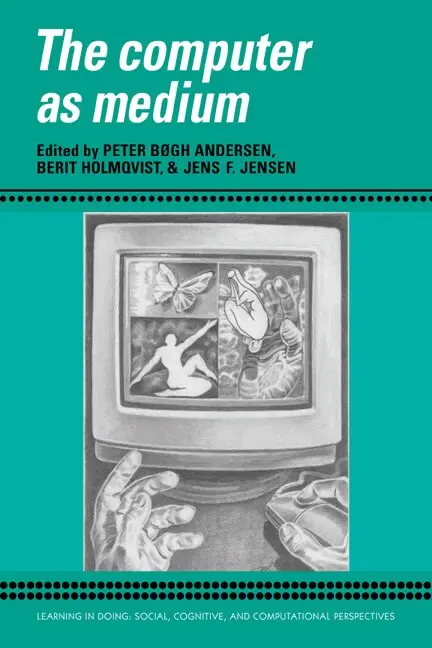
Computers are developing into a powerful medium integrating film, pictures, text and sound, and the use of computers for communication and information is rapidly expanding. The Computer as Medium brings insights from art, literature and theatre to bear on computers and discusses the communicative and organizational nature of computer networks within a historical perspective. The book consists of three parts. The first part characterizes the semiotic nature of computers and discusses semiotic approaches to programming and interface design. The second part discusses narrative and aesthetic issues of interactive fiction, information systems and hypertext. The final part contains papers on the cultural, organizational and historical impact of computers.The broad and rich coverage of this book will appeal to scholars in cognitive science, computer science, linguistics, semiotics, media studies and mass communications, cultural studies and education.
2 181 kr
Skickas inom 10-15 vardagar
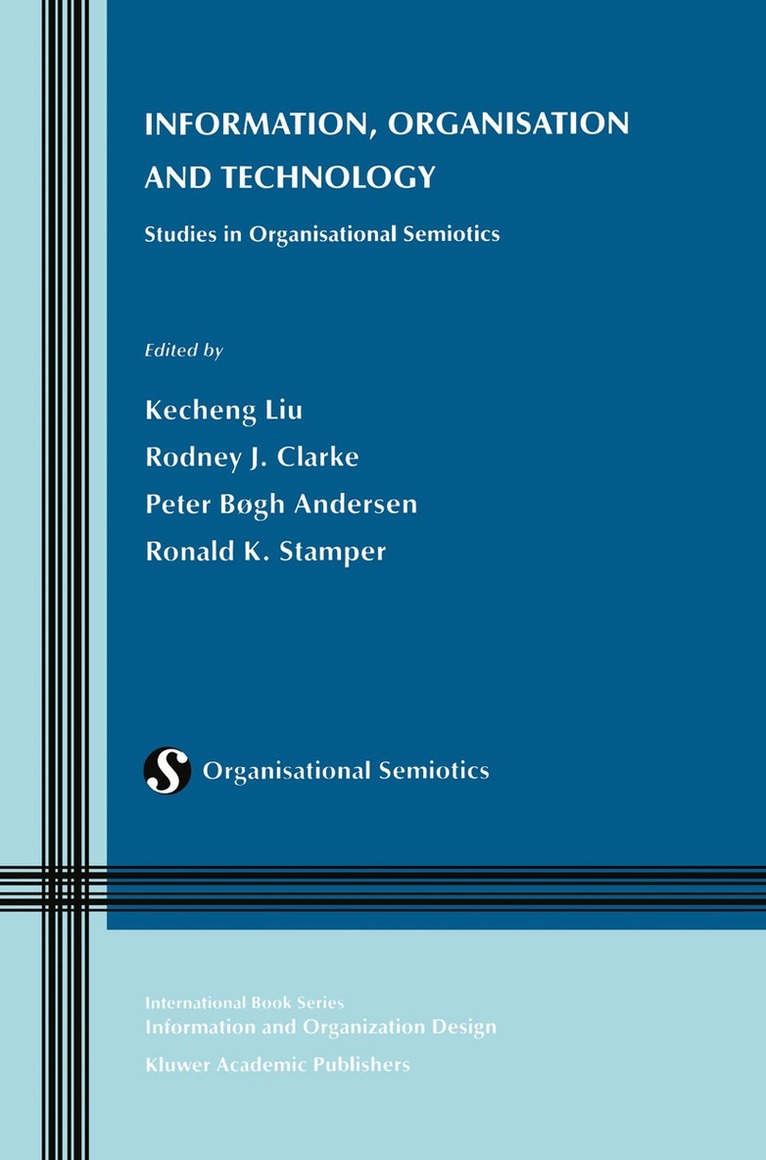
Organizational semiotics is a discipline that is concerned with the interrelationships between individuals and groups, and between humans and technology, functioning in organizations and society. Organizational semiotics opens up the prospect of theory-building and the development of new methods and techniques to gain insights into organized behaviour and enacted social practices, in the presence and absence of various technologies. It shares common interests with many other approaches to information and organizations, such as computer science, computational semiotics, organizational engineering, and language action perspective. The common vision shared by these approaches is to treat organizations and related information systems and technologies within a unified semiotic framework, with particular reference to the huge range of issues that elude many traditional disciplines. The analysis and design of information systems develops methods for solving the practical problems but offers no rigorous, theoretical foundation for them or how information functions within and between organizations.The semiotic perspective accommodates the individual and the social, the human and the technical, intra- and inter-organizational interactions, at a level of detail that is required in the study, modelling, design, and engineering of new and alternative organizational and technical systems. This perspective is outlined in the chapter presentations in this work.