Peter C Hauser – författare
Visar alla böcker från författaren Peter C Hauser. Handla med fri frakt och snabb leverans.
6 produkter
6 produkter
E-bok
Engelska, 2008779 kr
Läs direkt efter köp
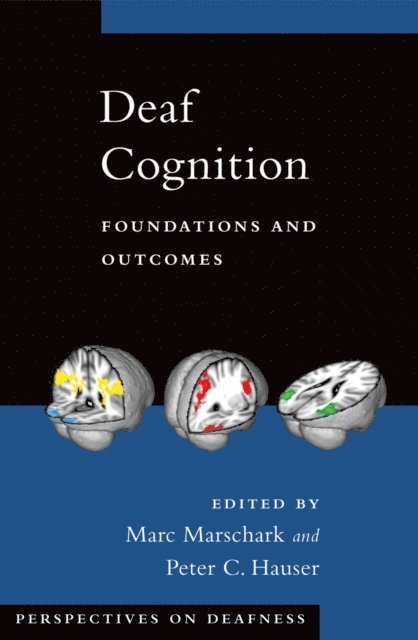
Deaf Cognition examines the cognitive underpinnings of deaf individuals'' learning. Marschark and Hauser have brought together scientists from different disciplines, which rarely interact, to share their ideas and create this book. It contributes to the science of learning by describing and testing theories that might either over or underestimate the role that audition or vision plays in learning and memory, and by shedding light on multiple pathways for learning. International experts in cognitive psychology, brain sciences, cognitive development, and deaf children offer a unique, integrative examination of cognition and learning, with discussions on their implications for deaf education. Each chapter focuses primarily on the intersection of research in cognitive psychology, developmental psychology, and deaf education. The general theme of the book is that deaf and hearing individuals differ to some extent in early experience, brain development, cognitive functioning, memory organization, and problem solving. Identifying similarities and differences among these domains provides new insights into potential methods for enhancing achievement in this traditionally under-performing population.
Inbunden, Engelska, 2008
1 018 kr
Skickas inom 5-8 vardagar
Deaf Cognition examines the cognitive underpinnings of deaf individuals' learning. Marschark and Hauser have brought together scientists from different disciplines, which rarely interact, to share their ideas and create this book. It contributes to the science of learning by describing and testing theories that might either over or underestimate the role that audition or vision plays in learning and memory, and by shedding light on multiple pathways for learning. International experts in cognitive psychology, brain sciences, cognitive development, and deaf children offer a unique, integrative examination of cognition and learning, with discussions on their implications for deaf education. Each chapter focuses primarily on the intersection of research in cognitive psychology, developmental psychology, and deaf education. The general theme of the book is that deaf and hearing individuals differ to some extent in early experience, brain development, cognitive functioning, memory organization, and problem solving. Identifying similarities and differences among these domains provides new insights into potential methods for enhancing achievement in this traditionally under-performing population.
Inbunden, Engelska, 2011
473 kr
Skickas inom 5-8 vardagar
In this invaluable guide, renowned authorities Marc Marschark and Peter Hauser highlight important new advances in scientific and educational research that can help parents and teachers of students with significant hearing loss. The authors stress that deaf children have strengths and needs that are sometimes dramatically different from those who can hear. Consequently, if deaf students are to have full academic access and optimal educational outcomes, it is essential that parents and teachers learn to recognize these differences and adjust their teaching methods to them. Marschark and Hauser explain how the fruits of research conducted over the last several years can markedly improve educational practices at home and in the classroom, and they offer innovative strategies that parents and teachers can use to promote learning in their children. The result is a lively, accessible volume that sheds light on what it means to be a deaf learner and that provides a wealth of advice on how we can best support their language development, social skills, and academic success.
E-bok
PDF, Engelska, 2008751 kr
Läs direkt efter köp
Deaf Cognition examines the cognitive underpinnings of deaf individuals'' learning. Marschark and Hauser have brought together scientists from different disciplines, which rarely interact, to share their ideas and create this book. It contributes to the science of learning by describing and testing theories that might either over or underestimate the role that audition or vision plays in learning and memory, and by shedding light on multiple pathways for learning. International experts in cognitive psychology, brain sciences, cognitive development, and deaf children offer a unique, integrative examination of cognition and learning, with discussions on their implications for deaf education. Each chapter focuses primarily on the intersection of research in cognitive psychology, developmental psychology, and deaf education. The general theme of the book is that deaf and hearing individuals differ to some extent in early experience, brain development, cognitive functioning, memory organization, and problem solving. Identifying similarities and differences among these domains provides new insights into potential methods for enhancing achievement in this traditionally under-performing population.
E-bok
PDF, Engelska, 2011422 kr
Läs direkt efter köp
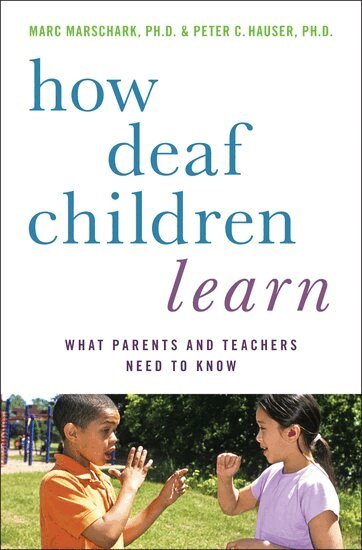
How can parents and teachers most effectively support the language development and academic success of deaf and hard-of-hearing children? Will using sign language interfere with learning spoken language? Should deaf children be placed in classrooms with hearing children? Are traditional methods of teaching subjects such as reading and math to hearing children appropriate for deaf learners? As many parents and teachers will attest, questions like these have no easy answers, and it can be difficult for caring adults to separate science from politics and fact from opinion in order to make informed decisions about how to help deaf children learn. In this invaluable guide, renowned authorities Marc Marschark and Peter Hauser highlight important new advances in scientific and educational research that can help parents and teachers of students with significant hearing loss. The authors stress that deaf children have strengths and needs that are sometimes very different from those who can hear. Consequently, if deaf students are to have full academic access and optimal educational outcomes, it is essential that parents and teachers learn to recognize these differences and adjust their teaching methods to them. Marschark and Hauser explain how the fruits of research conducted over the last several years can markedly improve educational practices at home and in the classroom, and they offer innovative strategies that parents and teachers can use to promote learning in their children. The result is a lively, accessible volume that sheds light on what it means to be a deaf learner and that provides a wealth of advice on how we can best support their language development, social skills, and academic success.
E-bok
Engelska, 2011422 kr
Läs direkt efter köp
How can parents and teachers most effectively support the language development and academic success of deaf and hard-of-hearing children? Will using sign language interfere with learning spoken language? Should deaf children be placed in classrooms with hearing children? Are traditional methods of teaching subjects such as reading and math to hearing children appropriate for deaf learners? As many parents and teachers will attest, questions like these have no easy answers, and it can be difficult for caring adults to separate science from politics and fact from opinion in order to make informed decisions about how to help deaf children learn. In this invaluable guide, renowned authorities Marc Marschark and Peter Hauser highlight important new advances in scientific and educational research that can help parents and teachers of students with significant hearing loss. The authors stress that deaf children have strengths and needs that are sometimes very different from those who can hear. Consequently, if deaf students are to have full academic access and optimal educational outcomes, it is essential that parents and teachers learn to recognize these differences and adjust their teaching methods to them. Marschark and Hauser explain how the fruits of research conducted over the last several years can markedly improve educational practices at home and in the classroom, and they offer innovative strategies that parents and teachers can use to promote learning in their children. The result is a lively, accessible volume that sheds light on what it means to be a deaf learner and that provides a wealth of advice on how we can best support their language development, social skills, and academic success.