Peter Engelke – författare
Visar alla böcker från författaren Peter Engelke. Handla med fri frakt och snabb leverans.
4 produkter
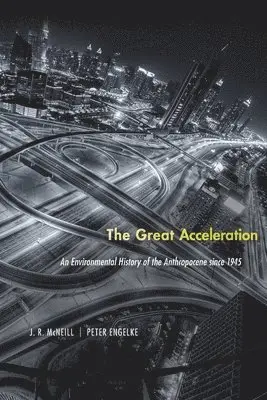
Great Acceleration
An Environmental History of the Anthropocene since 1945
Av J. R. McNeill, Peter Engelke
Häftad, 2016
4,0 utav 5 stjärnor. Totalt antal röster: (2)
273 kr
Lägg i varukorg
The Earth has entered a new age—the Anthropocene—in which humans are the most powerful influence on global ecology. Since the mid-twentieth century, the accelerating pace of energy use, greenhouse gas emissions, and population growth has thrust the planet into a massive uncontrolled experiment. The …
Integration von Forschung und Entwicklung in die unternehmerische Planung und Steuerung
E-bok, 2013
507 kr
Lägg i varukorg
Forschung und Entwicklung (FuE) stellt eine wesentliche Voraussetzung zur langfristigen Existenzsicherung von Unternehmen dar. Schneller technischer Wandel und sich verkürzende Produktlebenszyklen erfordern mehr und mehr ein koordiniertes, an der unternehmerischen Gesamtzielsetzung ausgerichtetes …
Integration von Forschung und Entwicklung in die unternehmerische Planung und Steuerung
Häftad, 1991
583 kr
Lägg i varukorg
Forschung und Entwicklung (FuE) stellt eine wesentliche Voraussetzung zur langfristigen Existenzsicherung von Unternehmen dar. Schneller technischer Wandel und sich verkürzende Produktlebenszyklen erfordern mehr und mehr ein koordiniertes, an der unternehmerischen Gesamtzielsetzung ausgerichtetes …
Health and Community Design
The Impact Of The Built Environment On Physical Activity
Av Lawrence Frank, Peter Engelke m. fl.
Häftad, 2003
393 kr
Tillfälligt slut
Health and Community Design is a comprehensive examination of how the built environment encourages or discourages physical activity, drawing together insights from a range of research on the relationships between urban form and public health. It provides important information about the factors that …