Peter G. Renstrom - Böcker
Visar alla böcker från författaren Peter G. Renstrom. Handla med fri frakt och snabb leverans.
6 produkter
6 produkter
929 kr
Skickas inom 10-15 vardagar
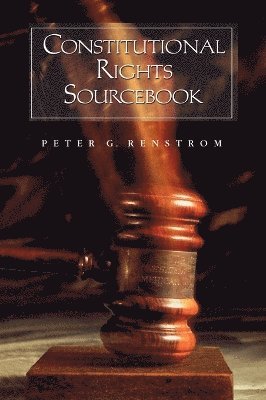
The Constitutional Rights Sourcebook examines fundamental ideas of constitutionalism and American constitutional law through case summaries. The U.S. Supreme Court as an institution is featured and its rulings and rationale are represented throughout the work, beginning with a thorough treatment of the current court and including all the significant rulings since the mid-1980s.
805 kr
Skickas inom 10-15 vardagar
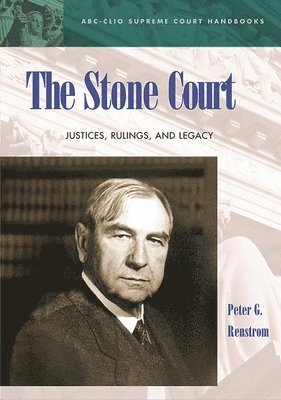
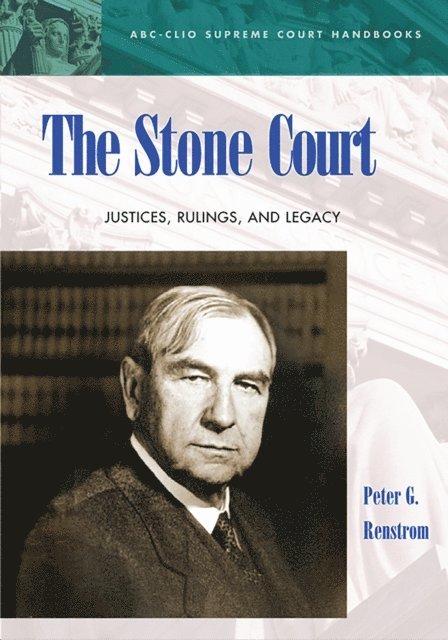
A comprehensive examination of the rulings, key figures, and legal legacy of the Stone Court.When President Franklin Roosevelt got the chance to appoint seven Supreme Court justices within five years, he created a bench packed with liberals and elevated justice Harlan Fiske Stone to lead them. Roosevelt Democrats expected great things from the Stone Court. But for the most part, they were disappointed.The Stone Court significantly expanded executive authority. It also supported the rights of racial minorities, laying the foundation for subsequent rulings on desegregation and discrimination. But whatever gains it made in advancing individual rights were overshadowed by its decisions regarding the evacuation of Japanese Americans. Although the Stone Court itself did not profoundly affect individual rights jurisprudence, it became the bridge between the pre-1937 constitutional interpretation and the "new constitutionalism" that came after.
833 kr
Skickas inom 10-15 vardagar
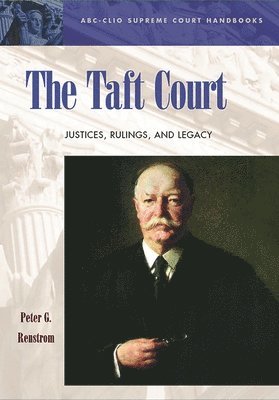
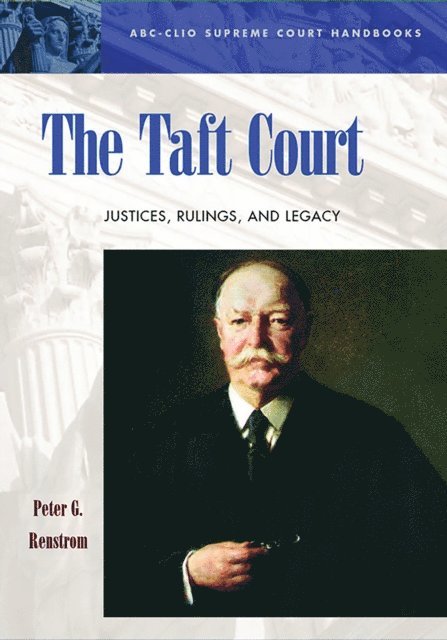
An authoritative survey of the Taft Court, which served from 1921 to 1929, and the impact it had on the U.S. legal system, social order, economics, and politics.William Howard Taft's experience in the executive branch gave him a unique perspective on the court's work. He initiated judicial reform and was the prime mover behind the Judiciary Act of 1925, which gave the court wide latitude to accept cases based on their importance to the nation.The Taft Court decided about 1,600 cases during its nine terms. This book examines the "aggregate" personality of the court through discussions of individual voting characteristics, bloc alignments, and other patterned behavior. It also charts the strengths and weaknesses of the rulings and demonstrates Taft's penchant for increasing the impact of decisions by pursuing consensus among the justices, two of whom were his own appointees when he served as president.An A–Z set of entries on the people, laws, events, and concepts that are important to an understanding of the Taft CourtA photograph of and a brief bibliography on each justice
833 kr
Skickas inom 10-15 vardagar
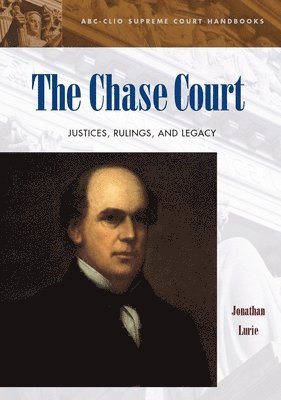
A revealing examination of the Supreme Court's justices and their "cautiously moderate" jurisprudence during the ten-year tenure of Chief Justice Salmon Portland Chase.The Chase Court: Justices, Rulings, and Legacy examines the workings and legacies of the Supreme Court during the tenure of Chief Justice Salmon Portland Chase. Accompanying an in-depth analysis of the Chase Court's landmark rulings on Civil War and Reconstruction issues that shaped U.S. history—such as military commissions and the status of seceding states—are detailed discussions of the Court's rulings on government-issued paper currency "greenbacks" and the newly ratified 14th Amendment.Salmon Portland Chase's role as the first chief justice to preside over the impeachment of a president is carefully examined. Profiles of the 13 Chase Court justices describe their rise to prominence, controversies surrounding their nominations, work on the court, judicial philosophies, important decisions, and overall impacts.A–Z entries include the significant rulings involving Reconstruction and restoration of the Union such as Ex parte Milligan (1866), the Test Oath Cases (1867), Ex parte McCardle (1868), and Texas v. White (1869)An analysis of the historical impact and continuing legacy of decisions such as the Court's narrow interpretation of the 14th Amendment in the famous Slaughterhouse Cases
833 kr
Skickas inom 10-15 vardagar
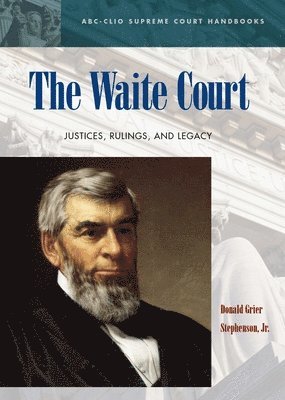
An extensive exploration of the major decisions and personalities of the Supreme Court during the 14-year tenure of Chief Justice Morrison Remick Waite.The Waite Court: Justices, Rulings, and Legacy presents a fresh interpretation of the Supreme Court under the tenure of Chief Justice Morrison Remick Waite (1874–1888). An in-depth analysis of key decisions demonstrates how the Waite Court confronted such profound issues as the post-Civil War rights of African Americans and state regulations intended to cope with rampant industrialization.Highlighting the Court's most famous decision, Munn v. Illinois, which upheld legislation regulating railroad and grain elevator rates, this careful analysis also reviews the Court's unique involvement in the 1876 presidential election electoral predicament. Profiles of the 15 justices who served on the Waite Court include extensive descriptions of the five that rank among the most outstanding justices ever to serve on the Supreme Court.A–Z entries on key people, laws, cases, events, and concepts that were relevant during the Waite Court era, including the growing volume of state economic regulations enacted to cope with industrial expansion and urban growth fueled by the Civil War and by a nationwide rail network for people and goodsAn appendix including a timeline of important events for the years 1865 through 1890, plus excerpts from other important source materials, such as landmark decisions of the Waite Court
833 kr
Skickas inom 10-15 vardagar
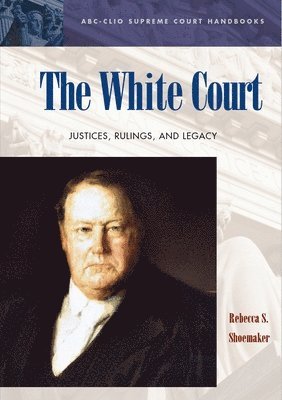
An in-depth examination of the U.S. Supreme Court under the 11-year reign of Chief Justice Edward Douglass White.The White Court: Justices, Rulings, and Legacy examines the workings and legacies of the Supreme Court during the tenure of Chief Justice Edward Douglass White. Through detailed discussions of landmark cases, this reference work explores the role the Court played in steering the country through an era of economic growth, racial discrimination, and international warfare.The White Court reveals how the Court established its greatest legacy, the "rule of reason," in antitrust cases against the American Tobacco Company and Standard Oil, and how it resolved controversies concerning the expansion of executive power during wartime. Individual profiles of the 13 White Court justices describe their rise to prominence and controversies surrounding their nominations, their work on the Court, judicial philosophies, important decisions, and overall impact.A–Z entries on key people, laws, cases, events, and concepts such as Oliver Wendell Holmes, Hipolite Egg Co. v. United States, and Standard Oil of New Jersey v. United StatesAppendix with excerpts from primary documents of key cases decided during the White Court tenure