Peter Good – författare
Visar alla böcker från författaren Peter Good. Handla med fri frakt och snabb leverans.
7 produkter
7 produkter
Inbunden, Engelska, 2001
1 123 kr
Skickas inom 10-15 vardagar
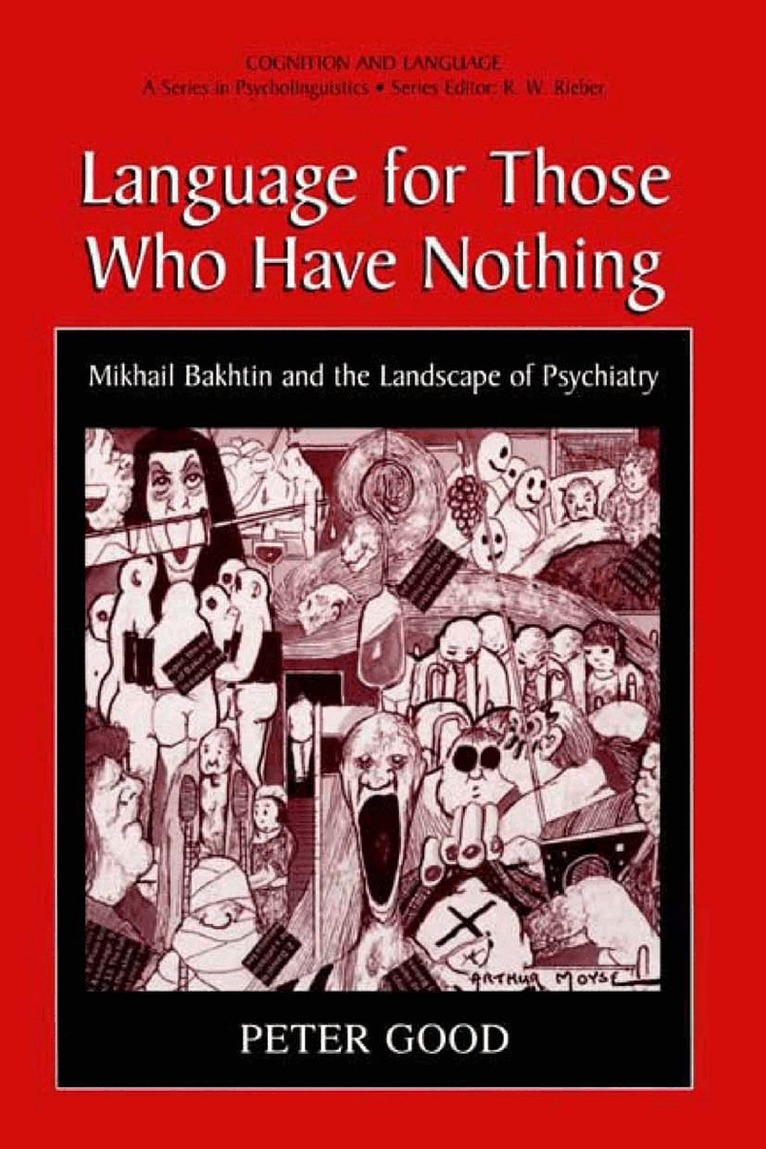
The aim of Language for those who have Nothing is to think psychiatry through the writings of Mikhail Bakhtin. Using the concepts of Dialogism and Polyphony, the Carnival and the Chronotope, a novel means of navigating the clinical landscape is developed. Bakhtin offers language as a social phenomenon and one that is fully embodied. Utterances are shown to be alive and enfleshed and their meanings realised in the context of given social dimensions. The organisation of this book corresponds with carnival practices of taking the high down to the low before replenishing its meaning anew. Thus early discussions of official language and the chronotope become exposed to descending levels of analysis and emphasis. Patients and practitioners are shown to occupy an entirely different spatio-temporal topography. These chronotopes have powerful borders and it is necessary to use the Carnival powers of cunning and deception in order to enter and to leave them. The book provides an overview of practitioners who have attempted such transgression and the author records his own unnerving experience as a pseudopatient. By exploring the context of psychiatry's unofficial voices: its terminology, jokes, parodies, and everyday narratives, the clinical landscape is shown to rely heavily on unofficial dialogues in order to safeguard an official identity.
E-bok
PDF, Engelska, 20061 408 kr
Läs direkt efter köp
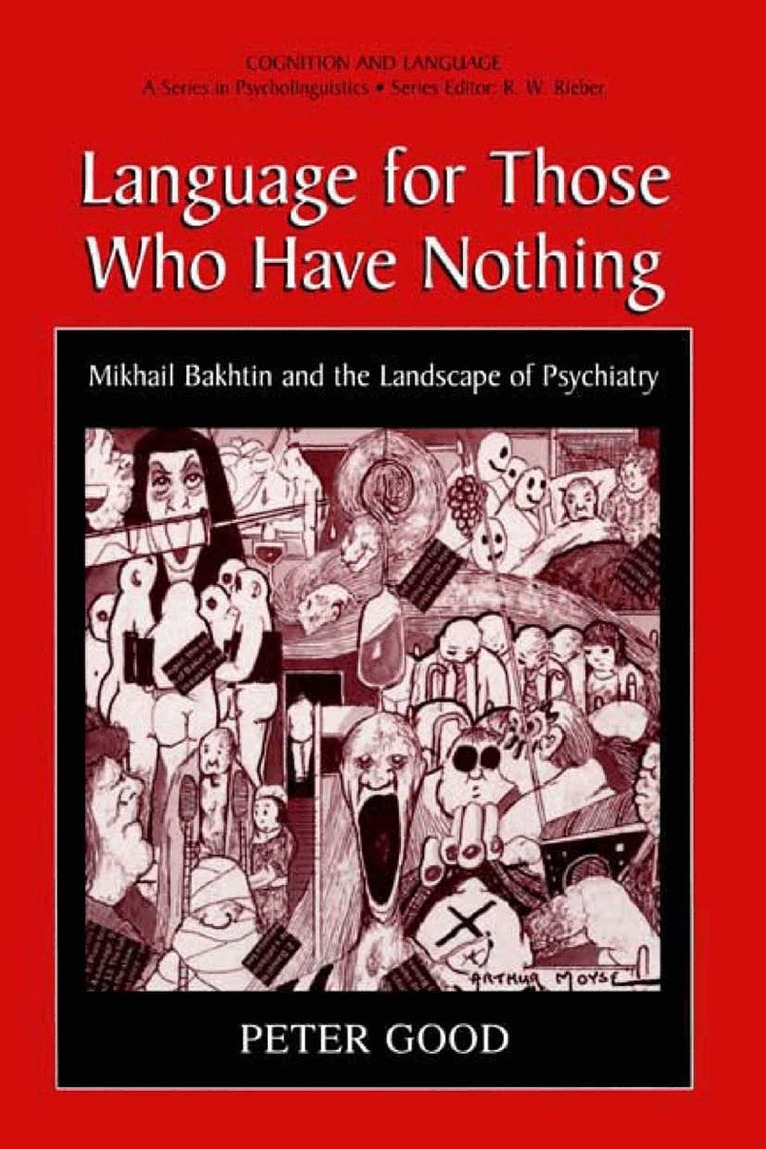
The aim of Language for those who have Nothing is to think psychiatry through the writings of Mikhail Bakhtin. Using the concepts of Dialogism and Polyphony, the Carnival and the Chronotope, a novel means of navigating the clinical landscape is developed. Bakhtin offers language as a social phenomenon and one that is fully embodied. Utterances are shown to be alive and enfleshed and their meanings realised in the context of given social dimensions. The organisation of this book corresponds with carnival practices of taking the high down to the low before replenishing its meaning anew. Thus early discussions of official language and the chronotope become exposed to descending levels of analysis and emphasis. Patients and practitioners are shown to occupy an entirely different spatio-temporal topography. These chronotopes have powerful borders and it is necessary to use the Carnival powers of cunning and deception in order to enter and to leave them. The book provides an overview of practitioners who have attempted such transgression and the author records his own unnerving experience as a pseudopatient. By exploring the context of psychiatry''s unofficial voices: its terminology, jokes, parodies, and everyday narratives, the clinical landscape is shown to rely heavily on unofficial dialogues in order to safeguard an official identity.
Häftad, Engelska, 2023
436 kr
Skickas inom 10-15 vardagar
In 1747, the city of Kerman in Persia burned amidst chaos, destruction and death perpetrated by the city’s own overlord, Nader Shah. After the violent overthrow of the Safavid dynasty in 1722 and subsequent foreign invasions from all sides, Persia had been in constant turmoil. One well-appointed house that belonged to the East India Company had been saved from destruction by the ingenuity of a Company servant, Danvers Graves, and his knowledge of the Company’s privileges in Persia. This book explores the lived experience of the Company and its trade in Persia and how it interacted with power structures and the local environment in a time of great upheaval in Persian history. Using East India Company records and other sources, it charts the role of the Navy and commercial fleet in the Gulf, trade agreements, and the experience of Company staff, British and non-British living in and navigating conditions in 18th-century Persia. By examining the social, commercial and diplomatic history of this relationship, this book creates a new paradigm for the study of Early Modern interactions in the Indian Ocean.
Inbunden, Engelska, 2022
1 365 kr
Skickas inom 10-15 vardagar
In 1747, the city of Kerman in Persia burned amidst chaos, destruction and death perpetrated by the city’s own overlord, Nader Shah. After the violent overthrow of the Safavid dynasty in 1722 and subsequent foreign invasions from all sides, Persia had been in constant turmoil. One well-appointed house that belonged to the East India Company had been saved from destruction by the ingenuity of a Company servant, Danvers Graves, and his knowledge of the Company’s privileges in Persia. This book explores the lived experience of the Company and its trade in Persia and how it interacted with power structures and the local environment in a time of great upheaval in Persian history. Using East India Company records and other sources, it charts the role of the Navy and commercial fleet in the Gulf, trade agreements, and the experience of Company staff, British and non-British living in and navigating conditions in 18th-century Persia. By examining the social, commercial and diplomatic history of this relationship, this book creates a new paradigm for the study of Early Modern interactions in the Indian Ocean.
E-bok
Engelska, 2022451 kr
Läs direkt efter köp
In 1747, the city of Kerman in Persia burned amidst chaos, destruction and death perpetrated by the city's own overlord, Nader Shah. After the violent overthrow of the Safavid dynasty in 1722 and subsequent foreign invasions from all sides, Persia had been in constant turmoil. One well-appointed house that belonged to the East India Company had been saved from destruction by the ingenuity of a Company servant, Danvers Graves, and his knowledge of the Company's privileges in Persia. This book explores the lived experience of the Company and its trade in Persia and how it interacted with power structures and the local environment in a time of great upheaval in Persian history. Using East India Company records and other sources, it charts the role of the Navy and commercial fleet in the Gulf, trade agreements, and the experience of Company staff, British and non-British living in and navigating conditions in 18th-century Persia. By examining the social, commercial and diplomatic history of this relationship, this book creates a new paradigm for the study of Early Modern interactions in the Indian Ocean.
E-bok
PDF, Engelska, 2022451 kr
Läs direkt efter köp
In 1747, the city of Kerman in Persia burned amidst chaos, destruction and death perpetrated by the city's own overlord, Nader Shah. After the violent overthrow of the Safavid dynasty in 1722 and subsequent foreign invasions from all sides, Persia had been in constant turmoil. One well-appointed house that belonged to the East India Company had been saved from destruction by the ingenuity of a Company servant, Danvers Graves, and his knowledge of the Company's privileges in Persia. This book explores the lived experience of the Company and its trade in Persia and how it interacted with power structures and the local environment in a time of great upheaval in Persian history. Using East India Company records and other sources, it charts the role of the Navy and commercial fleet in the Gulf, trade agreements, and the experience of Company staff, British and non-British living in and navigating conditions in 18th-century Persia. By examining the social, commercial and diplomatic history of this relationship, this book creates a new paradigm for the study of Early Modern interactions in the Indian Ocean.
Häftad, Engelska, 2013
1 124 kr
Skickas inom 10-15 vardagar
The aim of Language for those who have Nothing is to think psychiatry through the writings of Mikhail Bakhtin. Using the concepts of Dialogism and Polyphony, the Carnival and the Chronotope, a novel means of navigating the clinical landscape is developed. Bakhtin offers language as a social phenomenon and one that is fully embodied. Utterances are shown to be alive and enfleshed and their meanings realised in the context of given social dimensions. The organisation of this book corresponds with carnival practices of taking the high down to the low before replenishing its meaning anew. Thus early discussions of official language and the chronotope become exposed to descending levels of analysis and emphasis. Patients and practitioners are shown to occupy an entirely different spatio-temporal topography. These chronotopes have powerful borders and it is necessary to use the Carnival powers of cunning and deception in order to enter and to leave them. The book provides an overview of practitioners who have attempted such transgression and the author records his own unnerving experience as a pseudopatient. By exploring the context of psychiatry's unofficial voices: its terminology, jokes, parodies, and everyday narratives, the clinical landscape is shown to rely heavily on unofficial dialogues in order to safeguard an official identity.