Peter H. Tu - Böcker
Visar alla böcker från författaren Peter H. Tu. Handla med fri frakt och snabb leverans.
6 produkter
6 produkter
2 103 kr
Skickas inom 10-15 vardagar
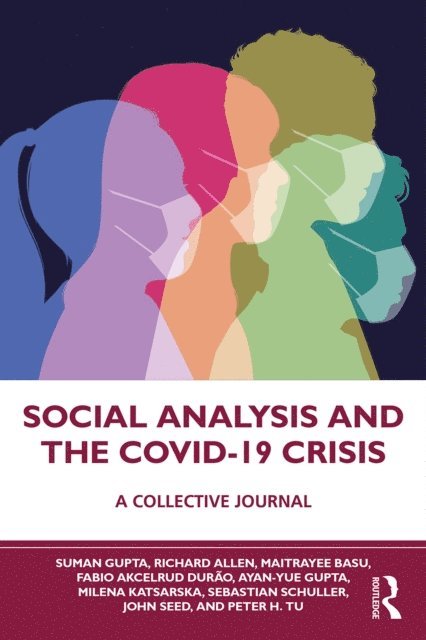
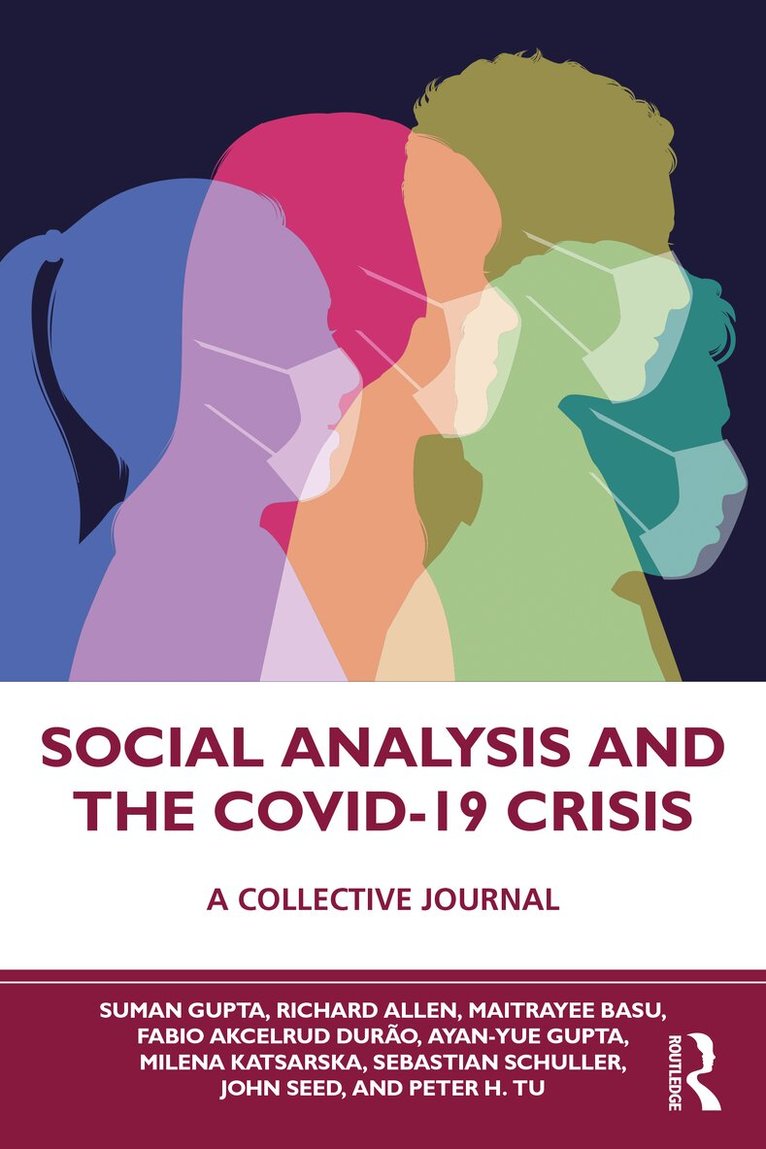
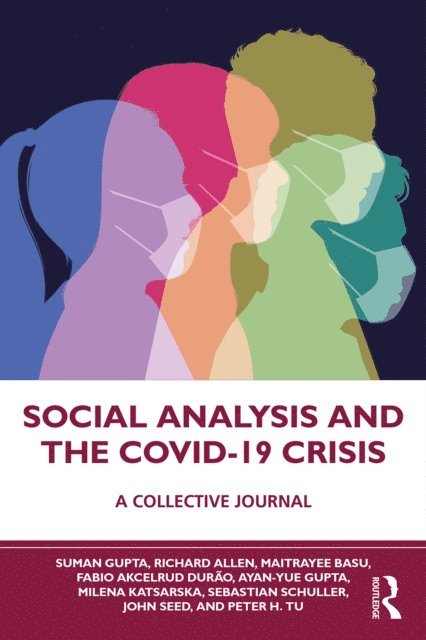
This book is a collective journal of the COVID-19 pandemic. With first-hand accounts of the pandemic as it unfolded, it explores the social and the political through the lens of the outbreak. Featuring contributors located in India, the United States, Brazil, the United Kingdom, Germany, and Bulgaria, the book presents us with simultaneous multiple histories of our time.The volume documents the beginning of social distancing and lockdown measures adopted by countries around the world and analyses how these bore upon prevailing social conditions in specific locations. It presents the authors’ personal observations in a lucid conversational style as they reflect on themes such as the reorganization of political debates and issues, the experience of the marginalized, theodicy, government policy responses, and shifts into digital space under lockdown, all of these under an overarching narrative of the healthcare and economic crisis facing the world. A unique and engaging contribution, this book will be useful to students and researchers of sociology, public health, political economy, public policy, and comparative politics. It will also appeal to general readers interested in pandemic literature.
580 kr
Skickas inom 10-15 vardagar
This book is a collective journal of the COVID-19 pandemic. With first-hand accounts of the pandemic as it unfolded, it explores the social and the political through the lens of the outbreak. Featuring contributors located in India, the United States, Brazil, the United Kingdom, Germany, and Bulgaria, the book presents us with simultaneous multiple histories of our time.The volume documents the beginning of social distancing and lockdown measures adopted by countries around the world and analyses how these bore upon prevailing social conditions in specific locations. It presents the authors’ personal observations in a lucid conversational style as they reflect on themes such as the reorganization of political debates and issues, the experience of the marginalized, theodicy, government policy responses, and shifts into digital space under lockdown, all of these under an overarching narrative of the healthcare and economic crisis facing the world. A unique and engaging contribution, this book will be useful to students and researchers of sociology, public health, political economy, public policy, and comparative politics. It will also appeal to general readers interested in pandemic literature.
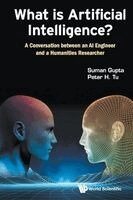
What Is Artificial Intelligence?: A Conversation Between An Ai Engineer And A Humanities Researcher
Inbunden, Engelska, 2020
1 264 kr
Skickas
"A light-hearted, but engaging conversation about one of the key technologies of our age.I recommend this book to anyone interested in the broader issues around Artificial Intelligence."Richard HartleyAustralian National University, Australia This book engages with the title question: what is artificial intelligence (AI)? Instead of reiterating received definitions or surveying the field from a disciplinary perspective, the question is engaged here by putting two standpoints into conversation. The standpoints are different in their disciplinary groundings — i.e. technology and the humanities — and also in their approaches — i.e. applied and conceptual. Peter is an AI engineer: his approach is in terms of how to make AI work. Suman is a humanities researcher: his approach is in terms of what people and academics mean when they say 'AI'.A coherent argument, if not a consensus, develops by putting the two standpoints into conversation. The conversation is presented in 32 short chapters, in turn by Suman and Peter. There are two parts: Part 1, Questioning AI, and Part 2, AI and Government Policy. The first part covers issues such as the meaning of intelligence, automation, evolution, artificial and language. It outlines some of the processes through which these concepts may be technologically grounded as AI. The second part addresses policy considerations that underpin the development of AI and responds to the consequences. Themes taken up here include: rights and responsibilities; data usage and state-level strategies in the USA, UK and China; unemployment and policy futures.
Practical Philosophy Of Ai-assistants: An Engineering-humanities Conversation
Inbunden, Engelska, 2024
1 238 kr
Skickas inom 3-6 vardagar
The Practical Philosophy of AI-Assistants presents a formal conversation between an AI engineer, Peter, and a humanities researcher, Suman. The book ensures that specialist concepts in AI research are made comprehensible to a humanities researcher, while humanities theories can be easily grasped by an AI engineer.The authors establish ground rules to design an AI-Assistant, that is, an AI system that could act as a personal friend, consultant and confidante for every individual, to be integrated into our daily lives. These rules apply to four large areas of AI development: recognition and identification, communication, explanation, and civility.In discussing these areas, this book provides an accessible account of the current state of AI research, as well as adding nuance to the underpinning assumptions informing the relevant technologies, reflecting on their social implications.The broader ideological objective of The Practical Philosophy of AI-Assistants is captured by the phrase 'practical philosophy', which expresses a commitment to bringing AI development to work towards a good life for all.
557 kr
Skickas inom 5-8 vardagar
The Practical Philosophy of AI-Assistants presents a formal conversation between an AI engineer, Peter, and a humanities researcher, Suman. The book ensures that specialist concepts in AI research are made comprehensible to a humanities researcher, while humanities theories can be easily grasped by an AI engineer.The authors establish ground rules to design an AI-Assistant, that is, an AI system that could act as a personal friend, consultant and confidante for every individual, to be integrated into our daily lives. These rules apply to four large areas of AI development: recognition and identification, communication, explanation, and civility.In discussing these areas, this book provides an accessible account of the current state of AI research, as well as adding nuance to the underpinning assumptions informing the relevant technologies, reflecting on their social implications.The broader ideological objective of The Practical Philosophy of AI-Assistants is captured by the phrase 'practical philosophy', which expresses a commitment to bringing AI development to work towards a good life for all.
What Is Artificial Intelligence?: A Conversation Between An Ai Engineer And A Humanities Researcher
Häftad, Engelska, 2020
494 kr
Skickas inom 5-8 vardagar
"A light-hearted, but engaging conversation about one of the key technologies of our age.I recommend this book to anyone interested in the broader issues around Artificial Intelligence."Richard HartleyAustralian National University, Australia This book engages with the title question: what is artificial intelligence (AI)? Instead of reiterating received definitions or surveying the field from a disciplinary perspective, the question is engaged here by putting two standpoints into conversation. The standpoints are different in their disciplinary groundings — i.e. technology and the humanities — and also in their approaches — i.e. applied and conceptual. Peter is an AI engineer: his approach is in terms of how to make AI work. Suman is a humanities researcher: his approach is in terms of what people and academics mean when they say 'AI'.A coherent argument, if not a consensus, develops by putting the two standpoints into conversation. The conversation is presented in 32 short chapters, in turn by Suman and Peter. There are two parts: Part 1, Questioning AI, and Part 2, AI and Government Policy. The first part covers issues such as the meaning of intelligence, automation, evolution, artificial and language. It outlines some of the processes through which these concepts may be technologically grounded as AI. The second part addresses policy considerations that underpin the development of AI and responds to the consequences. Themes taken up here include: rights and responsibilities; data usage and state-level strategies in the USA, UK and China; unemployment and policy futures.