Peter H. Westfall - Böcker
Visar alla böcker från författaren Peter H. Westfall. Handla med fri frakt och snabb leverans.
3 produkter
3 produkter
1 900 kr
Skickas inom 10-15 vardagar
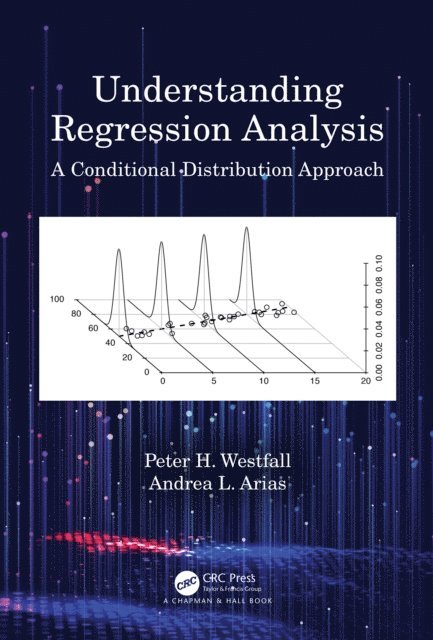
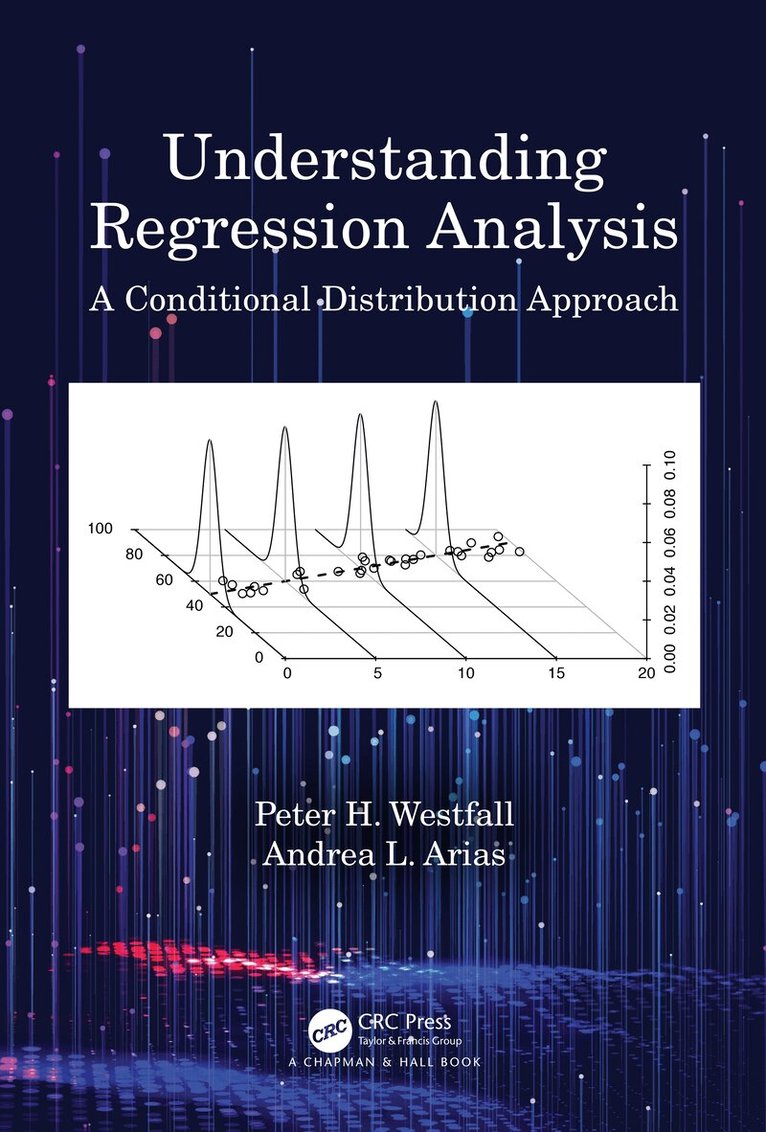
Understanding Regression Analysis unifies diverse regression applications including the classical model, ANOVA models, generalized models including Poisson, Negative binomial, logistic, and survival, neural networks, and decision trees under a common umbrella -- namely, the conditional distribution model. It explains why the conditional distribution model is the correct model, and it also explains (proves) why the assumptions of the classical regression model are wrong. Unlike other regression books, this one from the outset takes a realistic approach that all models are just approximations. Hence, the emphasis is to model Nature’s processes realistically, rather than to assume (incorrectly) that Nature works in particular, constrained ways.Key features of the book include: Numerous worked examples using the R software Key points and self-study questions displayed "just-in-time" within chapters Simple mathematical explanations ("baby proofs") of key concepts Clear explanations and applications of statistical significance (p-values), incorporating the American Statistical Association guidelines Use of "data-generating process" terminology rather than "population" Random-X framework is assumed throughout (the fixed-X case is presented as a special case of the random-X case) Clear explanations of probabilistic modelling, including likelihood-based methods Use of simulations throughout to explain concepts and to perform data analysesThis book has a strong orientation towards science in general, as well as chapter-review and self-study questions, so it can be used as a textbook for research-oriented students in the social, biological and medical, and physical and engineering sciences. As well, its mathematical emphasis makes it ideal for a text in mathematics and statistics courses. With its numerous worked examples, it is also ideally suited to be a reference book for all scientists.
629 kr
Skickas inom 10-15 vardagar
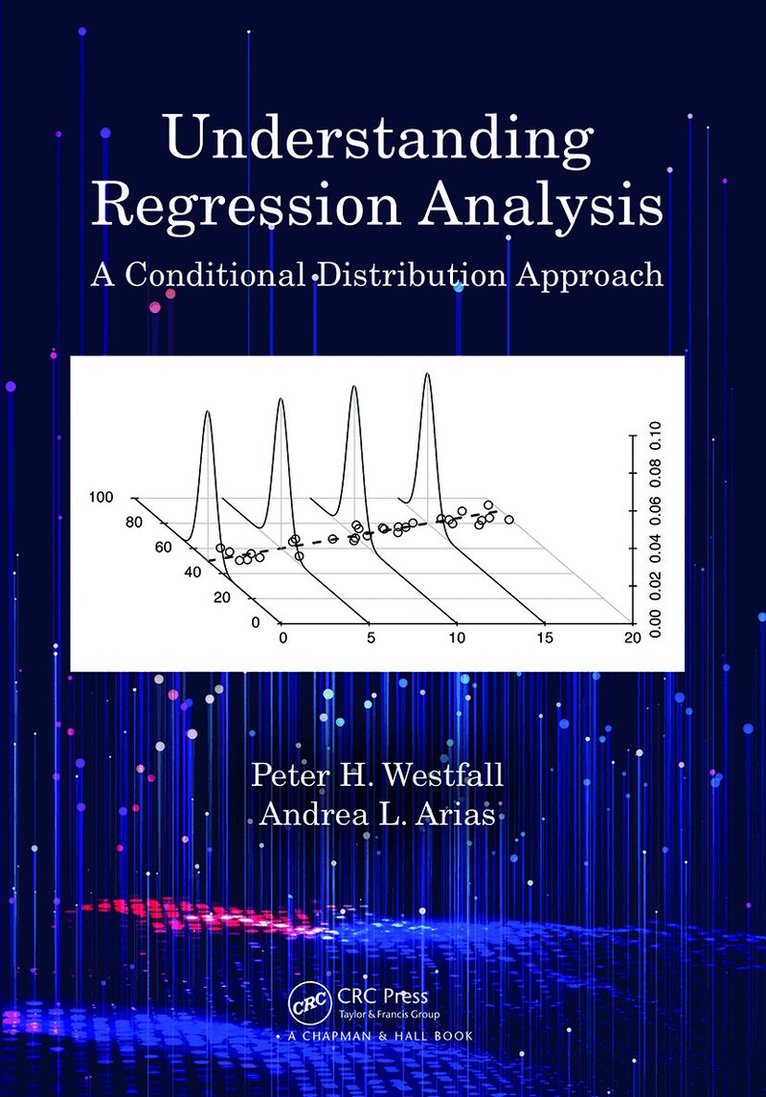
Understanding Regression Analysis unifies diverse regression applications including the classical model, ANOVA models, generalized models including Poisson, Negative binomial, logistic, and survival, neural networks, and decision trees under a common umbrella -- namely, the conditional distribution model. It explains why the conditional distribution model is the correct model, and it also explains (proves) why the assumptions of the classical regression model are wrong. Unlike other regression books, this one from the outset takes a realistic approach that all models are just approximations. Hence, the emphasis is to model Nature’s processes realistically, rather than to assume (incorrectly) that Nature works in particular, constrained ways.Key features of the book include: Numerous worked examples using the R software Key points and self-study questions displayed "just-in-time" within chapters Simple mathematical explanations ("baby proofs") of key concepts Clear explanations and applications of statistical significance (p-values), incorporating the American Statistical Association guidelines Use of "data-generating process" terminology rather than "population" Random-X framework is assumed throughout (the fixed-X case is presented as a special case of the random-X case) Clear explanations of probabilistic modelling, including likelihood-based methods Use of simulations throughout to explain concepts and to perform data analysesThis book has a strong orientation towards science in general, as well as chapter-review and self-study questions, so it can be used as a textbook for research-oriented students in the social, biological and medical, and physical and engineering sciences. As well, its mathematical emphasis makes it ideal for a text in mathematics and statistics courses. With its numerous worked examples, it is also ideally suited to be a reference book for all scientists.
Del 279 - Wiley Series in Probability and Statistics
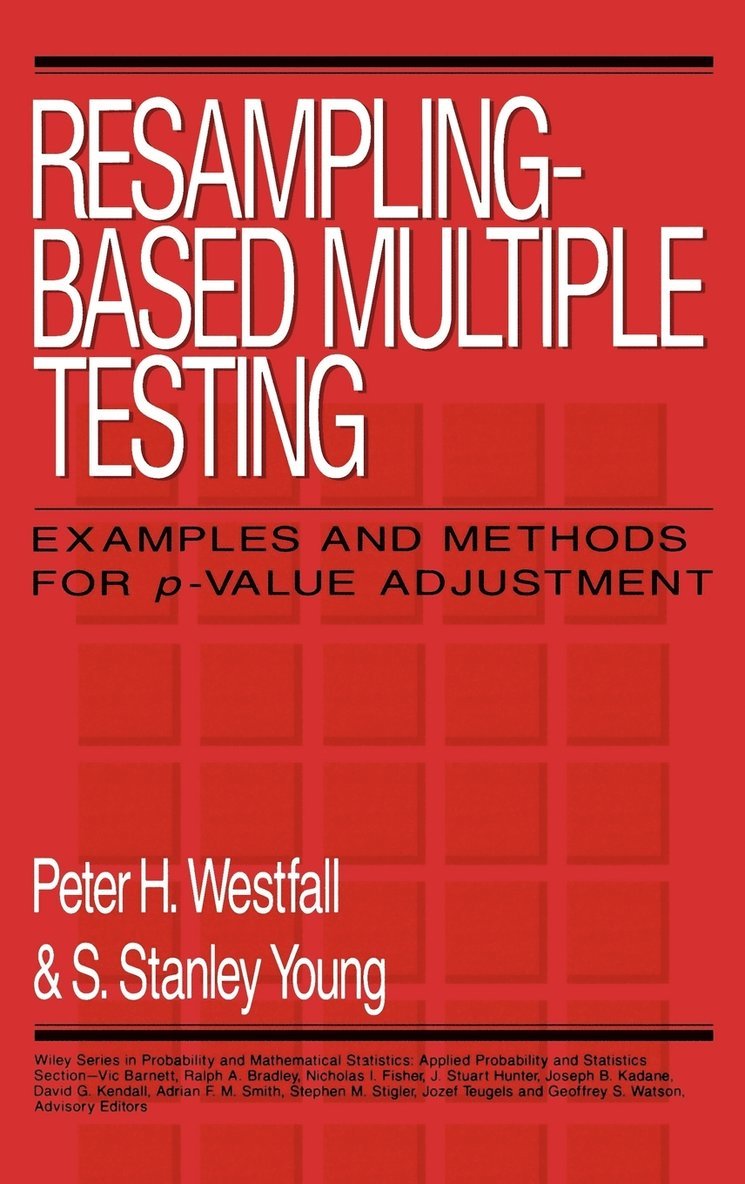
Resampling-Based Multiple Testing
Examples and Methods for p-Value Adjustment
Inbunden, Engelska, 1993
2 390 kr
Skickas inom 7-10 vardagar
Combines recent developments in resampling technology (including the bootstrap) with new methods for multiple testing that are easy to use, convenient to report and widely applicable. Software from SAS Institute is available to execute many of the methods and programming is straightforward for other applications. Explains how to summarize results using adjusted p-values which do not necessitate cumbersome table look-ups. Demonstrates how to incorporate logical constraints among hypotheses, further improving power.