Peter J. Fleming - Böcker
Visar alla böcker från författaren Peter J. Fleming. Handla med fri frakt och snabb leverans.
4 produkter
4 produkter
963 kr
Skickas inom 10-15 vardagar
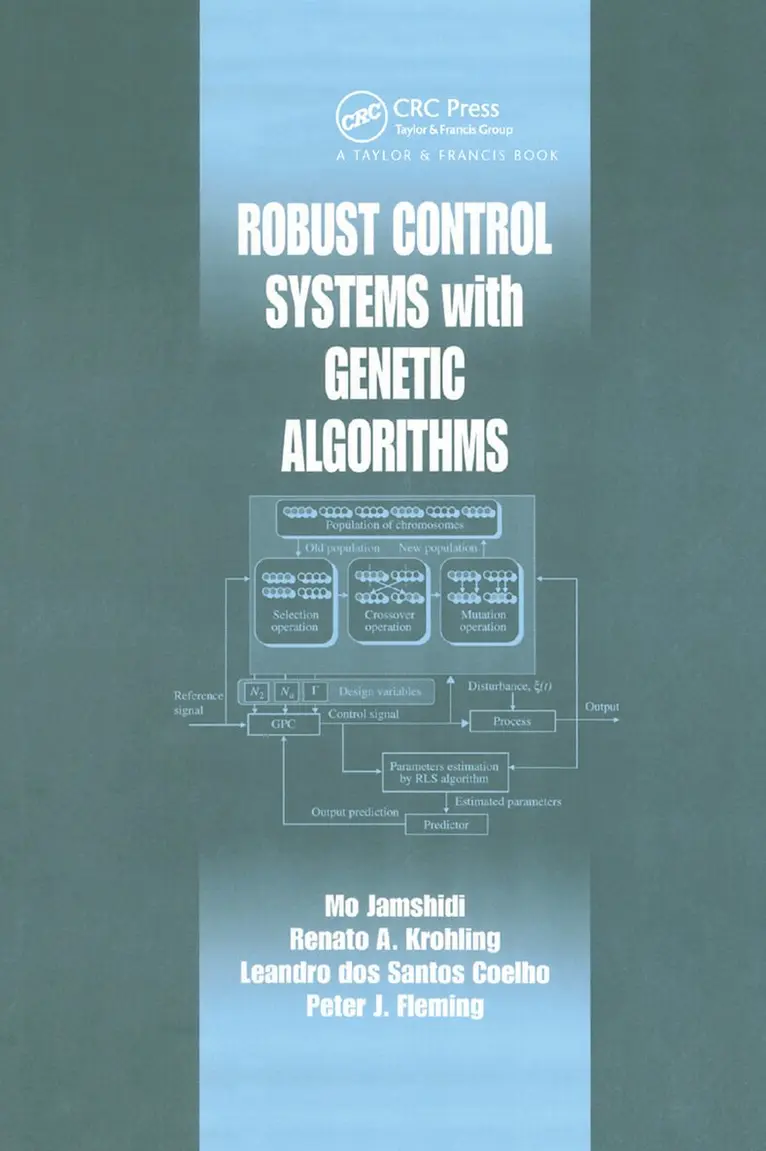
In recent years, new paradigms have emerged to replace-or augment-the traditional, mathematically based approaches to optimization. The most powerful of these are genetic algorithms (GA), inspired by natural selection, and genetic programming, an extension of GAs based on the optimization of symbolic codes.Robust Control Systems with Genetic Algorithms builds a bridge between genetic algorithms and the design of robust control systems. After laying a foundation in the basics of GAs and genetic programming, it demonstrates the power of these new tools for developing optimal robust controllers for linear control systems, optimal disturbance rejection controllers, and predictive and variable structure control. It also explores the application of hybrid approaches: how to enhance genetic algorithms and programming with fuzzy logic to design intelligent control systems. The authors consider a variety of applications, such as the optimal control of robotic manipulators, flexible links and jet engines, and illustrate a multi-objective, genetic algorithm approach to the design of robust controllers with a gasification plant case study.The authors are all masters in the field and clearly show the effectiveness of GA techniques. Their presentation is your first opportunity to fully explore this cutting-edge approach to robust optimal control system design and exploit its methods for your own applications.
1 440 kr
Skickas inom 10-15 vardagar
In recent years, new paradigms have emerged to replace-or augment-the traditional, mathematically based approaches to optimization. The most powerful of these are genetic algorithms (GA), inspired by natural selection, and genetic programming, an extension of GAs based on the optimization of symbolic codes.Robust Control Systems with Genetic Algorithms builds a bridge between genetic algorithms and the design of robust control systems. After laying a foundation in the basics of GAs and genetic programming, it demonstrates the power of these new tools for developing optimal robust controllers for linear control systems, optimal disturbance rejection controllers, and predictive and variable structure control. It also explores the application of hybrid approaches: how to enhance genetic algorithms and programming with fuzzy logic to design intelligent control systems. The authors consider a variety of applications, such as the optimal control of robotic manipulators, flexible links and jet engines, and illustrate a multi-objective, genetic algorithm approach to the design of robust controllers with a gasification plant case study.The authors are all masters in the field and clearly show the effectiveness of GA techniques. Their presentation is your first opportunity to fully explore this cutting-edge approach to robust optimal control system design and exploit its methods for your own applications.
540 kr
Skickas inom 10-15 vardagar
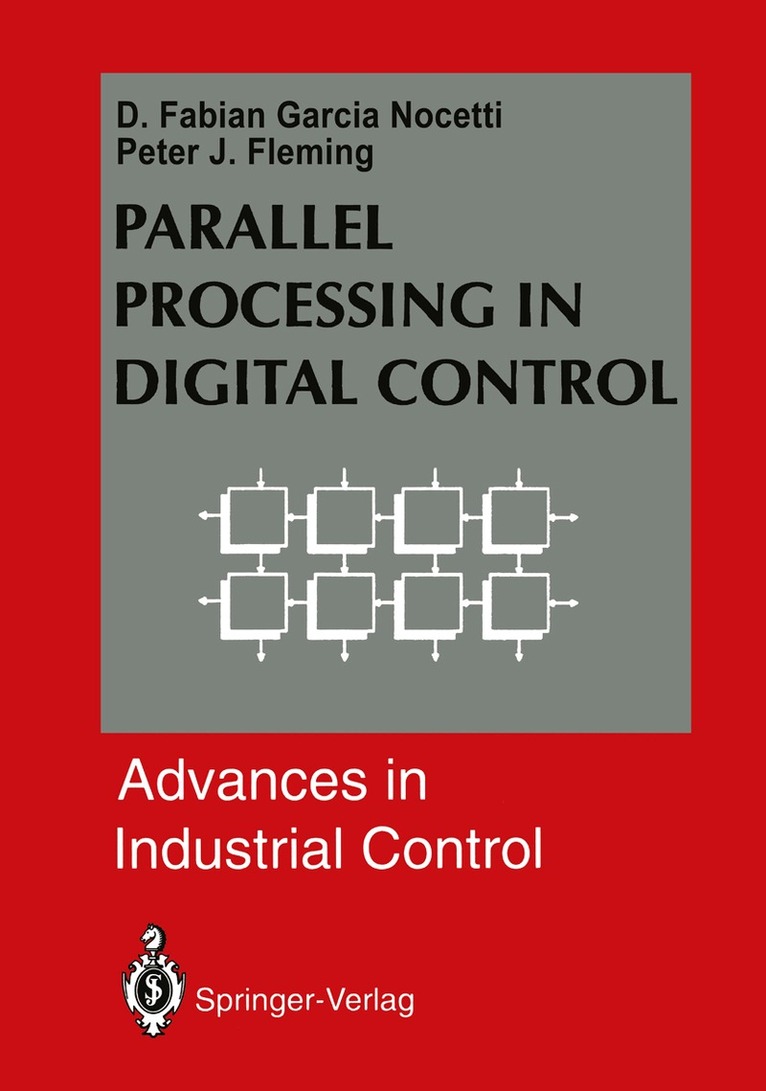
Parallel Processing in Digital Control is a volume to be published in the new Advances in Industrial Control series, edited by Professor M.J. Grimble and Dr. M.A. Johnson of the Industrial Control Unit, University of Strathclyde. The growing complexity of digital control systems in such areas as robotics, flight control and engine control has created a demand for faster and more reliable systems. This book examines how parallel processing can satisfy these requirements. Following a survey of parallel computer architectures, MIMD (Multiple Instruction Multiple Data) machines are identified as suitable systems for digital control problems, which are characterised by a mixture of regular and irregular algorithmic tasks. An example of a typical MIMD architecture, suitable for real-time control, (the Inmos Transputer) is introduced together with its associated parallel programming language (Occam). The key problem in implementing parallel software is associated with mapping parallel tasks onto physical processors. In this book a variety of schemes are described and assessed to help illustrate potential areas of difficulty for the real-time control software engineer. Solutions are proposed and tested on a flight control case study example. Recognising the widespread acceptance of MATLAB and its derivatives for computer aided control system design, this book demonstrates how mapping strategies can be realised in this environment and integrated with a transputer development system for on-line performance evaluation. A case study example demonstrates the power of this approach and important issues are highlighted. Readers will experience the advantages of parallel processing in digital control while being made aware of the key factors to be considered in the development of an effective solution. Practising control engineers and graduate/post-graduate students will find the book of particular interest and benefit.
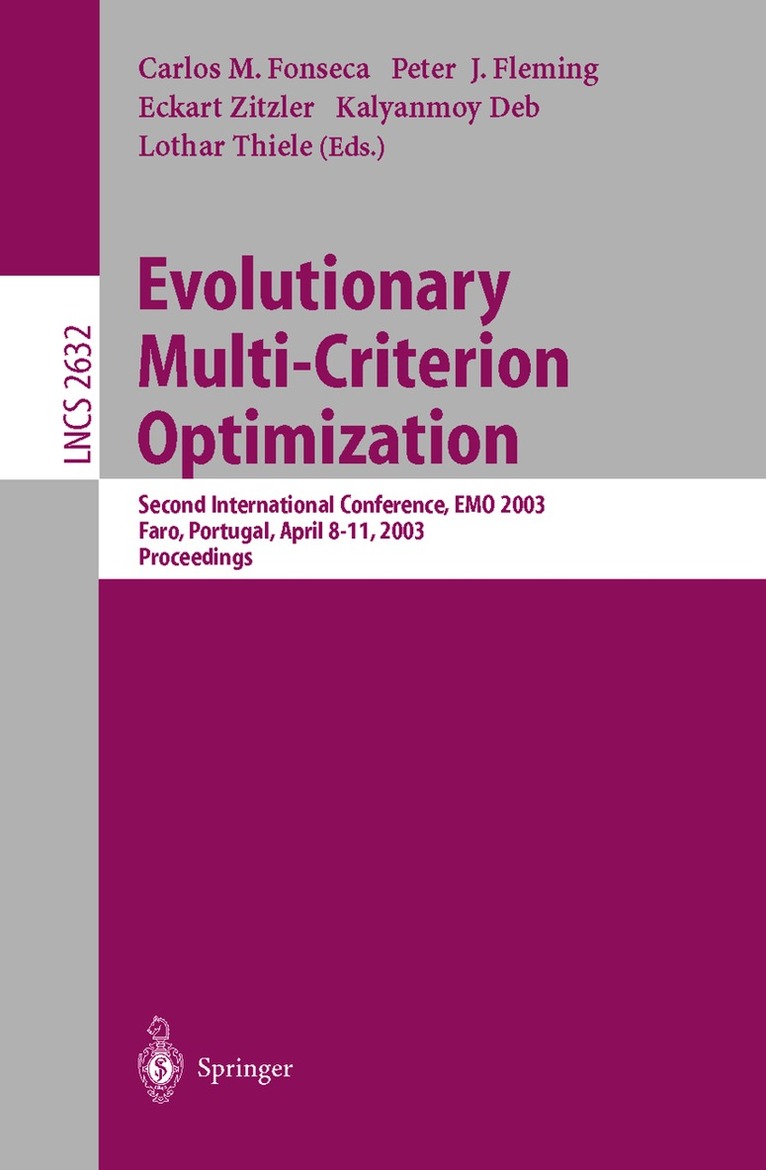
Evolutionary Multi-Criterion Optimization
Second International Conference, EMO 2003, Faro, Portugal, April 8-11, 2003, Proceedings
Häftad, Engelska, 2003
2 118 kr
Skickas inom 10-15 vardagar
The 2nd International Conference on Evolutionary Multi-Criterion Optimi- tion (EMO 2003) was held on April 8-11, 2003, at the University of the Algarve in Faro, Portugal. This was the second international conference dedicated en- rely to this important topic, following the very successful EMO 2001 conference, whichwasheldinZuric .. h,Switzerland,inMarch2001.EMO2003wasco-located with the IFAC International Conference on Intelligent Control Systems and S- nal Processing (ICONS 2003), exposing EMO to a wider audience of scientists and engineers. The EMO 2003 scienti?c program included two keynote addresses, one given byDavidScha?eronoptimizationandmachinelearninginindustry,andanother delivered by Pekka Korhonen on multiple-criteria decision making. In addition, three tutorials were presented, one on multicriterion decision analysis by - lerie Belton, another on multiobjective evolutionary algorithms by Kalyanmoy Deb, and a third on multiple objective metaheuristics by Andrzej Jaszkiewicz. The President of the Portuguese Innovation Agency, Prof. Jo" ao Silveira Lobo, and the President of the Portuguese Foundation for Science and Technology, Prof.Fernando Ramoa Ribeiro, attended the opening ceremony and the closing ceremony, respectively. In response to the call for papers, 100 full-length papers were submitted from 27 countries. Fifty-six papers were accepted for presentation at the conference after thorough reviewing by members of the program committee and they are contained in this volume. April 2003 Carlos M. Fonseca, Peter J. Fleming, Eckart Zitzler, Kalyanmoy Deb, and Lothar Thiele Organization EMO 2003 was organized by CSI (Centre for Intelligent Systems, University of the Algarve, Portugal) with the support of EvoNet (European Network of Excellence in Evolutionary Computing).