Peter Karavites – författare
Visar alla böcker från författaren Peter Karavites. Handla med fri frakt och snabb leverans.
3 produkter
3 produkter
Inbunden, Engelska, 2013
1 708 kr
Skickas inom 5-8 vardagar
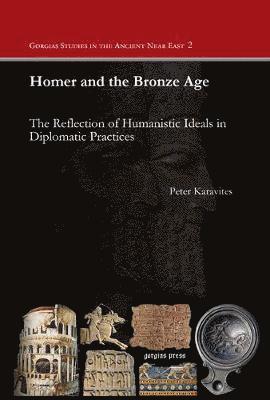
Peter Karavites presents a revisionist overview of Homeric scholarship, whose purpose is to bridge the gap between the “positivist” and “negativist” theories dominant in the greater part of the twentieth century. His investigation derives new insights from Homer’s text and solves the age old question of the relationship between Homer and the Mycenaean age.
E-bok
PDF, Engelska, 20153 126 kr
Läs direkt efter köp
This study deals with Clement of Alexandria's interpretation of evil and free will in the context of the rising Christianity, the influence of Near Eastern and Greek thought on him, his differences from St. Augustine, and how his interpretation affected the rise of the Eastern Christian thought.The book also treats briefly the subject of man's personal aim in life perceived by Clement as the supersession of his nature. Failure to realize this personal aim in life leads to alienation from God, and death.The moral dilemma of Clement's interpretation of evil as failure of life's aim is not a conventional explanation of good and evil but something much more: the option between real life and death. Consequently, Clement's idea of evil refers to existential problems and ontological realities.
E-bok
PDF, Engelska, 20182 941 kr
Läs direkt efter köp
This book challenges the current view of the Homeric epics that they reflect only the institutions and ideas of the Dark Ages, during which they were composed, telling us nothing about the Mycenaean Age preceding it. Comparing evidence from the Near East with the Homeric corpus, Peter Karavites argues that the epics actually contain much that harks back to the Mycenaean Age, and that the two eras may not be completely discontinuous after all.Most contemporary scholars maintain that the mighty Mycenaean period was almost completely separated from the Dark Ages and that virtually no evidence of the former remains, with the exception of the archeological finds and the meager testimony of the Linear B tablets. However, the Near Eastern evidence about treaties and other forms of promising suggests that the Iliad and Odyssey may indeed provide historical pictures of the Mycenaean times featured in their narratives.