Peter Katona - Böcker
Visar alla böcker från författaren Peter Katona. Handla med fri frakt och snabb leverans.
4 produkter
4 produkter
2 570 kr
Skickas inom 10-15 vardagar
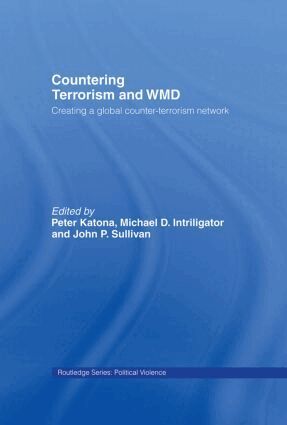
This volume shows us that in order to deal with today’s Fourth Generation asymmetric warfare by terrorist groups using conventional arms and weapons of mass destruction, we need a new ‘global networked’ approach.The contributors examine the various attempts that have been made to counter the latest wave of terrorism, including the US strikes against Afghanistan and Iraq, President George W. Bush's declaration of a ‘war against terrorism’, the creation of the US Department of Homeland Security, and the 9/11 Commission. Drawing from our experience with ‘Terrorism Early Warning’ and the co-production of counter-terrorism intelligence, this book explains the need for such a network and shows how it could be formed. It compiles the opinions of experts from clinical medicine, public policy, law enforcement and the military. These expert contributors identify the nature of a global counter-terrorism network, show how it could be created, and provide clear guidelines for gauging its future effectiveness. This book will be of great interest to all students of terrorism studies, US national security, international relations, and political science in general.
810 kr
Skickas inom 10-15 vardagar
This volume shows us that in order to deal with today’s Fourth Generation asymmetric warfare by terrorist groups using conventional arms and weapons of mass destruction, we need a new ‘global networked’ approach.The contributors examine the various attempts that have been made to counter the latest wave of terrorism, including the US strikes against Afghanistan and Iraq, President George W. Bush's declaration of a ‘war against terrorism’, the creation of the US Department of Homeland Security, and the 9/11 Commission. Drawing from our experience with ‘Terrorism Early Warning’ and the co-production of counter-terrorism intelligence, this book explains the need for such a network and shows how it could be formed. It compiles the opinions of experts from clinical medicine, public policy, law enforcement and the military. These expert contributors identify the nature of a global counter-terrorism network, show how it could be created, and provide clear guidelines for gauging its future effectiveness. This book will be of great interest to all students of terrorism studies, US national security, international relations, and political science in general.
2 165 kr
Skickas inom 10-15 vardagar
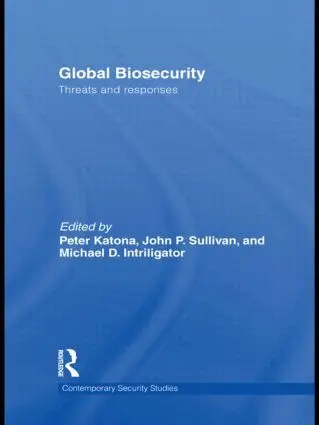
This book explores a range of biohealth and biosecurity threats, places them in context, and offers responses and solutions from global and local, networked and pyramidal, as well as specialized and interdisciplinary perspectives. Specifically covering bioterrorism, emerging infectious diseases, pandemic disease preparedness and remediation, agroterroism, food safety, and environmental issues, the contributors demonstrate that to counter terrorism of any kind, a global, networked, and multidisciplinary approach is essential. To be successful in biosecurity, this book argues it is necessary to extend partnerships, cooperation, and co-ordination between public health, clinical medicine, private business, law enforcement and other agencies locally, nationally and internationally. Internationally, a clear understanding is needed of what has happened in past epidemics and what was accomplished in past bioprograms (in Britain, South Africa, Russia, for example). This book also assesses how, with the right technology and motivation, both a state and a non-state actor could initiate an extremely credible biothreat to security at both local and national levels.This book will be of much interest to students, researchers and practitioners of security studies, public health, public policy and IR in general.Peter Katona is Associate Professor of Clinical Medicine at the David Geffen School of Medicine at UCLA in Infectious Diseases. He is co-founder of Biological Threat Mitigation, a bioterror consulting firm.John P. Sullivan is a lieutenant with the Los Angeles Sheriff’s Department. He is also a researcher focusing on terrorism, conflict disaster, intelligence studies, and urban operations. He is co-founder of the Los Angeles Terrorism Early Warning (TEW) Group.Michael D. Intriligator is Professor of Economics at the University of California, Los Angeles (UCLA). He is also Professor of Political Science, Professor of Public Policy in the School of Public Policy and Social Research, and Co-Director of the Jacob Marschak Interdisciplinary Colloquium on Mathematics in the Behavioral Sciences, all at UCLA.
810 kr
Skickas inom 10-15 vardagar
This book explores a range of biohealth and biosecurity threats, places them in context, and offers responses and solutions from global and local, networked and pyramidal, as well as specialized and interdisciplinary perspectives. Specifically covering bioterrorism, emerging infectious diseases, pandemic disease preparedness and remediation, agroterroism, food safety, and environmental issues, the contributors demonstrate that to counter terrorism of any kind, a global, networked, and multidisciplinary approach is essential. To be successful in biosecurity, this book argues it is necessary to extend partnerships, cooperation, and co-ordination between public health, clinical medicine, private business, law enforcement and other agencies locally, nationally and internationally. Internationally, a clear understanding is needed of what has happened in past epidemics and what was accomplished in past bioprograms (in Britain, South Africa, Russia, for example). This book also assesses how, with the right technology and motivation, both a state and a non-state actor could initiate an extremely credible biothreat to security at both local and national levels.This book will be of much interest to students, researchers and practitioners of security studies, public health, public policy and IR in general.Peter Katona is Associate Professor of Clinical Medicine at the David Geffen School of Medicine at UCLA in Infectious Diseases. He is co-founder of Biological Threat Mitigation, a bioterror consulting firm.John P. Sullivan is a lieutenant with the Los Angeles Sheriff’s Department. He is also a researcher focusing on terrorism, conflict disaster, intelligence studies, and urban operations. He is co-founder of the Los Angeles Terrorism Early Warning (TEW) Group.Michael D. Intriligator is Professor of Economics at the University of California, Los Angeles (UCLA). He is also Professor of Political Science, Professor of Public Policy in the School of Public Policy and Social Research, and Co-Director of the Jacob Marschak Interdisciplinary Colloquium on Mathematics in the Behavioral Sciences, all at UCLA.