Peter Königs – författare
Visar alla böcker från författaren Peter Königs. Handla med fri frakt och snabb leverans.
4 produkter
4 produkter
Inbunden, Engelska, 2022
1 351 kr
Skickas inom 5-8 vardagar
One the most interesting debates in moral philosophy revolves around the significance of empirical moral psychology for moral philosophy. Genealogical arguments that rely on empirical findings about the origins of moral beliefs, so-called debunking arguments, take center stage in this debate. Looking at debunking arguments based on evidence from evolutionary moral psychology, experimental ethics and neuroscience, this book explores what ethicists can learn from the science of morality, and what they cannot. Among other things, the book offers a new take on the deontology/utilitarianism debate, discusses the usefulness of experiments in ethics, investigates whether morality should be thought of as a problem-solving device, shows how debunking arguments can tell us something about the structure of philosophical debate, and argues that debunking arguments lead to both moral and prudential skepticism. Presenting a new picture of the relationship between empirical moral psychology and moral philosophy, this book is essential reading for moral philosophers and moral psychologists alike.
Häftad, Engelska, 2023
202 kr
Skickas inom 5-8 vardagar
One the most interesting debates in moral philosophy revolves around the significance of empirical moral psychology for moral philosophy. Genealogical arguments that rely on empirical findings about the origins of moral beliefs, so-called debunking arguments, take center stage in this debate. Looking at debunking arguments based on evidence from evolutionary moral psychology, experimental ethics and neuroscience, this book explores what ethicists can learn from the science of morality, and what they cannot. Among other things, the book offers a new take on the deontology/utilitarianism debate, discusses the usefulness of experiments in ethics, investigates whether morality should be thought of as a problem-solving device, shows how debunking arguments can tell us something about the structure of philosophical debate, and argues that debunking arguments lead to both moral and prudential skepticism. Presenting a new picture of the relationship between empirical moral psychology and moral philosophy, this book is essential reading for moral philosophers and moral psychologists alike.
Häftad, Tyska
166 kr
Skickas inom 3-6 vardagar
Inbunden, Engelska, 2026
2 163 kr
Kommande
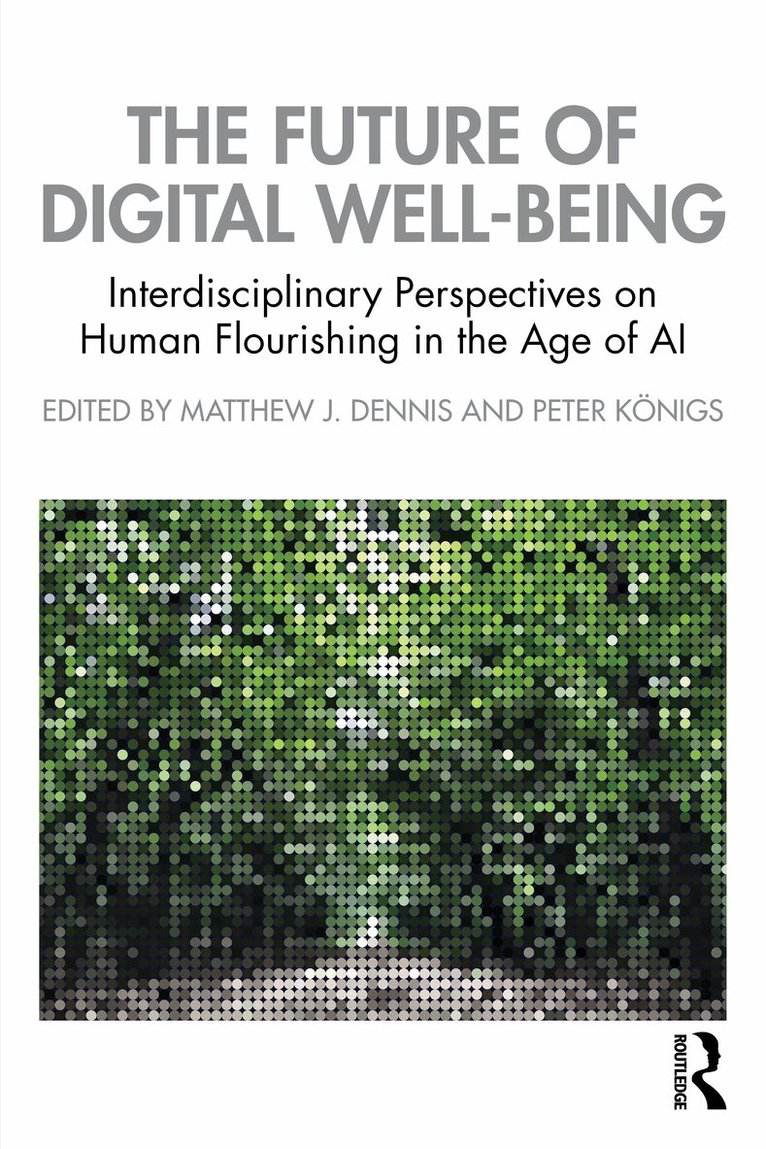
The Future of Digital Well-Being explores how digital technologies and artificial intelligence are reshaping human flourishing and the meaning of the good life, with insights from philosophy, ethics, psychology, and communication science.Interest in digital well-being has increased in recent years as researchers from many disciplines have acknowledged the power of emerging technologies to dramatically affect our lives. Studying digital well-being requires us to engage with age-old questions about the nature of human flourishing and how to cultivate it, while simultaneously striving to understand how artificial intelligence and other digital technologies are changing the very nature and meaning of the good life. To do this, the contributors use conceptual and empirical tools from a wide range of disciplines, including philosophy, psychology, and communication science, to illuminate the importance of digital well-being in the age of artificial intelligence. In the final part of the book, the chapters introduce ethical perspectives from non-Western traditions, showing how designing effectively for digital well-being requires that we make use of global conceptual resources.This book is designed to appeal to an international audience, with contributors and perspectives drawn from both Western and non-Western contexts. Practitioners and industry professionals interested in the ethical implications and practical applications of digital technologies will find this book useful, and it will be of particular interest to those engaged in interdisciplinary research on digital well-being, including philosophy, psychology, communication studies, ethics, and STS.