Peter M. B. Cahusac – författare
712 kr
Skickas inom 3-6 vardagar
1 619 kr
Läs direkt efter köp
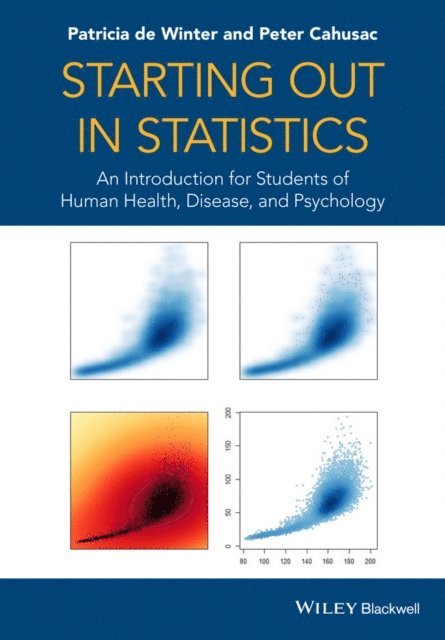
To form a strong grounding in human-related sciences it is essential for students to grasp the fundamental concepts of statistical analysis, rather than simply learning to use statistical software. Although the software is useful, it does not arm a student with the skills necessary to formulate the experimental design and analysis of a research project in later years of study or indeed, if working in research.
This textbook deftly covers a topic that many students find difficult. With an engaging and accessible style it provides the necessary background and tools for students to use statistics confidently and creatively in their studies and future career.
Key features:
Up-to-date methodology, techniques and current examples relevant to the analysis of large data sets, putting statistics in context Strong emphasis on experimental design Clear illustrations throughout that support and clarify the text A companion website with explanations on how to apply learning to related software packagesThis is an introductory book written for undergraduate biomedical and social science students with a focus on human health, interactions, and disease. It is also useful for graduate students in these areas, and for practitioners requiring a modern refresher.
503 kr
Läs direkt efter köp
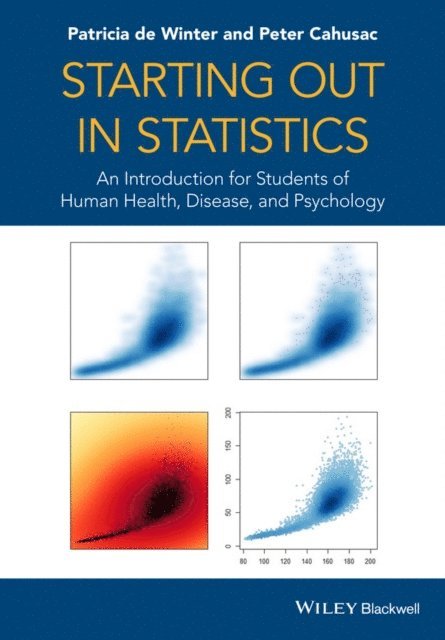
To form a strong grounding in human-related sciences it is essential for students to grasp the fundamental concepts of statistical analysis, rather than simply learning to use statistical software. Although the software is useful, it does not arm a student with the skills necessary to formulate the experimental design and analysis of a research project in later years of study or indeed, if working in research.
This textbook deftly covers a topic that many students find difficult. With an engaging and accessible style it provides the necessary background and tools for students to use statistics confidently and creatively in their studies and future career.
Key features:
Up-to-date methodology, techniques and current examples relevant to the analysis of large data sets, putting statistics in context Strong emphasis on experimental design Clear illustrations throughout that support and clarify the text A companion website with explanations on how to apply learning to related software packagesThis is an introductory book written for undergraduate biomedical and social science students with a focus on human health, interactions, and disease. It is also useful for graduate students in these areas, and for practitioners requiring a modern refresher.
1 189 kr
Skickas inom 5-8 vardagar
1 328 kr
Läs direkt efter köp
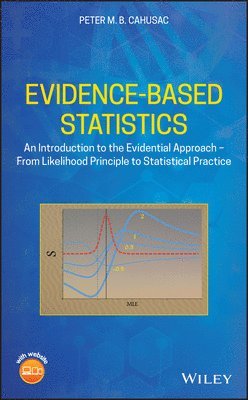
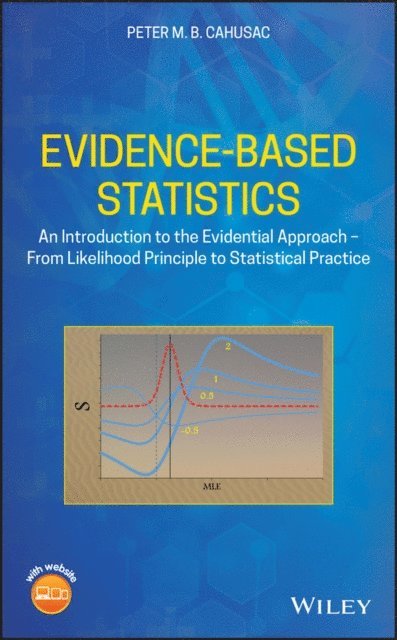
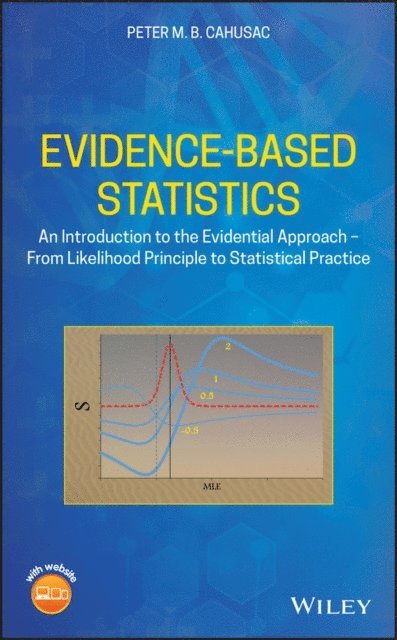
Evidence-Based Statistics: An Introduction to the Evidential Approach – from Likelihood Principle to Statistical Practice provides readers with a comprehensive and thorough guide to the evidential approach in statistics. The approach uses likelihood ratios, rather than the probabilities used by other statistical inference approaches. The evidential approach is conceptually easier to grasp, and the calculations more straightforward to perform. This book explains how to express data in terms of the strength of statistical evidence for competing hypotheses.
The evidential approach is currently underused, despite its mathematical precision and statistical validity. Evidence-Based Statistics is an accessible and practical text filled with examples, illustrations and exercises. Additionally, the companion website complements and expands on the information contained in the book.
While the evidential approach is unlikely to replace probability-based methods of statistical inference, it provides a useful addition to any statistician’s "bag of tricks." In this book:
It explains how to calculate statistical evidence for commonly used analyses, in a step-by-step fashion Analyses include: t tests, ANOVA (one-way, factorial, between- and within-participants, mixed), categorical analyses (binomial, Poisson, McNemar, rate ratio, odds ratio, data that''s ''too good to be true'', multi-way tables), correlation, regression and nonparametric analyses (one sample, related samples, independent samples, multiple independent samples, permutation and bootstraps) Equations are given for all analyses, and R statistical code provided for many of the analyses Sample size calculations for evidential probabilities of misleading and weak evidence are explained Useful techniques, like Matthews''s critical prior interval, Goodman''s Bayes factor, and Armitage''s stopping rule are describedRecommended for undergraduate and graduate students in any field that relies heavily on statistical analysis, as well as active researchers and professionals in those fields, Evidence-Based Statistics: An Introduction to the Evidential Approach – from Likelihood Principle to Statistical Practice belongs on the bookshelf of anyone who wants to amplify and empower their approach to statistical analysis.
1 328 kr
Läs direkt efter köp
Evidence-Based Statistics: An Introduction to the Evidential Approach – from Likelihood Principle to Statistical Practice provides readers with a comprehensive and thorough guide to the evidential approach in statistics. The approach uses likelihood ratios, rather than the probabilities used by other statistical inference approaches. The evidential approach is conceptually easier to grasp, and the calculations more straightforward to perform. This book explains how to express data in terms of the strength of statistical evidence for competing hypotheses.
The evidential approach is currently underused, despite its mathematical precision and statistical validity. Evidence-Based Statistics is an accessible and practical text filled with examples, illustrations and exercises. Additionally, the companion website complements and expands on the information contained in the book.
While the evidential approach is unlikely to replace probability-based methods of statistical inference, it provides a useful addition to any statistician’s "bag of tricks." In this book:
It explains how to calculate statistical evidence for commonly used analyses, in a step-by-step fashion Analyses include: t tests, ANOVA (one-way, factorial, between- and within-participants, mixed), categorical analyses (binomial, Poisson, McNemar, rate ratio, odds ratio, data that''s ''too good to be true'', multi-way tables), correlation, regression and nonparametric analyses (one sample, related samples, independent samples, multiple independent samples, permutation and bootstraps) Equations are given for all analyses, and R statistical code provided for many of the analyses Sample size calculations for evidential probabilities of misleading and weak evidence are explained Useful techniques, like Matthews''s critical prior interval, Goodman''s Bayes factor, and Armitage''s stopping rule are describedRecommended for undergraduate and graduate students in any field that relies heavily on statistical analysis, as well as active researchers and professionals in those fields, Evidence-Based Statistics: An Introduction to the Evidential Approach – from Likelihood Principle to Statistical Practice belongs on the bookshelf of anyone who wants to amplify and empower their approach to statistical analysis.