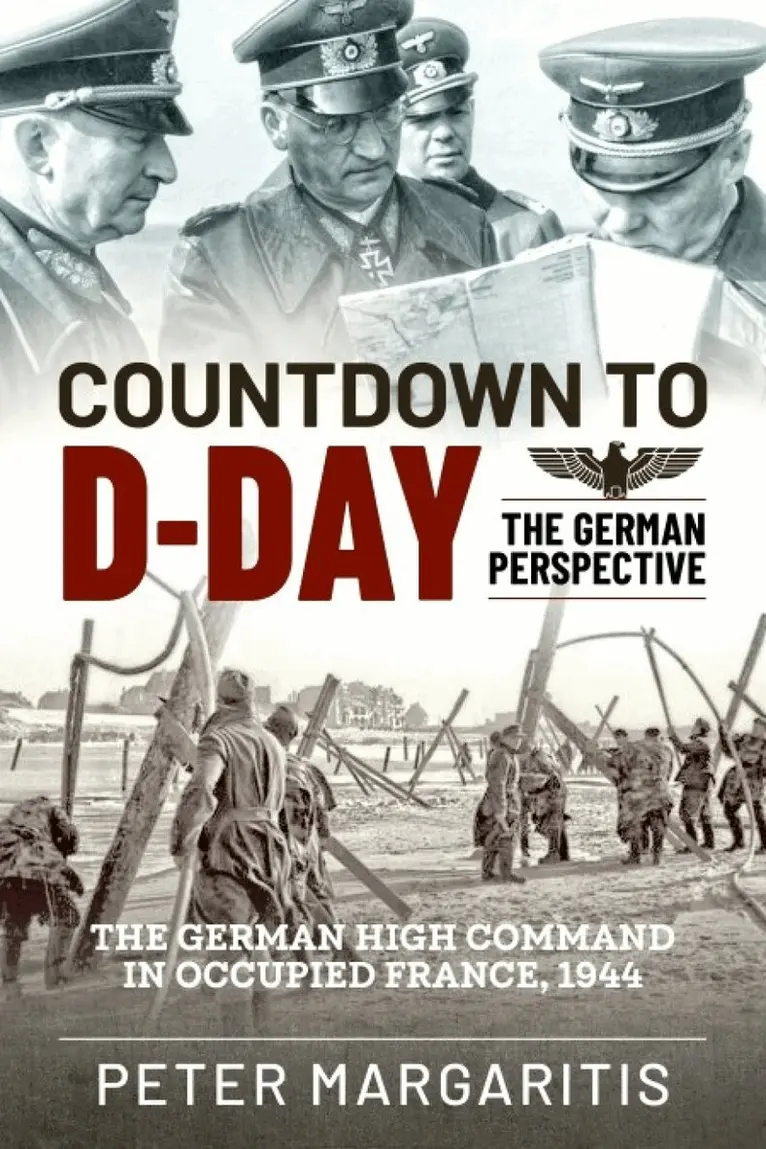
An accurate, exciting diary-like chronicle of the day-to-day machinations of the German generals as they struggle to prepare to meet the enemy in the West.In December 1943 with the rising realization that the Allies are planning to invade Fortress Europe, Field Marshal Erwin Rommel is assigned the title of General Inspector for the Atlantic Wall. His mission is to assess their readiness.What he finds disgusts him. The famed Atlantikwall is nothing but a paper tiger, woefully unprepared for the forces being massed across the English Channel. His task—to turn back the Allied invasion—already seems hopeless.His superior, theater commander, crusty old Field Marshal Gerd von Rundstedt, who had led the Reich to victory in the early years of the war, is now fed up with the whole Nazi regime. He lives comfortably in a plush villa in a quiet Paris suburb, waiting for the inevitable Allied invasion that will bring about their final defeat.General der Artillerie Erich Marcks, badly injured in Russia, is the corps commander on the ground in Normandy, trying to build up the coastal defenses with woefully inadequate supplies and a shortage of men to fulfill Rommel's demands. Marcks is convinced that the Allies will land in his sector, but no one higher up the chain of command seems interested in what he thinks.Meanwhile, aristocratic Generaloberst Hans von Salmuth, an outspoken, cocky, experienced veteran of the Russian Front, has been given responsibility for defending Fifteenth Army's coastline at Calais—the area that the High Command thinks is most likely to be the Allies' objective. General der Panzertruppen Geyr von Schweppenburg is preparing the élite panzer divisions for what may lie ahead. Generalmajor Max Pemsel struggles in coordinating efforts to prepare Seventh Army, suspecting that if an invasion comes he will be the hub of the German response. All of the Western Theater commanders are subject to the whims of Adolf Hitler, hundreds of miles away but continually issuing orders increasingly divorced from the reality of the war.Countdown to D-Day takes a detailed day-to-day journal approach tracing the daily activities and machinations of the German High Command as they try to prepare for the Allied invasion.

A memoir of a tough childhood—and tough combat—by an "adventurous, lively, outspoken, opinionated" WWII Marine veteran (Columbus Dispatch). On September 15, 1944, the US First Marine Division landed on a small island in the Central Pacific called Peleliu as a prelude to the liberation of the Philippines. Among the first wave of Marines that hit the beach that day was twenty-two-year-old George Peto. Growing up on an Ohio farm, George always preferred being outdoors and exploring. This made school a challenge, but his hunting, fishing, and trapping skills helped put food on his family''s table. As a poor teenager living in a rough area, he got into regular brawls, and he found holding down a job hard because of his wanderlust. After working out west with the CCC, he decided that joining the Marines offered him the opportunity for adventure, plus three square meals a day—so he and his brother joined the Corps in 1941, just a few months before Pearl Harbor. Following boot camp and training, he was initially assigned to various guard units until he was shipped out to the Pacific and assigned to the 1st Marines. His first combat experience was the landing at Finschhaven, followed by Cape Gloucester. Then as a Forward Observer, he went ashore in one of the lead amtracs at Peleliu and saw fierce fighting for a week before the regiment was relieved due to massive casualties. Six months later, his division became the immediate reserve for the initial landing on Okinawa. They encountered no resistance when they came ashore, but would go on to fight on Okinawa for over six months. This is the wild and remarkable story of an "Old Breed" Marine—his youth in the Great Depression, his training and combat in the Pacific, and his life after the war, told in his own words.
A detailed history and analysis of the most controversial amphibious operation in the Pacific during WWII: the Battle for Peleliu. On September 15, 1944, the United States invaded the tiny Pacific island of Peleliu, located at the southern end of the Palau Islands. Boasting a large airfield from which the Americans could mount bomber campaigns, Peleliu was a strategically essential part of Gen. MacArthur''s long-awaited liberation of the Philippines. With the famed 1st Marine Division making the amphibious assault, Pacific High Command was confident that victory would be theirs in just a few days. They were drastically wrong. A mere week after landing, having sustained terrific losses in fierce combat, the 1st Marine Regiment was withdrawn. The entire division would be out of action for six months after sustaining the highest unit losses in Marine Corps history. This book analyzes the many things that went wrong in the Battle for Peleliu, and in doing so, corrects several earlier accounts of the campaign. It includes a comprehensive account of the presidential summit that determined the operation, details of how new weapons were deployed, a new enemy strategy, and command failure in what became the most controversial amphibious operation in the Pacific during WWII.
A WWII historian takes readers inside the day-to-day drama of Nazi military commanders in occupied Europe as they brace for the Allied invasion. In December of 1943, with Allied forces planning to invade Fortress Europe, Field Marshal Erwin Rommel is named General Inspector of the Atlantic Wall. His mission is to assess their readiness, and what he finds disgusts him. The famed Atlantikwall is nothing but a paper tiger, woefully unprepared for the forces being massed across the English Channel. His task—to turn back the Allied invasion—already seems hopeless. The crust old theater commander, Field Marshal Gerd von Rundstedt, awaits the inevitable defeat from a plush villa outside Paris. The corps commander on the ground in Normandy attempts to fulfill Rommel''s demands, but supplies are woefully inadequate. Meanwhile, all focus is on defending the coastline at Calais—the area that High Command believes to be the Allies'' most likely objective. All of the Western Theater commanders are subject to the whims of Adolf Hitler, hundreds of miles away and issuing orders that are increasingly divorced from the reality of the war. Countdown to D-Day takes a detailed day-to-day journal approach tracing the daily activities and machinations of the German High Command as they try to prepare for the Allied invasion.