Peter Nakaji - Böcker
Visar alla böcker från författaren Peter Nakaji. Handla med fri frakt och snabb leverans.
9 produkter
9 produkter
1 182 kr
Skickas inom 5-8 vardagar
Part of the Neurosurgery by Example series, this volume on cerebrovascular neurosurgery presents exemplary cases in which renowned authors guide readers through the assessment and planning, decision making, surgical procedure, after care, and complication management of common and uncommon disorders. The cases explore the spectrum of clinical diversity and complexity within cerebrovascular neurosurgery, including aneurysms, ischemic/occlusive disease, arteriovenous malformation, dural arteriovenous fistula, and more. Each chapter also contains 'pivot points' that illuminate changes required to manage patients in alternate or atypical situations, and pearls for accurate diagnosis, successful treatment, and effective complication management. Containing a focused review of medical evidence and expected outcomes, Cerebrovascular Neurosurgery is appropriate for neurosurgeons who wish to learn more about a subspecialty, and those preparing for the American Board of Neurological Surgery oral examination.
Ablative Therapies in Neurosurgery, An Issue of Neurosurgery Clinics of North America
Inbunden, Engelska, 2024
1 376 kr
Skickas inom 7-10 vardagar
In this issue of Neurosurgery Clinics, guest editors Drs. Peter Nakaji and Oliver Bozinov bring their considerable expertise to the topic of Ablative Therapies in Neurosurgery. Top experts in the field cover key topics such as MR-guided laser interstitial thermal therapy for infield of brain metastases; awake LITT; high frequency ultrasound ablation in neurosurgery; current application of ablative therapies for trigeminal neuralgia; and more.
4 557 kr
Skickas inom 7-10 vardagar
The complex, highly technological field of neurovascular surgery is quickly expanding, encompassing traditional surgical approaches, as well as endovascular and neurointerventional techniques. The last decade has seen increased cross-specialty interest in utilizing minimally invasive techniques to help prevent and treat cerebrovascular disease. Concurrently, there has been important research analyzing the efficacy of surgical methods versus endovascular approaches – and the clip versus coil discussion is covered herein.Written by 21st Century pioneers in the field, this second, cutting-edge edition offers the latest science throughout 1,400 pages – and a remarkable video library – covering anatomy, diagnosis, epidemiology, history, treatment indications, technical nuances, outcomes, and complications. Internationally renowned experts from across the globe share clinical pearls and best practices, from the research lab to the ER to the OR. Medical, surgical, endovascular, cerebral revascularization, bypass surgery, radiation therapy, and other procedures are covered in depth. Evidence-based and transdisciplinary, the second edition covers the full spectrum of neurovascular pathologies, preoperatively and postoperatively, including:Ischemic Stroke and Vascular InsufficiencyCerebral and Spinal AneurysmsCerebral and Spinal Arteriovenous Fistulae and MalformationsVascular TumorsCarotid Artery DiseaseMoya-Moya DiseaseRevascularization techniquesOrganized into 11 primary sections, 99 richly illustrated chapters, and more than 140 videos, this volume is an invaluable, one-stop reference tool. It is a must-have for general, vascular and endovascular neurosurgeons; interventional radiologists; neurologists; critical care practitioners; and neuro-rehabilitation specialists.
3 110 kr
Skickas inom 7-10 vardagar
First Prize Winner at the 2018 BMA Medical Book Awards!The highly complex specialty of brainstem surgery requires many years of study, a focus on precision, and a passionate dedication to excellence to prepare the neurosurgeon for navigating significant anatomic challenges. Although the brainstem is technically surgically accessible, its highly eloquent structure demands rigorous surgical decision-making. An in-depth understanding of brainstem and thalamic anatomy and the safe entry zones used to access critical areas of the brainstem is essential to traversing the brainstem safely and successfully.This remarkable, one-of-a-kind atlas draws on the senior author's decades of experience performing more than 1,000 surgeries on the brainstem, thalamus, basal ganglia, and surrounding areas. Its content is organized by anatomic region, enabling readers to study separate subdivisions of the brainstem, each of which has its own unique anatomic and surgical considerations. From cover to cover, the atlas provides readers with technical guidance on approach selection, the timing of surgery, and optimization of outcomes-elucidated by more than 1700 remarkable color illustrations, dissections, clinical images, and line drawings.Key Highlights Beautifully detailed, highly sophisticated brain slices and dissections by Kaan Yagmurlu, who trained under the internationally renowned neuroanatomist and neurosurgeon Albert Rhoton Jr.Color illustrations clearly labeled with callouts and other indicators of foci of interest delineate multiple safe entry zones to the brainstemMore than 50 detailed patient cases highlight each patient's history of previous neurological disorders, presenting symptoms, preoperative imaging, diagnosis, the planned surgical approach, patient positioning, intraoperative and postoperative imaging, and outcomeSeven animations and more than 50 surgical videos elucidate approach selection, anatomy, and surgical outcomes of thalamic region and brainstem lesionsThis illuminating atlas provides insights into the complexities of the hallowed halls of the brainstem. Neurosurgeons and neurosurgical residents alike who glean knowledge from the clinical pearls throughout each section will no doubt become more adept surgeons, to the ultimate benefit of their patients.
2 258 kr
Skickas inom 7-10 vardagar
A unique perspective on neuroendoscopic versus microsurgical techniques from world-renowned neurosurgeonsIn the last two decades, neuroendoscopy has evolved from a fringe neurosurgical tool to an established subspecialty focusing on the treatment of diverse cranial and spinal diseases. Today, neuroendoscopic technology is widely used to treat supratentorial diseases, skull base pathologies, craniocervical diseases, and spinal pathologies. Despite the expanded use of neuroendoscopy across several subspecialties, its benefits and disadvantages versus those of traditional microsurgical methods remain highly controversial. Contradictory evidence in the neurosurgical literature adds to the surgical decision-making challenges for veteran and novice practitioners alike.Controversies in Neuroendoscopy by Peter Nakaji and Hasan Zaidi fills an unmet need for a book encompassing best practices, patient selection, and limitations and advantages of neuroendoscopic surgical approaches. Each case presents firsthand knowledge of internationally esteemed neurosurgeons, with a moderator, an endoscopic expert, and an expert in traditional microsurgical approaches. The unique discussion of neuroendoscopy versus microsurgery enables readers to compare the benefits and pitfalls of endoscopic and open microsurgical procedures for a wide range of conditions.In-depth comparative guidance on applications of the flexible endoscope, rigid endoscope, 3D endoscope, and high-definition 2D endoscope versus the microscopeA full spectrum of neurological conditions across the age continuum with comparative approaches for skull base surgery, pituitary surgery, hydrocephalus, spinal surgery, peripheral nerve surgery, and arachnoid cyst fenestrationRadiological imaging and intraoperative photographs enhance cases and provide precise, insightful technical guidanceHigh-quality color illustrations from the skilled medica
1 432 kr
Skickas inom 7-10 vardagar
A step-by-step manual on fundamental microsurgical bypass techniques young neurosurgeons need to master!All neurosurgeons must undergo rigorous training in the laboratory and practice bypass techniques repetitively before performing microneurosurgery on a patient. Microsurgical Basics and Bypass Techniques by Evgenii Belykh, Nikolay Martirosyan, M. Yashar S. Kalani, and Peter Nakaji is a comprehensive yet succinct manual on fundamental laboratory techniques rarely included in clinical textbooks. The resource simplifies repetitive microsurgical practice in the laboratory by providing a menu of diverse, progressively challenging exercises.Step-by-step instructions accompanied by easy-to-understand illustrations, expert commentary, and videos effectively bridge the gap between laboratory practice and operating room performance. The book starts with an opening chapter on four founding principles of microsurgical practice inherited from great thinkers and concludes with a chapter featuring cerebrovascular bypass cases. Chapters 2-8 offer a complete one-week curriculum, with a different lab exercise each day, focused on learning basic microsurgery skills.Key Features Twenty-six videos cover a wide array of topics – from diverse methods for holding instruments and suturing techniques – to end-to-end, end-to-side, and side-to-side anastomosis proceduresHigh quality color illustrations clearly demonstrate basic techniquesPractical laboratory exercises include how to organize a microsurgical laboratory, essential training and skills, basic arterial and deep-field anastomoses, kidney autotransplantation, supermicrosurgery, and aneurysm clippingInvaluable tips such as preventing bypass errors and applying laboratory skills to neurosurgical practiceThis is an essential microsurgical learning and teaching guide for neurosurgical residents on how to perform basic bypass and anastomoses procedures step by step.Part of the Fundamental Skills in Neurosurgery Series, Series Editors: Peter Nakaji, Vadim A. Byvaltsev, and Robert F. Spetzler.This book includes complimentary access to a digital copy on https://medone.thieme.com.
2 725 kr
Skickas inom 7-10 vardagar
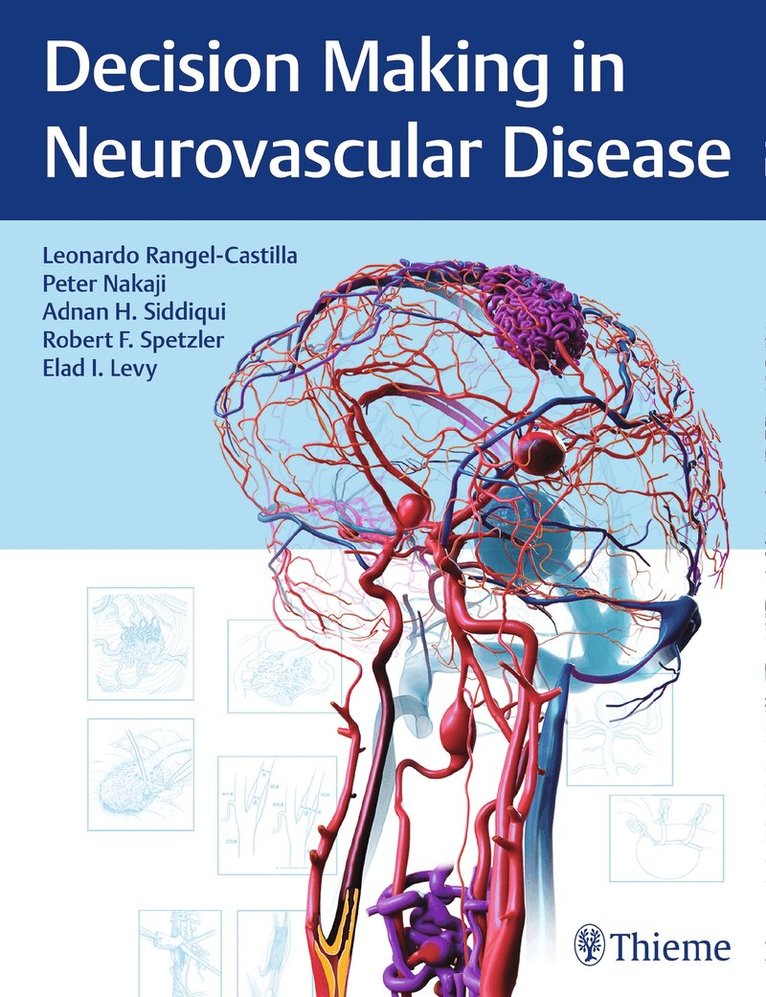
Neurovascular medicine has emerged as an established, semi-independent subspecialty of neurology and neurosurgery. Decision Making in Neurovascular Disease focuses on the challenging process of determining the best approach for managing patients with intracranial atherosclerosis, carotid artery disease, stroke, aneurysms, arteriovenous malformations, arteriovenous fistulae, cavernous malformations, and hypervascular tumors. Leonardo Rangel-Castilla, Robert Spetzler, esteemed coauthors, and an impressive cadre of experts discuss highly divergent modalities including medical management, open cerebrovascular, endovascular, radiosurgery, and combined/multimodality alternatives.The book is organized into seven sections: Ischemic Stroke and Vascular Insufficiency, Aneurysms – Anterior Circulation, Aneurysms – Posterior Circulation, Aneurysms – Other, Arteriovenous Malformations and Fistula, Cavernous Malformations, and Hypervascular Tumors. Chapters include an introduction, decision-making algorithm, whether to treat, conservative management, anatomical considerations, clinical and imaging evaluation, differential diagnosis, treatment options, images, clinical and radiographic follow-up, and suggested reading.Key highlights:Simple algorithms accompanying 71 chapters supported by the latest, most updated information in the literatureMore than 300 radiologic images help elucidate disease-specific treatment decision makingStep-by-step guidance, clinical pearls, surgical nuances, complication avoidance, and evidence-based outcomes provide in-depth understandingPoint/counterpoint expert commentary on each case provides balanced insights on potential implications of specific treatmentsThis essential step-by-step book is a must-have for residents and fellows in neurosurgery, neurology, endovascular, interventional radiology, vascular neurology, and neurocritical c
1 909 kr
Skickas inom 7-10 vardagar
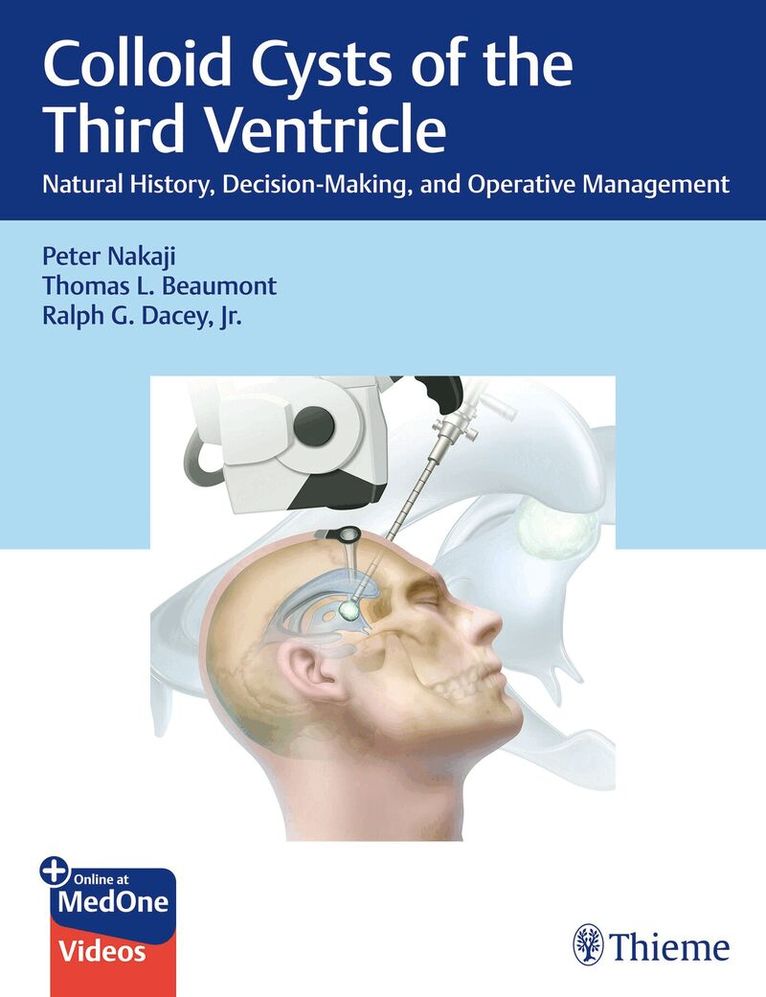
Collective wisdom and expert insights on the management of challenging colloid cystsFew conditions provoke more consternation and controversy among neurosurgeons than colloid cysts, due to their proximity to critical neurovascular structures, broad range of clinical presentation, and the risk of sudden death from increased intracranial pressure. Colloid Cysts of the Third Ventricle: Natural History, Decision-Making, and Operative Management edited by renowned neurosurgeons Peter Nakaji, Thomas L. Beaumont, and Ralph G. Dacey, Jr., fills the void in the literature. A who's who of master practitioners share personal perspectives and well-reasoned options for managing challenging colloid cysts.Advances in neurosurgical technique, both endoscopic and microsurgical, have created options for colloid cysts that render the "best" approach the subject of significant debate. The book brings together what is known and what is controversial from an impressive group of seasoned neurosurgeons in 5 parts, 18 chapters, and a collection of online videos. Impressively illustrated, the textbook presents salient background information, various techniques, and case study context, thereby enabling clinicians to interpret and inform various colloid cyst management strategies and surgical approaches.Key Features Contributions from an honor roll of distinguished neurosurgical experts from North America and around the globeDiscussion of nuances in colloid cyst clinical presentation, imaging, management, and surgical anatomyA consensus panel on colloid cysts lays a solid foundation of knowledge, enhanced with personal perspectives and brief case studies from experienced practitionersClear and succinct organization, insightful illustrations, high-quality diagnostic images, videos, and tables enrich a tome that constitutes a fundamental resource for readers The knowledge gleaned from these pages will enhance the ability of neurosurgeons at any stage to provide thoughtful, up-to-date options to patients with colloid cysts, with the ultimate goal of improved outcomes.This print book includes complimentary access to a digital copy on https://medone.thieme.com.Publisher's Note: Products purchased from Third Party sellers are not guaranteed by the publisher for quality, authenticity, or access to any online entitlements included with the product.
2 173 kr
Skickas inom 11-20 vardagar
The development and refinement of neuroendoscopy has been driven by the persistent desire of neurosurgeons to advance the field and offer less invasive, more efficacious options to patients.This remarkable multimedia book reflects the technological advances achieved in the last two decades in fiber optics, cold light, cameras, and endoscopic instrumentation. Written by an impressive Who’s Who of international neurosurgeons, the outstanding text and videos reflect global contributions to neuroendoscopy.Current indications for intracranial and intraventricular endoscopy are described in depth, through detailed chapters, stellar videos, professional animations, and exquisite illustrations. The authors share their clinical expertise on procedures ranging from endoscopic third ventriculostomy to transventricular approach of the fourth ventricle. Cover to cover, this book details the differences, alternatives, advantages, and limitations of the flexible neuroendoscope.This hands-on learning tool will enable neurosurgeons to perform endoscopy of the ventricles and basal cisterns for exploratory purposes and conditions such as hydrocephalus, congenital aqueductal stenosis, tumors, hypothalamic hamartoma, arachnoid cysts, and neurocysticercosis. Additional topics include endoscopic-assisted microvascular decompression and aneurysm surgery, fluorescence, complications, anesthesia, utilization in developing countries, and future trends.Key Features: Comprehensive multimedia reference with online access to 70 superb videos and animationsMore than 300 meticulously drawn illustrationsBeautifully illustrated anatomical chapters that facilitate in-depth understanding of endoscopic anatomyAn entire chapter devoted to flexible neuroendoscopyIndications, preoperative preparation, procedure description, intraoperative complications and their management ("risk and rescue" techniques), expert pearls, postoperative management, and outcomesThis volume is a must-have resource for neurosurgery and neurology residents, neurosurgeons, pediatric neurosurgeons, and all physicians involved in the care of patients with intracranial and intraventricular disease.