Peter Petkoff – författare
Visar alla böcker från författaren Peter Petkoff. Handla med fri frakt och snabb leverans.
3 produkter
3 produkter
E-bok
PDF, Engelska, 20151 649 kr
Läs direkt efter köp
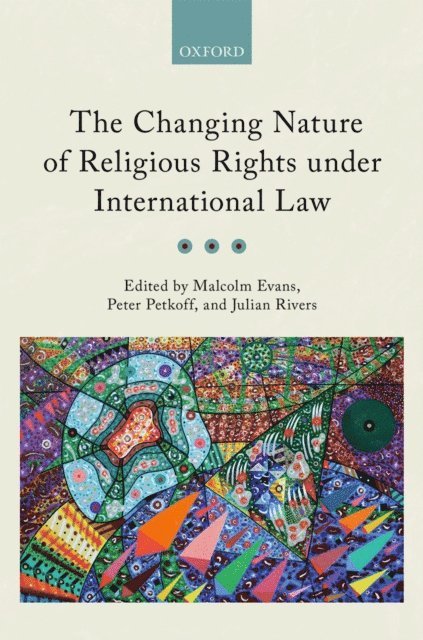
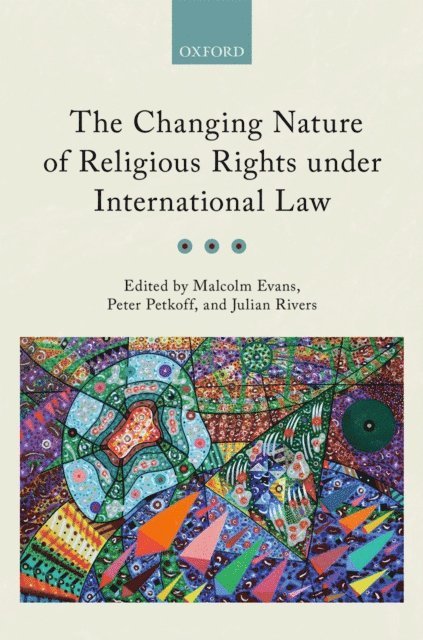
The Declaration on the Elimination of All Forms of Intolerance and of Discrimination Based on Religion or Belief, as proclaimed by the United Nations General Assembly in 1981, is the only universal human rights instrument specifically focusing on religious intolerance and discrimination. However, recent years have seen increasing controversy surrounding this right, in both political and legal contexts. The European Court of Human Rights has experienced a vast expansion in the number of cases it has had brought before it concerning religious freedom, and politically the boundaries of the right have been much disputed. This book provides a systematic analysis of the different approaches to religious rights which exist in public international law. The book explores how particular institutional perspectives emerge in the context of these differing approaches. It examines, and challenges, these institutional perspectives. It identifies new directions for approaching religious rights through international law by examining existing legal tools, and assesses their achievements and shortcomings. It studies religious organisations'' support for international human rights protection, as well as religious critique of international human rights and the development of an alternative religious ''Bills of Rights''. It investigates whether expressions of members belonging to religious minorities can be considered under the minority right to culture, rather than the right to religion, and discusses the benefits and shortcomings of such a route. It analyses the reach and limits of the provisions in the 1981 Declaration, identifies ways in which the right is being eroded as a concept, and suggests new ways in which the right can be reinforced and protected.
E-bok
Engelska, 20151 466 kr
Läs direkt efter köp
The Declaration on the Elimination of All Forms of Intolerance and of Discrimination Based on Religion or Belief, as proclaimed by the United Nations General Assembly in 1981, is the only universal human rights instrument specifically focusing on religious intolerance and discrimination. However, recent years have seen increasing controversy surrounding this right, in both political and legal contexts. The European Court of Human Rights has experienced a vast expansion in the number of cases it has had brought before it concerning religious freedom, and politically the boundaries of the right have been much disputed. This book provides a systematic analysis of the different approaches to religious rights which exist in public international law. The book explores how particular institutional perspectives emerge in the context of these differing approaches. It examines, and challenges, these institutional perspectives. It identifies new directions for approaching religious rights through international law by examining existing legal tools, and assesses their achievements and shortcomings. It studies religious organisations'' support for international human rights protection, as well as religious critique of international human rights and the development of an alternative religious ''Bills of Rights''. It investigates whether expressions of members belonging to religious minorities can be considered under the minority right to culture, rather than the right to religion, and discusses the benefits and shortcomings of such a route. It analyses the reach and limits of the provisions in the 1981 Declaration, identifies ways in which the right is being eroded as a concept, and suggests new ways in which the right can be reinforced and protected.
Inbunden, Engelska, 2015
2 781 kr
Skickas inom 3-6 vardagar
The Declaration on the Elimination of All Forms of Intolerance and of Discrimination Based on Religion or Belief, as proclaimed by the United Nations General Assembly in 1981, is the only universal human rights instrument specifically focusing on religious intolerance and discrimination. However, recent years have seen increasing controversy surrounding this right, in both political and legal contexts. The European Court of Human Rights has experienced a vast expansion in the number of cases it has had brought before it concerning religious freedom, and politically the boundaries of the right have been much disputed. This book provides a systematic analysis of the different approaches to religious rights which exist in public international law. The book explores how particular institutional perspectives emerge in the context of these differing approaches. It examines, and challenges, these institutional perspectives. It identifies new directions for approaching religious rights through international law by examining existing legal tools, and assesses their achievements and shortcomings. It studies religious organisations' support for international human rights protection, as well as religious critique of international human rights and the development of an alternative religious 'Bills of Rights'. It investigates whether expressions of members belonging to religious minorities can be considered under the minority right to culture, rather than the right to religion, and discusses the benefits and shortcomings of such a route. It analyses the reach and limits of the provisions in the 1981 Declaration, identifies ways in which the right is being eroded as a concept, and suggests new ways in which the right can be reinforced and protected.