Peter R. Schmidt – författare
1 069 kr
Läs direkt efter köp
1 784 kr
Skickas inom 5-8 vardagar
358 kr
Skickas inom 10-15 vardagar
316 kr
Skickas inom 10-15 vardagar
648 kr
Skickas inom 10-15 vardagar
1 689 kr
Skickas inom 10-15 vardagar
708 kr
Skickas inom 10-15 vardagar
752 kr
Läs direkt efter köp
1 129 kr
Skickas inom 10-15 vardagar
1 754 kr
Läs direkt efter köp
386 kr
Skickas inom 10-15 vardagar
1 059 kr
Skickas inom 10-15 vardagar
357 kr
Skickas inom 10-15 vardagar
434 kr
Skickas inom 10-15 vardagar
2 215 kr
Skickas inom 10-15 vardagar
719 kr
Skickas inom 10-15 vardagar
2 215 kr
Skickas inom 10-15 vardagar
836 kr
Läs direkt efter köp
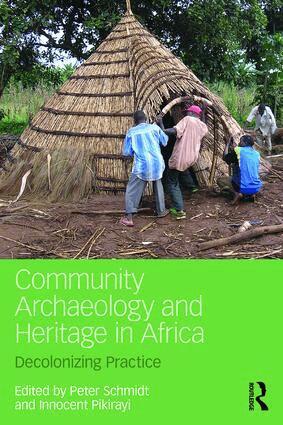
This volume provides new insights into the distinctive contributions that community archaeology and heritage make to the decolonization of archaeological practice. Using innovative approaches, the contributors explore important initiatives which have protected and revitalized local heritage, initiatives that involved archaeologists as co-producers rather than leaders. These case studies underline the need completely reshape archaeological practice, engaging local and indigenous communities in regular dialogue and recognizing their distinctive needs, in order to break away from the top-down power relationships that have previously characterized archaeology in Africa.
Community Archaeology and Heritage in Africa reflects a determined effort to change how archaeology is taught to future generations. Through community-based participatory approaches, archaeologists and heritage professionals can benefit from shared resources and local knowledge; and by sharing decision-making with members of local communities, archaeological inquiry can enhance their way of life, ameliorate their human rights concerns, and meet their daily needs to build better futures. Exchanging traditional power structures for research design and implementation, the examples outlined in this volume demonstrate the discipline’s exciting capacity to move forward to achieve its potential as a broader, more accessible, and more inclusive field.
836 kr
Läs direkt efter köp
This volume provides new insights into the distinctive contributions that community archaeology and heritage make to the decolonization of archaeological practice. Using innovative approaches, the contributors explore important initiatives which have protected and revitalized local heritage, initiatives that involved archaeologists as co-producers rather than leaders. These case studies underline the need completely reshape archaeological practice, engaging local and indigenous communities in regular dialogue and recognizing their distinctive needs, in order to break away from the top-down power relationships that have previously characterized archaeology in Africa.
Community Archaeology and Heritage in Africa reflects a determined effort to change how archaeology is taught to future generations. Through community-based participatory approaches, archaeologists and heritage professionals can benefit from shared resources and local knowledge; and by sharing decision-making with members of local communities, archaeological inquiry can enhance their way of life, ameliorate their human rights concerns, and meet their daily needs to build better futures. Exchanging traditional power structures for research design and implementation, the examples outlined in this volume demonstrate the discipline’s exciting capacity to move forward to achieve its potential as a broader, more accessible, and more inclusive field.
752 kr
Läs direkt efter köp
Participatory Archaeology and Heritage Studies: Perspectives from Africa provides new ways to look at and think about the practice of community archaeology and heritage studies across the globe. Long hidden from view, African experiences and experiments with participatory archaeology and heritage studies have poignant lessons to convey about local initiatives, local needs, and local perspectives among communities as diverse as an Islamic community on the edge of an ancient city in Sudan to multi-ethnic rural villages near rock art sites in South Africa. Straddling both heritage studies and archaeological practice, this volume incorporates a range of settings, from practical experiments with sustainable pottery kilns in Kenya, to an elite palace and its hidden traditional heritage in Northwestern Tanzania, to ancestral knowledge about heritage landscapes in rural Ethiopia. The genesis of participatory practices in Africa are traced back to the 1950s, with examples of how this legacy has played out over six decades—setting the scene for a deeply rooted practice now gaining widespread acceptance. The chapters in this book were originally published in the Journal of Community Archaeology and Heritage.
752 kr
Läs direkt efter köp
Participatory Archaeology and Heritage Studies: Perspectives from Africa provides new ways to look at and think about the practice of community archaeology and heritage studies across the globe. Long hidden from view, African experiences and experiments with participatory archaeology and heritage studies have poignant lessons to convey about local initiatives, local needs, and local perspectives among communities as diverse as an Islamic community on the edge of an ancient city in Sudan to multi-ethnic rural villages near rock art sites in South Africa. Straddling both heritage studies and archaeological practice, this volume incorporates a range of settings, from practical experiments with sustainable pottery kilns in Kenya, to an elite palace and its hidden traditional heritage in Northwestern Tanzania, to ancestral knowledge about heritage landscapes in rural Ethiopia. The genesis of participatory practices in Africa are traced back to the 1950s, with examples of how this legacy has played out over six decades—setting the scene for a deeply rooted practice now gaining widespread acceptance. The chapters in this book were originally published in the Journal of Community Archaeology and Heritage.
685 kr
Läs direkt efter köp
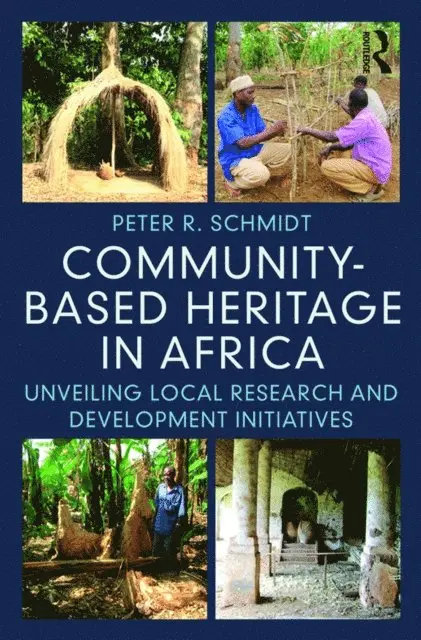
This volume provides a powerful alternative to the Western paradigms that have governed archaeological inquiry and heritage studies in Africa. Community-based Heritage Research in Africa boldly shifts focus away from top-down community engagements, usually instigated by elite academic and heritage institutions, to examine locally initiated projects. Schmidt explores how and why local research initiatives, which are often motivated by rapid culture change caused by globalization, arose among the Haya people of western Tanzania. In particular, the trauma of HIV/AIDS resulted in the loss of elders who had performed oral traditions and rituals at sacred places, the two most recognized forms of heritage among the Haya as well as distinct alternatives to the authorized heritage discourse favored around the globe.
Examining three local initiatives, Schmidt draws on his experience as an anthropologist invited to collaborate and co-produce with the Haya to provide a poignant rendering of the successes, conflicts, and failures that punctuated their participatory community research efforts. This frank appraisal privileges local voices and focuses attention on the unique and important contributions that such projects can make to the preservation of regional history. Through this blend of personalized narrative and analytical examination, the book provides fresh insights into African archaeology and heritage studies.
691 kr
Läs direkt efter köp
This volume provides a powerful alternative to the Western paradigms that have governed archaeological inquiry and heritage studies in Africa. Community-based Heritage Research in Africa boldly shifts focus away from top-down community engagements, usually instigated by elite academic and heritage institutions, to examine locally initiated projects. Schmidt explores how and why local research initiatives, which are often motivated by rapid culture change caused by globalization, arose among the Haya people of western Tanzania. In particular, the trauma of HIV/AIDS resulted in the loss of elders who had performed oral traditions and rituals at sacred places, the two most recognized forms of heritage among the Haya as well as distinct alternatives to the authorized heritage discourse favored around the globe.
Examining three local initiatives, Schmidt draws on his experience as an anthropologist invited to collaborate and co-produce with the Haya to provide a poignant rendering of the successes, conflicts, and failures that punctuated their participatory community research efforts. This frank appraisal privileges local voices and focuses attention on the unique and important contributions that such projects can make to the preservation of regional history. Through this blend of personalized narrative and analytical examination, the book provides fresh insights into African archaeology and heritage studies.
591 kr
Skickas inom 10-15 vardagar
2 785 kr
Skickas inom 10-15 vardagar
699 kr
Skickas inom 5-8 vardagar