Peter Redfield - Böcker
Visar alla böcker från författaren Peter Redfield. Handla med fri frakt och snabb leverans.
4 produkter
4 produkter
283 kr
Skickas inom 7-10 vardagar
Rockets roar into space--bearing roughly half the world's commercial satellites--from the same South American coastal rainforest where convicts once did time on infamous Devil's Island. What makes Space in the Tropics enthralling is anthropologist Peter Redfield's ability to draw from these two disparate European projects in French Guiana a gleaming web of ideas about the intersections of nature and culture. In comparing the Franco-European Ariane rocket program with the earlier penal experiment, Redfield connects the myth of Robinson Crusoe, nineteenth-century prison reform, the Dreyfus Affair, tropical medicine, postwar exploration of outer space, satellite technology, development, and ecotourism with a focus on place, and the incorporation of this particular place into greater extended systems. Examining the wider context of the Ariane program, he argues that technology and nature must be understood within a greater ecology of displacement and makes a case for the importance of margins in understanding the trajectories of modern life.

577 kr
Skickas inom 7-10 vardagar
"Life in Crisis" tells the story of Medecins Sans Frontieres (Doctors Without Borders or MSF) and its effort to "save lives" on a global scale. Begun in 1971 as a French alternative to the Red Cross, the MSF has grown into an international institution with a reputation for outspoken protest as well as technical efficiency. It has also expanded beyond emergency response, providing for a wider range of endeavors, including AIDS care. Yet its seemingly simple ethical goal proves deeply complex in practice. MSF continually faces the problem of defining its own limits. Its minimalist form of care recalls the promise of state welfare, but without political resolution or a sense of well-being beyond health and survival. Lacking utopian certainty, the group struggles when the moral clarity of crisis fades. Nevertheless, it continues to take action and innovate. Its organizational history illustrates both the logic and the tensions of casting humanitarian medicine into a leading role in international affairs.
251 kr
Skickas inom 7-10 vardagar
"Life in Crisis" tells the story of Medecins Sans Frontieres (Doctors Without Borders or MSF) and its effort to "save lives" on a global scale. Begun in 1971 as a French alternative to the Red Cross, the MSF has grown into an international institution with a reputation for outspoken protest as well as technical efficiency. It has also expanded beyond emergency response, providing for a wider range of endeavors, including AIDS care. Yet its seemingly simple ethical goal proves deeply complex in practice. MSF continually faces the problem of defining its own limits. Its minimalist form of care recalls the promise of state welfare, but without political resolution or a sense of well-being beyond health and survival. Lacking utopian certainty, the group struggles when the moral clarity of crisis fades. Nevertheless, it continues to take action and innovate. Its organizational history illustrates both the logic and the tensions of casting humanitarian medicine into a leading role in international affairs.
518 kr
Skickas inom 3-6 vardagar
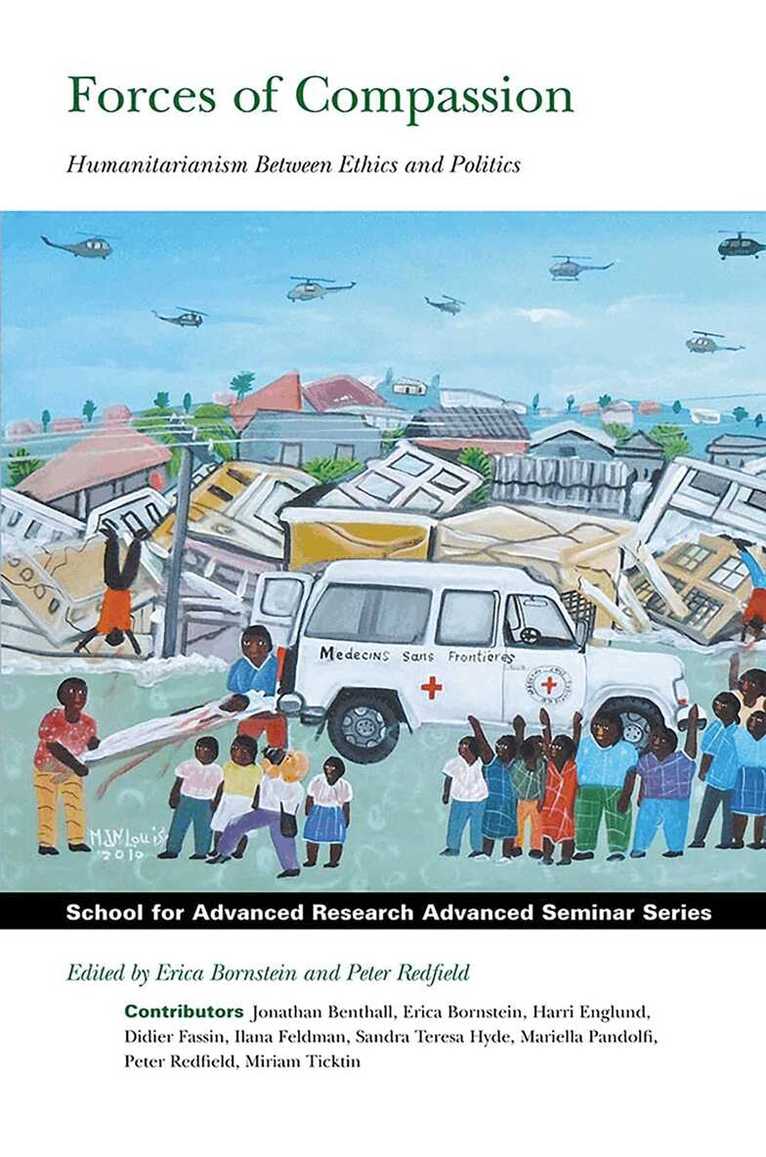
Suffering and charity have a long history. Both human sorrows and attempted remedies were familiar features of life in earlier eras and religious traditions, however, during the final decades of the twentieth century, natural disasters and civilian casualties of war transformed into “humanitarian crises.” In these recurring dramas presented by international media, an extensive network of interstate entities and nongovernmental organizations (NGOs) supplies assistance to victims. The contemporary aid world is a mosaic of aid sectors, each skewed slightly toward a particular aspect of need and action. The development sector focuses on alleviating poverty, while the human rights sector aims to rectify identifiable wrongs. Humanitarianism directly addresses physical and psychological suffering. The contributors to Forces of Compassion examine this sector through the lens of anthropology, looking at dominant practices, tensions, and beliefs.