Peter Schwieger - Böcker
Visar alla böcker från författaren Peter Schwieger. Handla med fri frakt och snabb leverans.
5 produkter
5 produkter
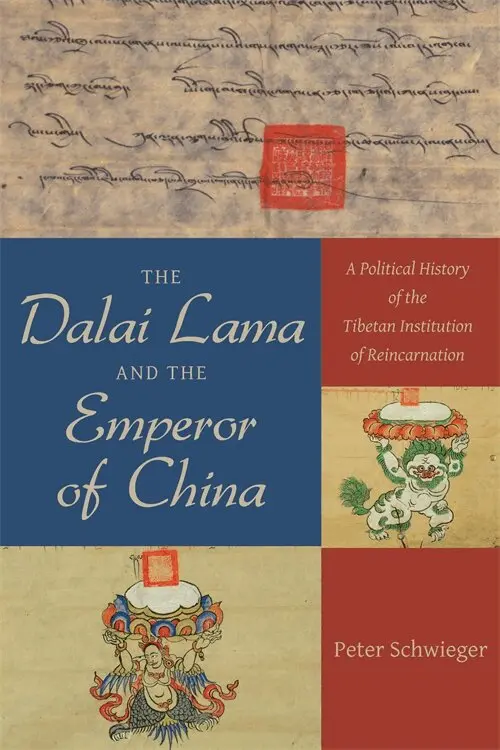
Dalai Lama and the Emperor of China
A Political History of the Tibetan Institution of Reincarnation
Inbunden, Engelska, 2015
518 kr
Skickas inom 7-10 vardagar
A major new work in modern Tibetan history, this book follows the evolution of Tibetan Buddhism's trulku (reincarnation) tradition from the seventeenth to the nineteenth centuries, along with the Emperor of China's efforts to control its development. By illuminating the political aspects of the trulku institution, Schwieger shapes a broader history of the relationship between the Dalai Lama and the Emperor of China, as well as a richer understanding of the Qing Dynasty as an Inner Asian empire, the modern fate of the Mongols, and current Sino-Tibetan relations. Unlike other pre-twentieth-century Tibetan histories, this volume rejects hagiographic texts in favor of diplomatic, legal, and social sources held in the private, monastic, and bureaucratic archives of old Tibet. This approach draws a unique portrait of Tibet's rule by reincarnation while shading in peripheral tensions in the Himalayas, eastern Tibet, and China. Its perspective fully captures the extent to which the emperors of China controlled the institution of the Dalai Lamas, making a groundbreaking contribution to the past and present history of East Asia.
770 kr
Skickas inom 7-10 vardagar
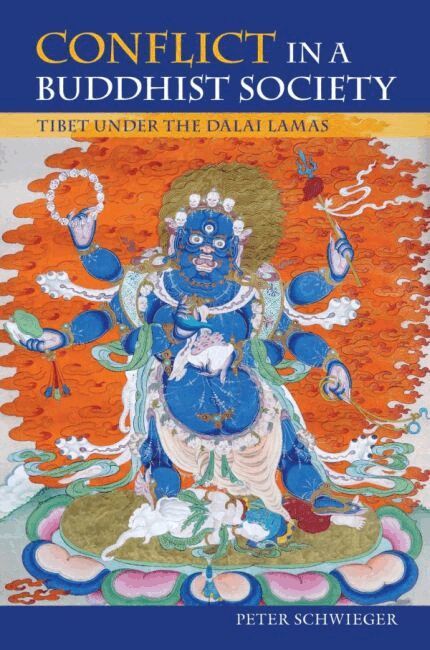
Conflict in a Buddhist Society presents a new way of looking at Tibet under the rule of the Dalai Lamas (1642-1959). Although this era can be clearly delineated as a distinct period in the history of Tibet, many questions remain concerning the specific form of rule established. Author Peter Schwieger attempts to make transparent the complexity and dynamics of the Dalai Lamas' domination using the work of sociologist Niklas Luhman (1927-1998) as his theoretical starting point. Luhman's systems theory allows Schwieger to approach Tibetan history and culture as a remarkable effort to create-under times of great conflict and stress and using uncommon means-a stable social and political order. Such a methodology provides the distance needed to move beyond event-based narrative history and understand the structures that made social action possible in Tibet and the operations by which its society as a whole distinguished itself from its environment.Schwieger begins by asking the crucial question of how Tibet's society dealt with conflict. The chapters that follow answer this question from various perspectives: history and memory; domination; hierarchy; center and periphery; semantics; morality and ethics; ritual; law; and war. Each reveals a different avenue for cross-cutting discourses in the historical and social sciences. Together, they provide a comprehensive picture of how conflicts were portrayed in Tibet society and how the manner in which they were handled stabilized the country for a considerable time but were ultimately unsuccessful in the face of radical upheavals in its environment. Situated at the intersection of systems theory, conflict theory, and Tibetan/Inner Asian history and society, Conflict in a Buddhist Society will be of considerable interest to students and scholars in these areas. Its theoretical rather than narrative-descriptive approach to the history of the three centuries of Dalai Lama rule will be welcomed as wide-ranging and insightful.
309 kr
Skickas
Conflict in a Buddhist Society presents a new way of looking at Tibet under the rule of the Dalai Lamas (1642–1959). Although this era can be clearly delineated as a distinct period in the history of Tibet, many questions remain concerning the specific form of rule established. Author Peter Schwieger attempts to make transparent the complexity and dynamics of the Dalai Lamas' domination using the work of sociologist Niklas Luhman (1927–1998) as his theoretical starting point. Luhman’s systems theory allows Schwieger to approach Tibetan history and culture as a remarkable effort to create—under times of great conflict and stress and using uncommon means—a stable social and political order. Such a methodology provides the distance needed to move beyond event-based narrative history and understand the structures that made social action possible in Tibet and the operations by which its society as a whole distinguished itself from its environment.Schwieger begins by asking the crucial question of how Tibet's society dealt with conflict. The chapters that follow answer this question from various perspectives: history and memory; domination; hierarchy; center and periphery; semantics; morality and ethics; ritual; law; and war. Each reveals a different avenue for cross-cutting discourses in the historical and social sciences. Together, they provide a comprehensive picture of how conflicts were portrayed in Tibet society and how the manner in which they were handled stabilized the country for a considerable time but were ultimately unsuccessful in the face of radical upheavals in its environment. Situated at the intersection of systems theory, conflict theory, and Tibetan/Inner Asian history and society, Conflict in a Buddhist Society will be of considerable interest to students and scholars in these areas. Its theoretical rather than narrative-descriptive approach to the history of the three centuries of Dalai Lama rule will be welcomed as wide-ranging and insightful.
Del 53 - Brill's Tibetan Studies Library
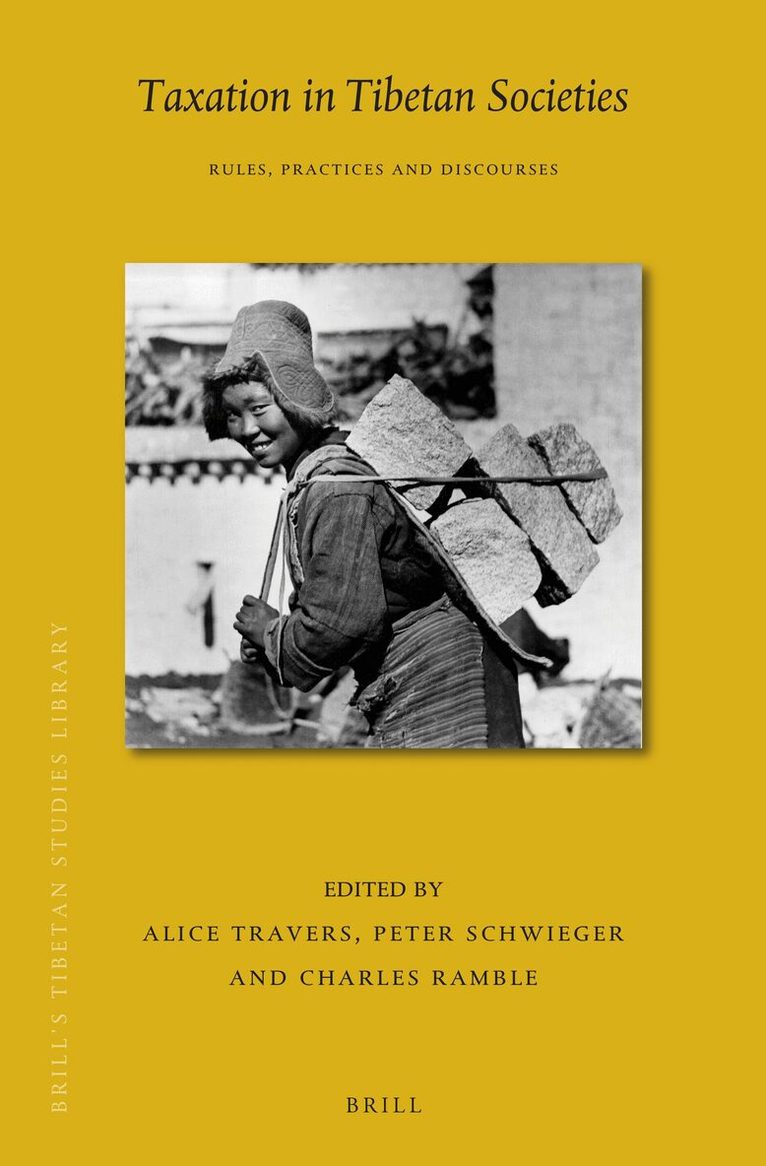
Taxation in Tibetan Societies: Rules, Practices and Discourses
Inbunden, Engelska, 2023
2 044 kr
Skickas inom 5-8 vardagar
The study of taxation is fundamental for understanding the construction of Tibetan polities, the nature of their power – often with a marked religious component – and their relationships with their subjects, as well as the consequences of taxation for social stratification. This volume takes the analysis of taxation in Tibetan societies (both under the Ganden Phodrang and beyond it) in new directions, using hitherto unexploited Tibetan-language sources. It pursues the dual objective of advancing our understanding of the organisation of taxation from an institutional perspective and of highlighting the ways in which taxpayers themselves experienced and represented these fiscal systems. Contributors are Saadet Arslan, John Bray, Kalsang Norbu Gurung, Isabelle Henrion-Dourcy, Berthe Jansen, Diana Lange, Nancy E. Levine, Charles Ramble, Isabelle Riaboff, Peter Schwieger, Alice Travers, and Maria M. Turek.
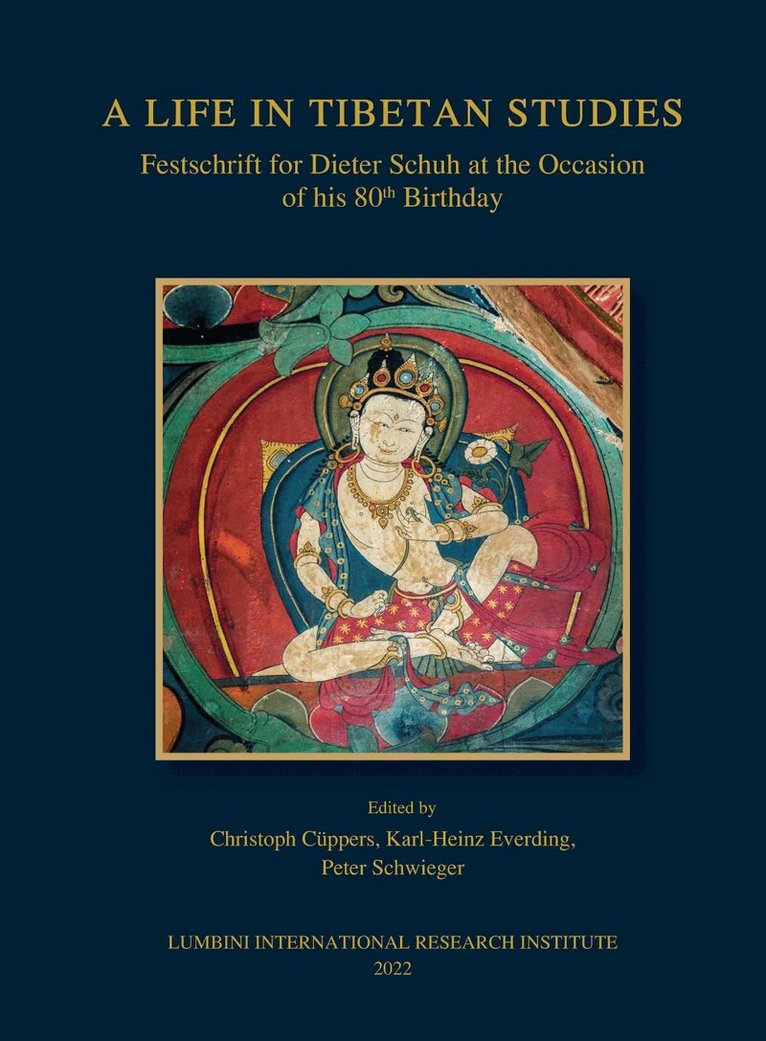
Life In Tibetan Studies
Festschrift for Dieter Schuh at the Ocassion of his 80th Birthday
Häftad, Engelska, 2022
2 272 kr
Kommande