Peter Stanfield - Böcker
Visar alla böcker från författaren Peter Stanfield. Handla med fri frakt och snabb leverans.
16 produkter
16 produkter
341 kr
Skickas inom 7-10 vardagar
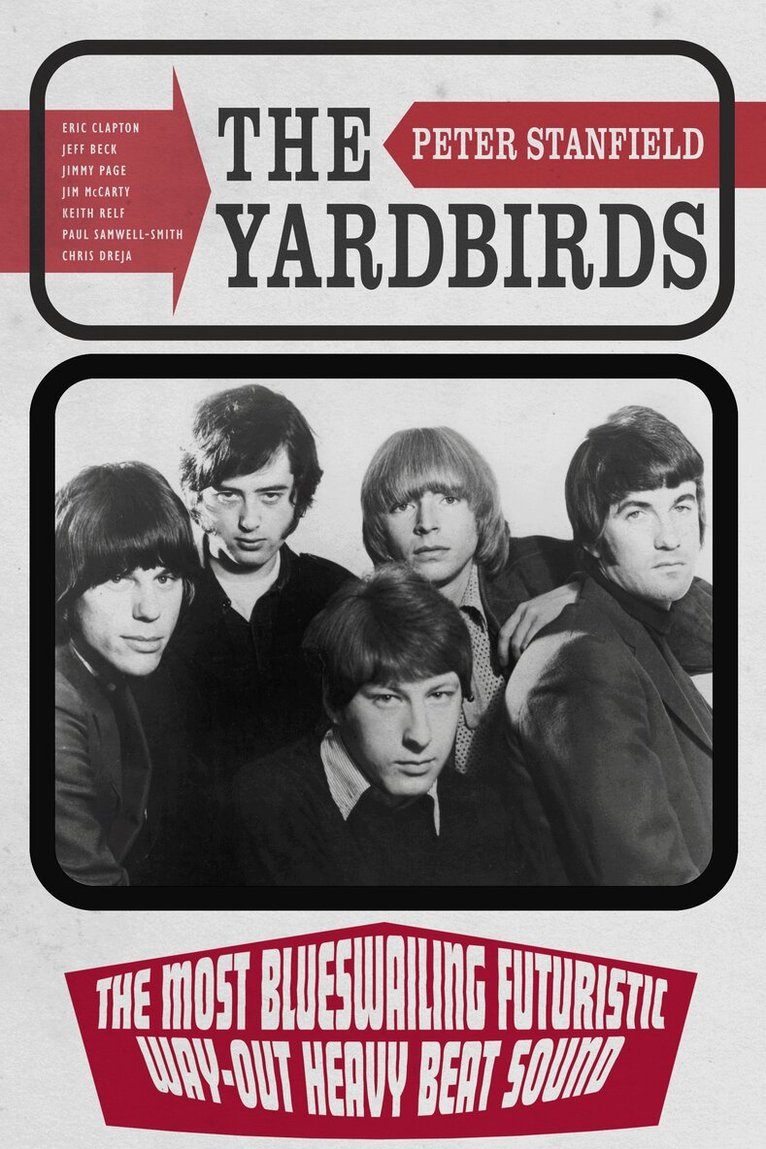
The Yardbirds were trailblazers in the rapid development of pop music in Britain between 1963 and 1968. With members including Eric Clapton, Jeff Beck and Jimmy Page, they helped to set the basic template of what has been known ever since as rock music, and gave rise to one of the most commercially successful bands of all time: Led Zeppelin. Peter Stanfield situates the band in the evolution of British R&B and the tumult of the psychedelic era. Obsessively detailed about both the band and 1960s pop culture, this is the book fans of the Yardbirds have always needed.
237 kr
Skickas inom 7-10 vardagar
In this innovative take on a neglected chapter of film history, Peter Stanfield challenges the commonly held view of the singing cowboy as an ephemeral figure of fun and argues instead that he was one of the most important cultural figures to emerge out of the Great Depression.The rural or newly urban working-class families who flocked to see the latest exploits of Gene Autry, Roy Rogers, Tex Ritter, andother singing cowboys were an audience largely ignored by mainstreamHollywood film. Hard hit by the depression, faced with the threat--and often the reality--of dispossession and dislocation, pressured to adapt to new ways of living, these small-town filmgoers saw their ambitions, fantasies, and desires embodied in the singing cowboy and their social and political circumstances dramatized in "B" Westerns.Stanfield traces the singing cowboy's previously uncharted roots in the performance tradition of blackface minstrelsy and its literary antecedents in dime novels, magazine fiction, and the novels of B. M. Bower, showing how silent cinema conventions, the developing commercial music media, and the prevailing conditions of film production shaped the "horse opera" of the 1930s. Cowboy songs offered an alternative to the disruptive modern effects of jazz music, while the series Western--tapping into aesthetic principles shunned by the aspiring middle class--emphasized stunts, fist fights, slapstick comedy, disguises, and hidden identities over narrative logic and character psychology. Singing cowboys also linked recording, radio, publishing, live performance, and film media.Entertaining and thought-provoking, Horse Opera recovers not only the forgotten cowboys of the 1930s but also their forgotten audiences: the ordinary men and women
237 kr
Skickas inom 7-10 vardagar
The minstrel show and striptease played an indelible role in early mass culture and influenced the popular culture that followed. Peter Stanfield focuses on Hollywood to explore this phenomenon. The movies used blackface minstrelsy to represent an emerging urban American theatrical history while American film at the end of the studio era used the image of the burlesque dancer and stripper to represent urban decay. Stanfield considers the representation of American urban life in jazz, blues, ballads, and sin-songs and the ways film studios exploited this range of so-called scandalous music. Stanfield’s analyses of standards like "Frankie and Johnny” and "St. Louis Blues” stand beside original thinking on blackface minstrelsy in early sound movies, racial representation and censorship, torch singers and torch songs, burlesque and strippers, the noir cityscape, the Hollywood Left, and hot jazz.
435 kr
Skickas inom 5-8 vardagar
The concept of "un-Americanism," so vital to the HUAC crusade of the 1940s and 1950s, was resoundingly revived in the emotional rhetoric that followed the September 11th terrorist attacks. Today's political and cultural climate makes it more crucial than ever to come to terms with the consequences of this earlier period of repression and with the contested claims of Americanism that it generated."Un-American" Hollywood reopens the intense critical debate on the blacklist era and on the aesthetic and political work of the Hollywood Left. In a series of fresh case studies focusing on contexts of production and reception, the contributors offer exciting and original perspectives on the role of progressive politics within a capitalist media industry.Original essays scrutinize the work of individual practitioners, such as Robert Rossen, Joseph Losey, Jules Dassin, and Edward Dmytryk, and examine key films, including The Robe, Christ in Concrete, The House I Live In, The Lawless, The Naked City, The Prowler, Body and Soul, and FTA.
Maximum Movies—Pulp Fictions
Film Culture and the Worlds of Samuel Fuller, Mickey Spillane, and Jim Thompson
Häftad, Engelska, 2011
441 kr
Skickas inom 7-10 vardagar
In the words of Richard Maltby . . . "Maximum Movies--Pulp Fictions describes two improbably imbricated worlds and the piece of cultural history their intersections provoked." One of these worlds comprises a clutch of noisy, garish pulp movies--Kiss Me Deadly, Shock Corridor, Fixed Bayonets!, I Walked with a Zombie, The Lineup, Terror in a Texas Town, Ride Lonesome--pumped out for the grind houses at the end of the urban exhibition chain by the studios' B-divisions and fly-by-night independents. The other is occupied by critics, intellectuals, cinephiles, and filmmakers such as Jean-Luc Godard, Manny Farber, and Lawrence Alloway, who championed the cause of these movies and incited the cultural guardians of the day by attacking a rigorously policed canon of tasteful, rarified, and ossified art objects. Against the legitimate, and in defense of the illegitimate, in an insolent and unruly manner, they agitated for the recognition of lurid sensational crime stories, war pictures, fast-paced Westerns, thrillers, and gangster melodramas were claimed as examples of the true, the real, and the authentic in contemporary culture--the foundation upon which modern film studies sits.
413 kr
Skickas inom 7-10 vardagar
Explosive! Amazing! Terrifying! You won’t believe your eyes! Such movie taglines were common in the 1950s, as Hollywood churned out a variety of low-budget pictures that were sold on the basis of their sensational content and topicality. While a few of these movies have since become canonized by film fans and critics, a number of the era’s biggest fads have now faded into obscurity. The Cool and the Crazy examines seven of these film cycles, including short-lived trends like boxing movies, war pictures, and social problem films detailing the sordid and violent life of teenagers, as well as uniquely 1950s takes on established genres like the gangster picture. Peter Stanfield reveals how Hollywood sought to capitalize upon current events, moral panics, and popular fads, making movies that were “ripped from the headlines” on everything from the Korean War to rock and roll. As he offers careful readings of several key films, he also considers the broader historical and commercial contexts in which these films were produced, marketed, and exhibited. In the process, Stanfield uncovers surprising synergies between Hollywood and other arenas of popular culture, like the ways that the fashion trend for blue jeans influenced the 1950s Western. Delivering sharp critical insights in jazzy, accessible prose, The Cool and the Crazy offers an appreciation of cinema as a “pop” medium, unabashedly derivative, faddish, and ephemeral. By studying these long-burst bubbles of 1950s “pop,” Stanfield reveals something new about what films do and the pleasures they provide.
426 kr
Skickas inom 7-10 vardagar
From The Wild Angels in 1966 until its conclusion in 1972, the cycle of outlaw motorcycle films contained forty-odd formulaic examples. All but one were made by independent companies that specialized in producing exploitation movies for drive-ins, neighborhood theaters, and rundown inner city theaters. Despised by critics, but welcomed by exhibitors denied first-run films, these cheaply and quickly produced movies were made to appeal to audiences of mobile youths. The films are repetitive, formulaic, and eminently forgettable, but there is a story to tell about all of the above, and it is one worth hearing. Hoodlum Movies is not only about the films, its focus is on why and how these films were made, who they were made for, and how the cycle developed through the second half of the 1960s and came to a shuddering halt in 1972.
1 666 kr
Skickas inom 7-10 vardagar
From The Wild Angels in 1966 until its conclusion in 1972, the cycle of outlaw motorcycle films contained forty-odd formulaic examples. All but one were made by independent companies that specialized in producing exploitation movies for drive-ins, neighborhood theaters, and rundown inner city theaters. Despised by critics, but welcomed by exhibitors denied first-run films, these cheaply and quickly produced movies were made to appeal to audiences of mobile youths. The films are repetitive, formulaic, and eminently forgettable, but there is a story to tell about all of the above, and it is one worth hearing. Hoodlum Movies is not only about the films, its focus is on why and how these films were made, who they were made for, and how the cycle developed through the second half of the 1960s and came to a shuddering halt in 1972.
972 kr
Skickas inom 5-8 vardagar
For the first time, this book tells the 'lost' story of the 1930s Western. Written from a concern to understand Western films primarily as products of Hollywood's studio system, it recovers the context in which Westerns were produced, exhibited and viewed in the 1930s. Peter Stanfield highlights the hitherto marginalised 'B' or 'series' Western, the significance of female audiences, the role of independent exhibitors and of censorship in shaping film production.Includes illustrations from the following films: Arizona, The Big Trail, Billy the Kid, Cimarron, Destry Rides Again, Dodge City, In Old Arizona, In Old Santa Fe, Jesse James, The Lash, Let Freedom Ring, Oh, Susanna!, Oklahoma Kid, The Plainsman, Ramona, Santa Fe Trail, Stand Up and Fight, Three Godfathers, Trail of the Lonesome Pine, Tumbling Tumbleweeds, Union Pacific, Virginia City, The Virginian, The Westerner.
329 kr
Skickas inom 5-8 vardagar
For the first time, this book tells the 'lost' story of the 1930s Western. Written from a concern to understand Western films primarily as products of Hollywood's studio system, it recovers the context in which Westerns were produced, exhibited and viewed in the 1930s. Peter Stanfield highlights the hitherto marginalised 'B' or 'series' Western, the significance of female audiences, the role of independent exhibitors and of censorship in shaping film production.Includes illustrations from the following films: Arizona, The Big Trail, Billy the Kid, Cimarron, Destry Rides Again, Dodge City, In Old Arizona, In Old Santa Fe, Jesse James, The Lash, Let Freedom Ring, Oh, Susanna!, Oklahoma Kid, The Plainsman, Ramona, Santa Fe Trail, Stand Up and Fight, Three Godfathers, Trail of the Lonesome Pine, Tumbling Tumbleweeds, Union Pacific, Virginia City, The Virginian, The Westerner.
188 kr
Skickas inom 7-10 vardagar
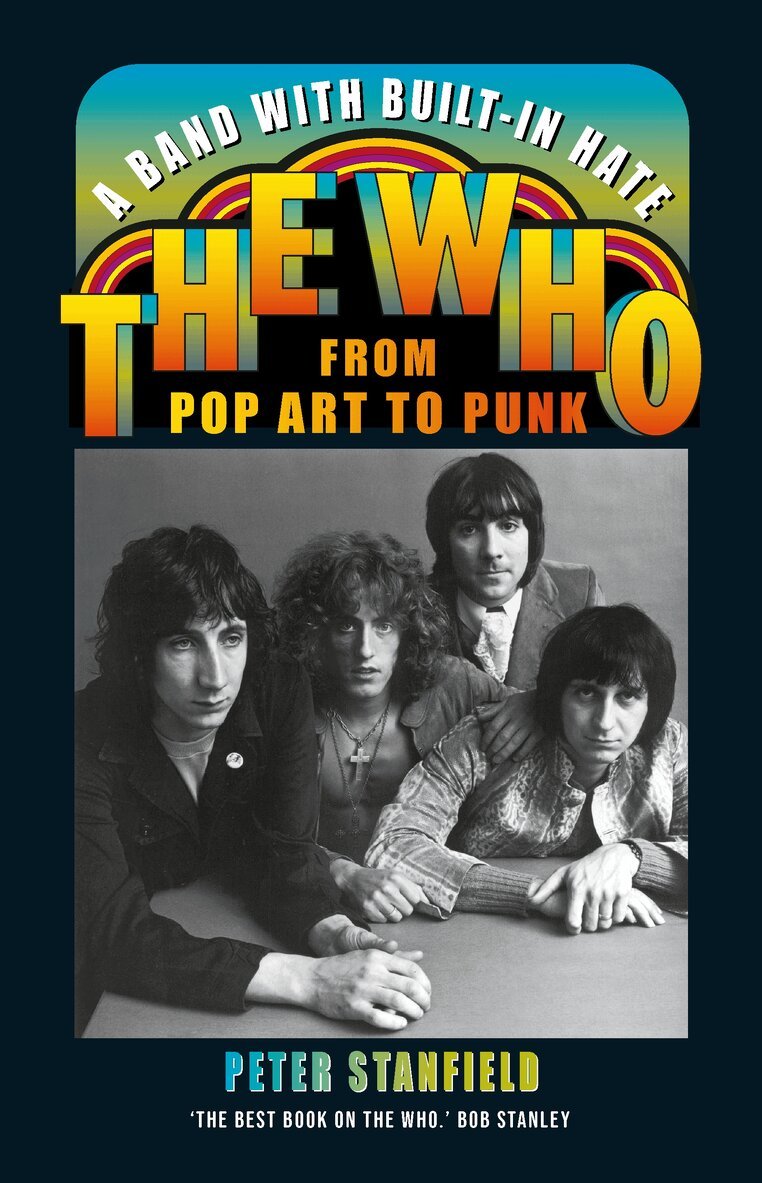
‘Ours is music with built-in hatred.’ Pete Townshend A Band with Built-In Hate pictures The Who from their inception as the Detours in the mid-sixties to the late seventies, post-Quadrophenia. It is a story of ambition and anger, glamour and grime, viewed through the prism of pop art and the radical levelling of high and low culture that it brought about – a drama that was aggressively performed by the band. Peter Stanfield lays down a path through the British pop revolution, its attitude and style, as it was uniquely embodied by The Who: first, under the mentorship of arch-mod Peter Meaden, as they learnt their trade in the pubs and halls of suburban London; and then with Kit Lambert and Chris Stamp, two aspiring filmmakers, at the very centre of things in Soho. Guided by contemporary commentators – among them George Melly, Lawrence Alloway and most conspicuously Nik Cohn – Stanfield describes a band driven by belligerence, and of what happened when Townshend, Daltrey, Moon and Entwistle moved from back-room stages to international arenas, from explosive 45s to expansive concept albums. Above all, he tells of how The Who confronted their lost youth as it was echoed in punk.
265 kr
Skickas
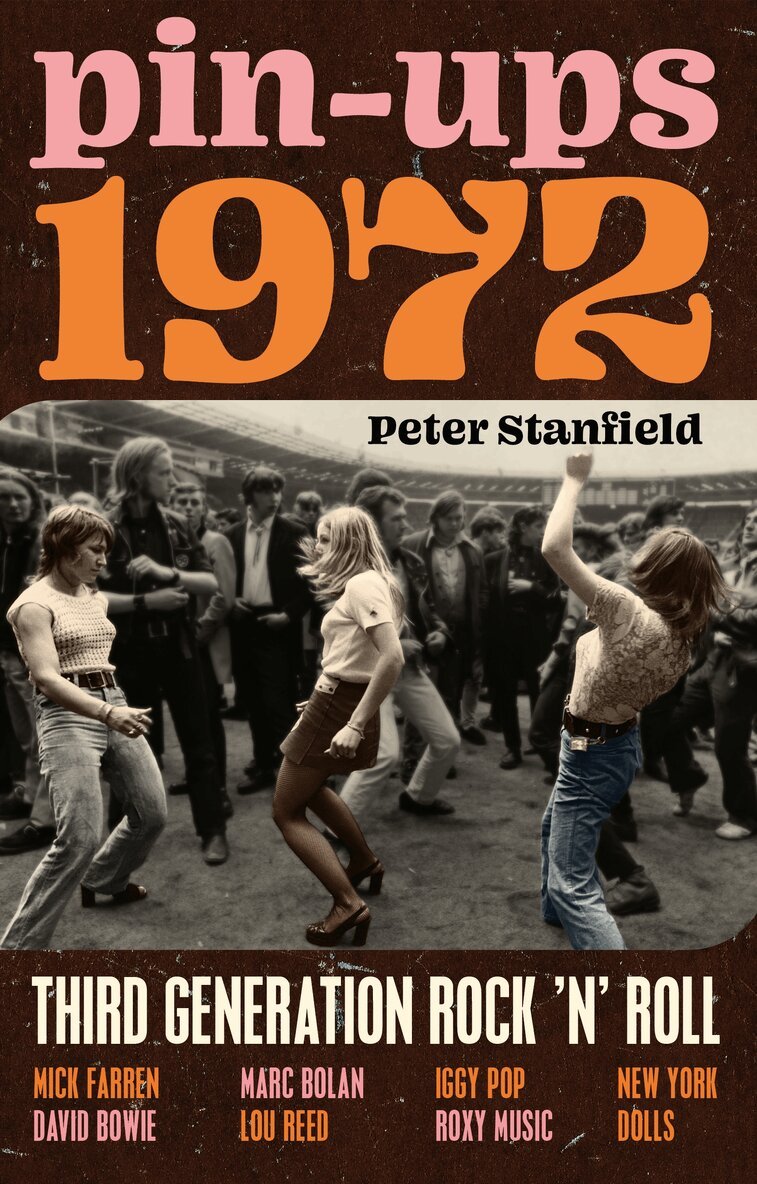
Elvis, Eddie, Chuck, Gene, Buddy and Little Richard were the original rockers. Dylan, The Beatles, The Stones and The Who formed rock’s second coming. As the 1960s turned into the 1970s, the crucial question was: who would lead rock ’n’ roll’s third generation?Pin-Ups 1972 tracks the London music scene during this pivotal year, all Soho sleaze, neon, grease and leather. It begins with the dissolution of the underground and the chart success of Marc Bolan. T. Rextasy formed the backdrop to Lou Reed and Iggy Pop’s British exile and their collaborations with David Bowie. This was the year Bowie became a star and redefined the teenage wasteland. In his wake followed Roxy Music and the New York Dolls, future-tense rock ’n’ roll revivalists. Bowie, Bolan, Iggy, Lou, Roxy and the Dolls – pin-ups for a new generation.
163 kr
Skickas
‘Ours is music with built-in hatred.’ Pete Townshend A Band with Built-In Hate pictures The Who from their inception as the Detours in the mid-sixties to the late seventies, post-Quadrophenia. It is a story of ambition and anger, glamour and grime, viewed through the prism of pop art and the radical levelling of high and low culture that it brought about – a drama that was aggressively performed by the band. Peter Stanfield lays down a path through the British pop revolution, its attitude and style, as it was uniquely embodied by The Who: first under the mentorship of arch-mod Peter Meaden as they learnt their trade in the pubs and halls of suburban London; and then with Kit Lambert and Chris Stamp, two aspiring filmmakers, at the very centre of things in Soho. Guided by contemporary commentators – among them George Melly, Lawrence Alloway and most conspicuously Nik Cohn – Stanfield describes a band driven by belligerence, and of what happened when Townshend, Daltrey, Moon and Entwistle moved from back-room stages to international arenas, from explosive 45s to expansive concept albums. Above all, he tells of how The Who confronted their lost youth as it was echoed in punk.
199 kr
Skickas
This is the tale of how Hollywood, inspired by the success of Easy Rider, sold a cycle of films as the new dirty real. Dennis Hopper, Peter Fonda, Monte Hellman, Jack Nicholson, Kris Kristofferson and Sam Peckinpah, among others, drew on a nostalgia for the gutter and donned bohemian personae, pulling on soiled shirts and scuffed boots, to better counter the glamour and phoniness of Tinseltown. With great care for the historical record and displaying a refined critical acuity, Peter Stanfield captures that pivotal moment when Hollywood tried to sell a begrimed vision of itself to the world.
1 669 kr
Skickas inom 10-15 vardagar
The gangster is perhaps the most potent figure in American cinema. Yet film criticism has focused almost entirely on a few canonical films such as Little Caesar, The Public Enemy, and The Godfather trilogy, resulting in a limited and distorted understanding of the compelling presence and persistence of the gangster. Mob Culture presents a detailed examination of the ideological richness of the gangster film throughout Hollywood's production history, from the silent period to the present.Mob Culture explores how the gangster figure has been connected to various cultural and racial identities, how issues of gender and sexuality are frequently highlighted by the genre, and how film criticism has drawn on eugenics, sociology and psychology to try to explain and contain the gangster. An ideal guide to both the film history and the critical literature, Mob Culture redefines the American gangster at the movies.
390 kr
Skickas inom 10-15 vardagar
The gangster is perhaps the most potent figure in American cinema. Yet film criticism has focused almost entirely on a few canonical films such as Little Caesar, The Public Enemy, and The Godfather trilogy, resulting in a limited and distorted understanding of the compelling presence and persistence of the gangster. Mob Culture presents a detailed examination of the ideological richness of the gangster film throughout Hollywood's production history, from the silent period to the present.Mob Culture explores how the gangster figure has been connected to various cultural and racial identities, how issues of gender and sexuality are frequently highlighted by the genre, and how film criticism has drawn on eugenics, sociology and psychology to try to explain and contain the gangster. An ideal guide to both the film history and the critical literature, Mob Culture redefines the American gangster at the movies.