Peter T. Coleman - Böcker
Visar alla böcker från författaren Peter T. Coleman. Handla med fri frakt och snabb leverans.
15 produkter
15 produkter
274 kr
Skickas inom 7-10 vardagar
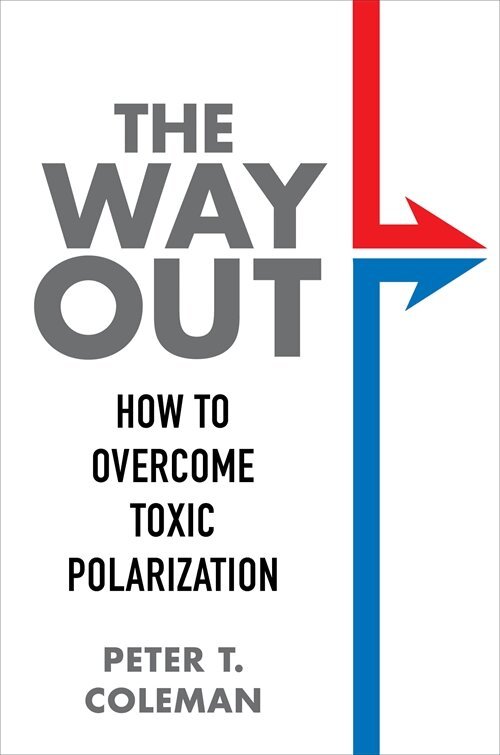
The partisan divide in the United States has widened to a chasm. Legislators vote along party lines and rarely cross the aisle. Political polarization is personal, too—and it is making us miserable. Surveys show that Americans have become more fearful and hateful of supporters of the opposing political party and imagine that they hold much more extreme views than they actually do. We have cordoned ourselves off: we prefer to date and marry those with similar opinions and are less willing to spend time with people on the other side. How can we loosen the grip of this toxic polarization and start working on our most pressing problems?The Way Out offers an escape from this morass. The social psychologist Peter T. Coleman explores how conflict resolution and complexity science provide guidance for dealing with seemingly intractable political differences. Deploying the concept of attractors in dynamical systems, he explains why we are stuck in this rut as well as the unexpected ways that deeply rooted oppositions can and do change. Coleman meticulously details principles and practices for navigating and healing the difficult divides in our homes, workplaces, and communities, blending compelling personal accounts from his years of working on entrenched conflicts with lessons from leading-edge research. The Way Out is a vital and timely guide to breaking free from the cycle of mutual contempt in order to better our lives, relationships, and country.
182 kr
Skickas inom 7-10 vardagar
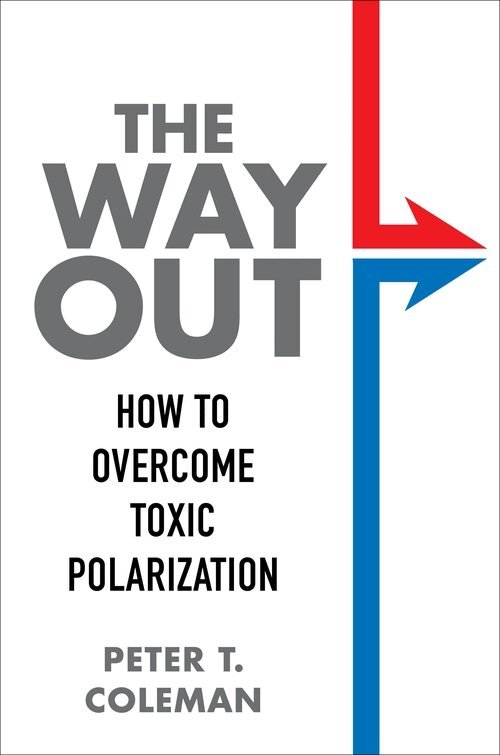
The partisan divide in the United States has widened to a chasm. Legislators vote along party lines and rarely cross the aisle. Political polarization is personal, too—and it is making us miserable. Surveys show that Americans have become more fearful and hateful of supporters of the opposing political party and imagine that they hold much more extreme views than they actually do. We have cordoned ourselves off: we prefer to date and marry those with similar opinions and are less willing to spend time with people on the other side. How can we loosen the grip of this toxic polarization and start working on our most pressing problems?The Way Out offers an escape from this morass. The social psychologist Peter T. Coleman explores how conflict resolution and complexity science provide guidance for dealing with seemingly intractable political differences. Deploying the concept of attractors in dynamical systems, he explains why we are stuck in this rut as well as the unexpected ways that deeply rooted oppositions can and do change. Coleman meticulously details principles and practices for navigating and healing the difficult divides in our homes, workplaces, and communities, blending compelling personal accounts from his years of working on entrenched conflicts with lessons from leading-edge research. The Way Out is a vital and timely guide to breaking free from the cycle of mutual contempt in order to better our lives, relationships, and country.
1 003 kr
Kommande
When The Way Out was first published in 2021, the partisan divide in the United States had widened to a chasm. Five years later, the crisis has metastasized. Political polarization continues to be personal but has also become more entrenched structurally. Today, our political, media, and digital systems reward outrage, punish moderation, and elevate those who escalate conflict. If we want a less contemptuous politics, we must come together across our differences to redesign the incentive systems that manufacture disdain. How can we loosen the grip of this toxic form of polarization and start redirecting our energies toward our most pressing problems?The Way Out offers an escape from this morass. The social psychologist Peter T. Coleman explores how conflict resolution and complexity science provide guidance for dealing with seemingly intractable political differences, explaining the unexpected ways that deeply rooted oppositions can and do change. Coleman meticulously details principles and practices for navigating and healing the difficult divides in our homes, workplaces, and communities, blending compelling personal accounts from his years of working on entrenched conflicts with lessons from leading-edge research. The Way Out is a vital and timely guide to breaking free from the cycle of mutual contempt in order to better our lives, relationships, and country.This updated edition includes practical plans and exercises for changing individual, social, and systemic practices. Coleman explores lessons learned since the first edition, considering how to transform the institutions that entrench conflict and find sustainable ways to live together.
244 kr
Kommande
When The Way Out was first published in 2021, the partisan divide in the United States had widened to a chasm. Five years later, the crisis has metastasized. Political polarization continues to be personal but has also become more entrenched structurally. Today, our political, media, and digital systems reward outrage, punish moderation, and elevate those who escalate conflict. If we want a less contemptuous politics, we must come together across our differences to redesign the incentive systems that manufacture disdain. How can we loosen the grip of this toxic form of polarization and start redirecting our energies toward our most pressing problems?The Way Out offers an escape from this morass. The social psychologist Peter T. Coleman explores how conflict resolution and complexity science provide guidance for dealing with seemingly intractable political differences, explaining the unexpected ways that deeply rooted oppositions can and do change. Coleman meticulously details principles and practices for navigating and healing the difficult divides in our homes, workplaces, and communities, blending compelling personal accounts from his years of working on entrenched conflicts with lessons from leading-edge research. The Way Out is a vital and timely guide to breaking free from the cycle of mutual contempt in order to better our lives, relationships, and country.This updated edition includes practical plans and exercises for changing individual, social, and systemic practices. Coleman explores lessons learned since the first edition, considering how to transform the institutions that entrench conflict and find sustainable ways to live together.
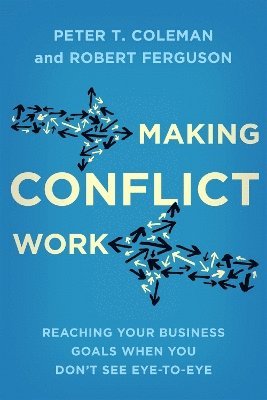
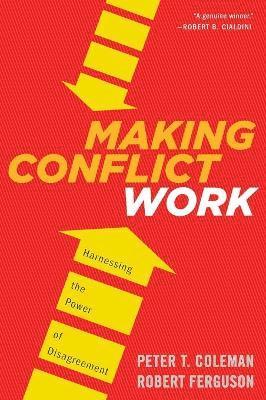
Making Conflict Work
Reaching your business goals when you don't see eye-to-eye
Häftad, Engelska, 2014
163 kr
Skickas inom 7-10 vardagar
'Coleman and Ferguson have done something remarkable: they've written an evidence-based book on the complex topic of conflict and made it easy to read, easy to understand, and, best of all, easy to use. A genuine winner' Robert B. Cialdini, author of Influence: The Psychology of PersuasionA PRACTICAL GUIDE TO NAVIGATING WORKPLACE CONFLICTS Work conflict is risky. It can go bad and poison employee health, work relationships and organizational climates, or it can go well and help to energize problem solving, innovation and bottom-line effectiveness. Managing conflicts up and down the chain of command at work can be particularly treacherous, as power differences complicate conflicts and constrain response options. Organizations are rife with stories of executives and managers who abuse their power, employees who overstep their authority, and the resulting conflicts that get stuck in downward spirals. When people find themselves in conflict, they immediately become aware of the balance of power in the situation or relationship: 'Hey, you work for me, so back off!', or 'Wow, he is much bigger and drunker than I thought he was before I told him to shut up', so understanding how conflict and power affect each other is vital to effective conflict management.In Making Conflict Work, Peter Coleman and Robert Ferguson, leading experts in the field of conflict resolution, address the key role of power in workplace tension. Coleman and Ferguson explain how power dynamics function and provide step-by-step guidance to determining your standing in a conflict and identifying and applying the strategies that will lead to the best resolution. Drawing on the authors' years of research and consulting experience, Making Conflict Work offers seven new strategies and dozens of tactics for negotiating disputes at all levels of an organization. This powerful approach can turn workplace tensions into catalysts for creativity, innovation, and meaningful change.
258 kr
Skickas inom 3-6 vardagar
1 014 kr
Skickas inom 7-10 vardagar
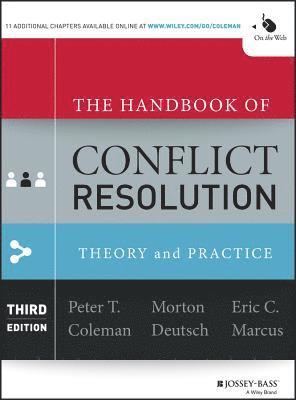
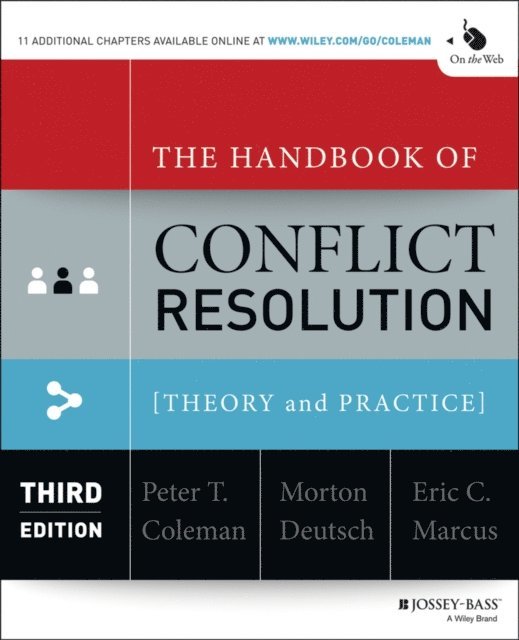
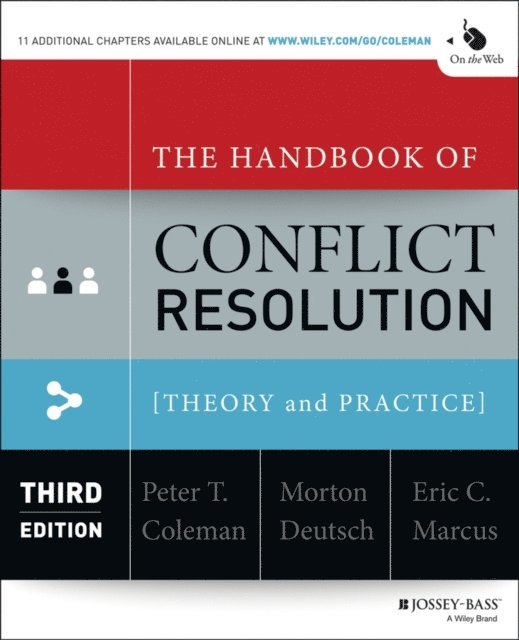
Praise for The Handbook of Conflict Resolution "This handbook is a classic. It helps connect the research of academia to the practical realities of peacemaking and peacebuilding like no other. It is both comprehensive and deeply informed on topics vital to the field like power, gender, cooperation, emotion, and trust. It now sits prominently on my bookshelf."—Leymah Gbowee, Nobel Peace Prize Laureate"The Handbook of Conflict Resolution offers an astonishing array of insightful articles on theory and practice by leading scholars and practitioners. Students, professors, and professionals alike can learn a great deal from studying this Handbook."—William Ury, Director, Global Negotiation Project, Harvard University; coauthor, Getting to Yes and author, The Third Side"Morton Deutsch, Peter Coleman, and Eric Marcus put together a handbook that will be helpful to many. I hope the book will reach well beyond North America to contribute to the growing worldwide interest in the constructive resolution of conflict. This book offers instructive ways to make this commitment a reality."—George J. Mitchell, Former majority leader of the United States Senate; former chairman of the Peace Negotiations in Northern Ireland and the International Fact-Finding Committee on Violence in the Middle East; chairman of the board, Walt Disney Company; senior fellow at the School of International and Public Affairs, Columbia University"Let's be honest. This book is just too big to carry around in your hand. But that's because it is loaded with the most critical essays linking the theory and practice of conflict resolution. The Handbook of Conflict Resolution is heavy on content and should be a well-referenced resource on the desk of every mediator—as it is on mine."—Johnston Barkat, Assistant Secretary-General, Ombudsman and Mediation Services, United Nations
Conflict, Interdependence, and Justice
The Intellectual Legacy of Morton Deutsch
Inbunden, Engelska, 2011
1 034 kr
Skickas inom 10-15 vardagar
Morton Deutsch is considered the founder of modern conflict resolution theory and practice. He has written and researched areas which pioneered current efforts in conflict resolution and diplomacy. This volume showcases six of Deutsch’s more notable and influential papers, and include complementary chapters written by other significant contributors working in these areas who can situate the original papers in the context of the existing state of scholarship.
2 041 kr
Skickas inom 10-15 vardagar
Scholarship on the psychology of peace has been accumulating for decades. The approach employed has been predominantly centered on addressing and preventing conflict and violence and less on the conditions associated with promoting peace. Concerns around nuclear annihilation, enemy images, discrimination, denial of basic human needs, terrorism and torture have been the focal points of most research. The Psychological Components of a Sustainable Peace moves beyond a prevention-orientation to the study of the conditions for increasing the probabilities for sustainable, cooperative peace. Such a view combines preventative scholarship with a promotive-orientation to the study of peaceful situations and societies.The contributors to this volume examine the components of various psychological theories that contribute to the promotion of a harmonious, sustainable peace. Underlying this orientation is the belief that promoting the ideas and actions which can lead to a sustainable, harmonious peace will not only contribute to the prevention of war, but will also lead to more positive, constructive relations among people and nations and to a more sustainable planet.The Psychological Components of a Sustainable Peace is valuable and stimulating reading for researchers in peace psychology, political psychology, and conflict resolution as well as others who are interested in developing a sustainable, harmonious world.
2 041 kr
Skickas inom 10-15 vardagar
Scholarship on the psychology of peace has been accumulating for decades. The approach employed has been predominantly centered on addressing and preventing conflict and violence and less on the conditions associated with promoting peace. Concerns around nuclear annihilation, enemy images, discrimination, denial of basic human needs, terrorism and torture have been the focal points of most research. The Psychological Components of a Sustainable Peace moves beyond a prevention-orientation to the study of the conditions for increasing the probabilities for sustainable, cooperative peace. Such a view combines preventative scholarship with a promotive-orientation to the study of peaceful situations and societies.The contributors to this volume examine the components of various psychological theories that contribute to the promotion of a harmonious, sustainable peace. Underlying this orientation is the belief that promoting the ideas and actions which can lead to a sustainable, harmonious peace will not only contribute to the prevention of war, but will also lead to more positive, constructive relations among people and nations and to a more sustainable planet.The Psychological Components of a Sustainable Peace is valuable and stimulating reading for researchers in peace psychology, political psychology, and conflict resolution as well as others who are interested in developing a sustainable, harmonious world.
Conflict, Interdependence, and Justice
The Intellectual Legacy of Morton Deutsch
Häftad, Engelska, 2014
1 034 kr
Skickas inom 10-15 vardagar
Morton Deutsch is considered the founder of modern conflict resolution theory and practice. He has written and researched areas which pioneered current efforts in conflict resolution and diplomacy. This volume showcases six of Deutsch’s more notable and influential papers, and include complementary chapters written by other significant contributors working in these areas who can situate the original papers in the context of the existing state of scholarship.
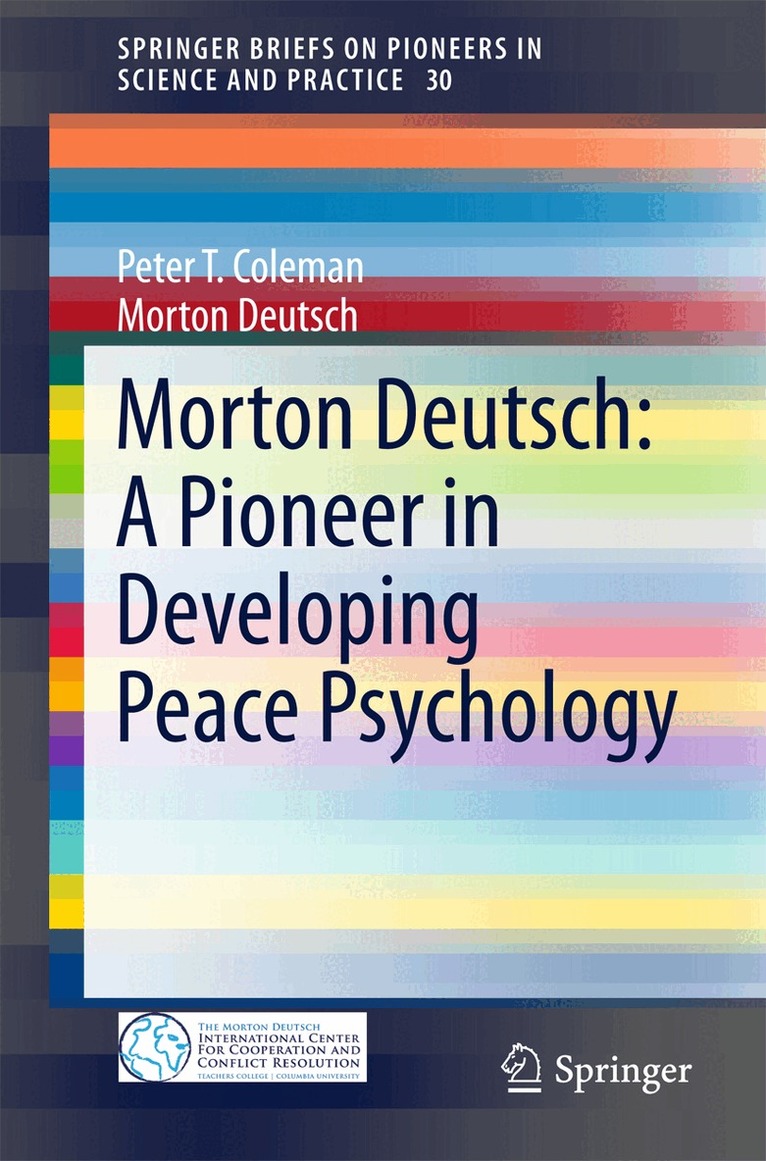
Del 30 - SpringerBriefs on Pioneers in Science and Practice
Morton Deutsch: A Pioneer in Developing Peace Psychology
Häftad, Engelska, 2015
493 kr
Skickas inom 10-15 vardagar
Commemorating Morton Deutsch’s 95th birthday, this book presents ten major texts by this highly respected social psychologist on war and peace. This first volume presents Deutsch in his role as a leading social science activist on issues of war and peace – writing papers, making speeches and participating in demonstrations. After serving in the U.S. Air Force during World War II and being awarded two Distinguished Flying Cross medals, as a psychologist he was determined to work for a more peaceful world. Influenced by Kurt Lewin, who believed that nothing was as practical as a good theory, Deutsch pursued theoretical work on such issues as cooperation-competition, conflict resolution and social justice with regard to issues of war and peace. As President of the Society for the Study of Peace, Conflict and Violence, the Society for the Psychological Study of Social Issues and the International Society of Political Psychology, he helped to foster social science efforts to make for a more peaceful world.
493 kr
Skickas inom 10-15 vardagar
Commemorating Morton Deutsch’s 95th birthday, this book presents ten major texts by this highly respected social psychologist on war and peace.
1 342 kr
Skickas inom 10-15 vardagar
Conflict is inherent in virtually every aspect of human relations, from sport to parliamentary democracy, from fashion in the arts to paradigmatic challenges in the sciences, and from economic activity to intimate relationships. Yet, it can become among the most serious social problems humans face when it loses its constructive features and becomes protracted over time with no obvious means of resolution.This book addresses the subject of intractable social conflict from a new vantage point. Here, these types of conflict represent self-organizing phenomena, emerging quite naturally from the ongoing dynamics in human interaction at any scale—from the interpersonal to the international. Using the universal language and computational framework of nonlinear dynamical systems theory in combination with recent insights from social psychology, intractable conflict is understood as a system locked in special attractor states that constrain the thoughts and actions of the parties to the conflict. The emergence and maintenance of attractors for conflict can be described by means of formal models that incorporate the results of computer simulations, experiments, field research, and archival analyses. Multi-disciplinary research reflecting these approaches provides encouraging support for the dynamical systems perspective.Importantly, this text presents new views on conflict resolution. In contrast to traditional approaches that tend to focus on basic, short-lived cause-effect relations, the dynamical perspective emphasizes the temporal patterns and potential for emergence in destructive relations. Attractor deconstruction entails restoring complexity to a conflict scenario by isolating elements or changing the feedback loops among them. The creation of a latent attractor trades on the tendency toward multi-stability in dynamical systems and entails the consolidation of incongruent (positive) elements into a coherent structure. In the bifurcation scenario, factors are identified that can change the number and types of attractors in a conflict scenario. The implementation of these strategies may hold the key to unlocking intractable conflict, creating the potential for constructive social relations.
1 342 kr
Skickas inom 10-15 vardagar
Conflict is inherent in virtually every aspect of human relations, from sport to parliamentary democracy, from fashion in the arts to paradigmatic challenges in the sciences, and from economic activity to intimate relationships. Yet, it can become among the most serious social problems humans face when it loses its constructive features and becomes protracted over time with no obvious means of resolution.This book addresses the subject of intractable social conflict from a new vantage point. Here, these types of conflict represent self-organizing phenomena, emerging quite naturally from the ongoing dynamics in human interaction at any scale—from the interpersonal to the international. Using the universal language and computational framework of nonlinear dynamical systems theory in combination with recent insights from social psychology, intractable conflict is understood as a system locked in special attractor states that constrain the thoughts and actions of the parties to the conflict. The emergence and maintenance of attractors for conflict can be described by means of formal models that incorporate the results of computer simulations, experiments, field research, and archival analyses. Multi-disciplinary research reflecting these approaches provides encouraging support for the dynamical systems perspective.Importantly, this text presents new views on conflict resolution. In contrast to traditional approaches that tend to focus on basic, short-lived cause-effect relations, the dynamical perspective emphasizes the temporal patterns and potential for emergence in destructive relations. Attractor deconstruction entails restoring complexity to a conflict scenario by isolating elements or changing the feedback loops among them. The creation of a latent attractor trades on the tendency toward multi-stability in dynamical systems and entails the consolidation of incongruent (positive) elements into a coherent structure. In the bifurcation scenario, factors are identified that can change the number and types of attractors in a conflict scenario. The implementation of these strategies may hold the key to unlocking intractable conflict, creating the potential for constructive social relations.