Peter-Theodor Wilrich - Böcker
Visar alla böcker från författaren Peter-Theodor Wilrich. Handla med fri frakt och snabb leverans.
10 produkter
10 produkter
553 kr
Skickas inom 10-15 vardagar
3 900 kr
Skickas inom 10-15 vardagar
Ein Klassiker mit hoher Verbreitung in der Praxis. Die Zusammenstellung der für die Praxis der mathematisch-statistischen Arbeiten wichtigen Verfahren mit ihren Grundlagen, den benötigten Formeln und den erforderlichen Tabellen oder Nomogrammen ist einmalig. Der Verzicht auf Beweise und Ableitungen gelingt, weil durchgerechnete Beispiele die wesentlichsten Methoden anschaulich erläutern.Anwendungen finden sich in vielen Bereichen der Naturwissenschaften, Ingenieurwissenschaften, Wirtschaftswissenschaften, Medizin und Sozialwissenschaften. Sie dienen beispielsweise dazu, anfallende Daten auszuwerten und Zusammenhänge zwischen Einfluß- und Zielgrößen darzulegen.
3 706 kr
Skickas inom 10-15 vardagar
Ein Klassiker mit hoher Verbreitung in der Praxis. Die Zusammenstellung der für die Praxis der mathematisch-statistischen Arbeiten wichtigen Verfahren mit ihren Grundlagen, den benötigten Formeln und den erforderlichen Tabellen oder Nomogrammen ist einmalig. Der Verzicht auf Beweise und Ableitungen gelingt, weil durchgerechnete Beispiele die wesentlichsten Methoden anschaulich erläutern.Anwendungen finden sich in vielen Bereichen der Naturwissenschaften, Ingenieurwissenschaften, Wirtschaftswissenschaften, Medizin und Sozialwissenschaften. Sie dienen beispielsweise dazu, anfallende Daten auszuwerten und Zusammenhänge zwischen Einfluß- und Zielgrößen darzulegen.
1 101 kr
Skickas inom 10-15 vardagar
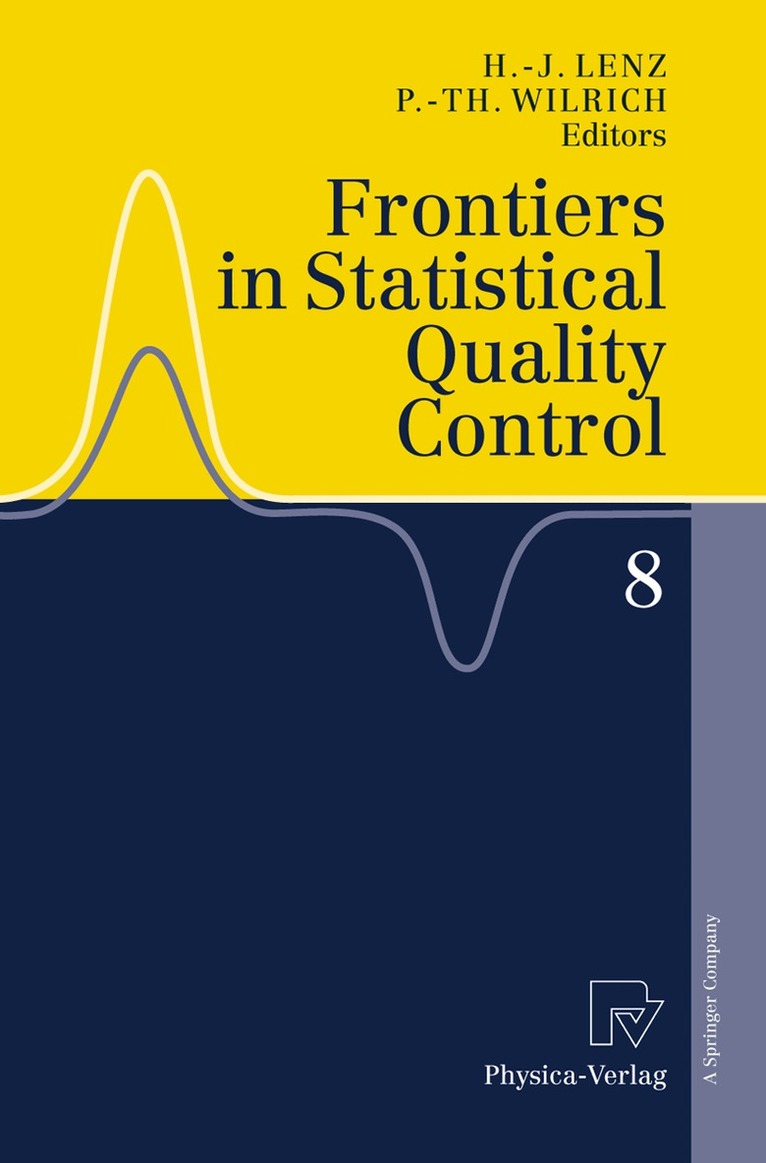
This volume treats the four main categories of Statistical Quality Control: General SQC Methodology, On-line Control including Sampling Inspection and Statistical Process Control, Off-line Control with Data Analysis and Experimental Design, and, fields related to Reliability. Experts with international reputation present their newest contributions.
538 kr
Skickas inom 10-15 vardagar
Like the first three volumes, published in 1981, 1984 and 1987 and met with a lively response, the present volume is collecting contributions stressed on methodology or successful industrial applications. The papers are classified under three main headings; sampling inspection, process quality control and experimental design. In the first group there are nine papers on acceptance sampling. The second large group of papers deal with control charts and process control and the third group of papers includes contributions on experimental design.
1 632 kr
Skickas inom 10-15 vardagar
Like the preceding volumes, and met with a lively response, the present volume is collecting contributions stressed on methodology or successful industrial applications. The papers are classified under four main headings: sampling inspection, process quality control, data analysis and process capability studies and finally experimental design.
1 069 kr
Skickas inom 10-15 vardagar
The book is a collection of papers presented at the 5th International Workshop on Intelligent Statistical Quality Control in Wurzburg, Germany. Contributions deal with methodology and successful industrial applications. They can be grouped in four catagories: Sampling Inspection, Statistical Process Control, Data Analysis and Process Capability Studies and Experimental Design.
1 069 kr
Skickas inom 10-15 vardagar
In Canada, acceptance sampling has been used in legal metrology applications for nearly four decades. One of its principal uses has been in the quality control of utility meters that measure electricity or natural gas supplied to consumers. By law, such meters must be inspected for conformance to specification requirements prior to use and be periodically inspected while huse. With few exceptions, due to the numerous utility companies in the country and their varied practices, the meters exist in the form of isolated lots for inspection purposes. The proportion of nonconforming meters in a lot has traditionally defined lot quality for utility meter sampling inspection purposes. Another principal application of acceptance sampling has been in the quality control of the net contents of packaged products sold in the marketplace. Such products include those sold on the basis of such measures as weight, volume, length, and area. In this particular application, products are also usually inspected on an isolated-lot basis for regulatory purposes. However, lot quality is usually measured on the basis of two criteria for such products: the proportion of nonc- forming packages in the lot and the lot mean quantity. This section reviews Canadian quality control practices in these two areas of application, highlighting some of the deficiencies and issues. Three-class s- pling plans are proposed as a possible solution to some of these deficiencies and issues.
1 069 kr
Skickas inom 10-15 vardagar
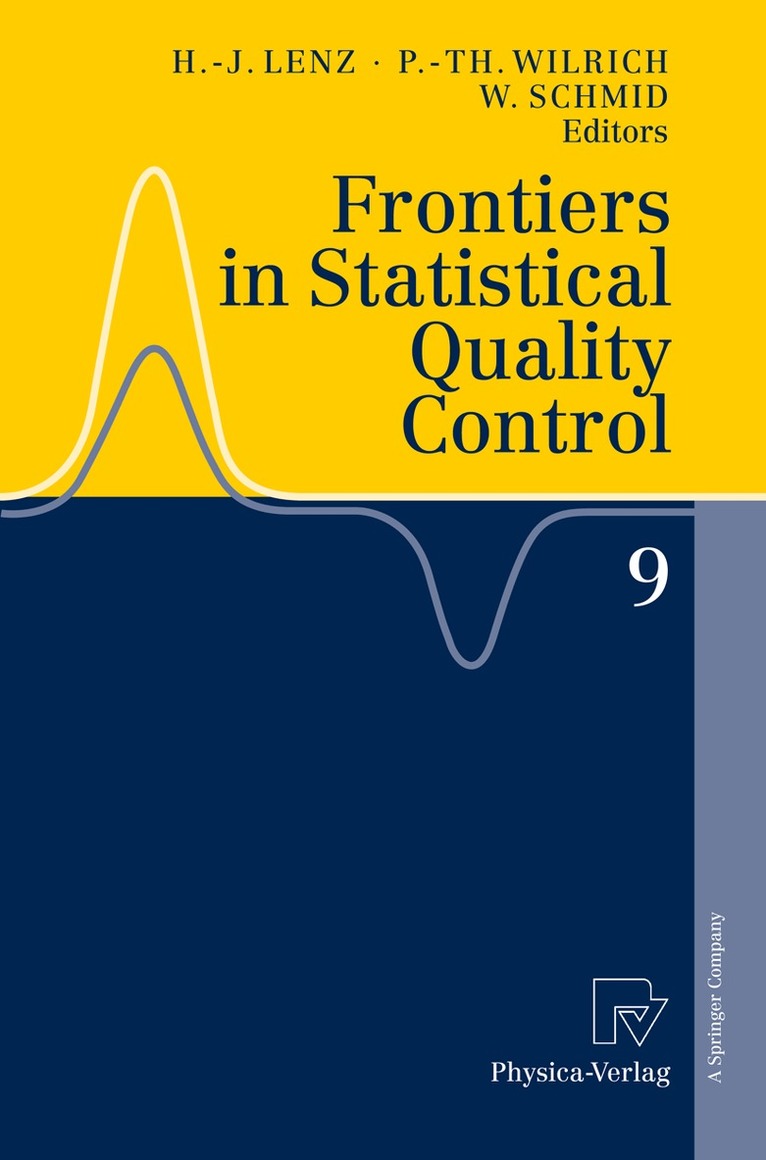
The twenty-three papers in this volume are carefully selected, reviewed and revised for this volume, and are divided into two parts: Part 1: "On-line Control" with subchapters 1.1 "Control Charts" and 1.2 "Surveillance Sampling and Sampling Plans" and Part 2:"Off-line Control".
538 kr
Skickas inom 10-15 vardagar
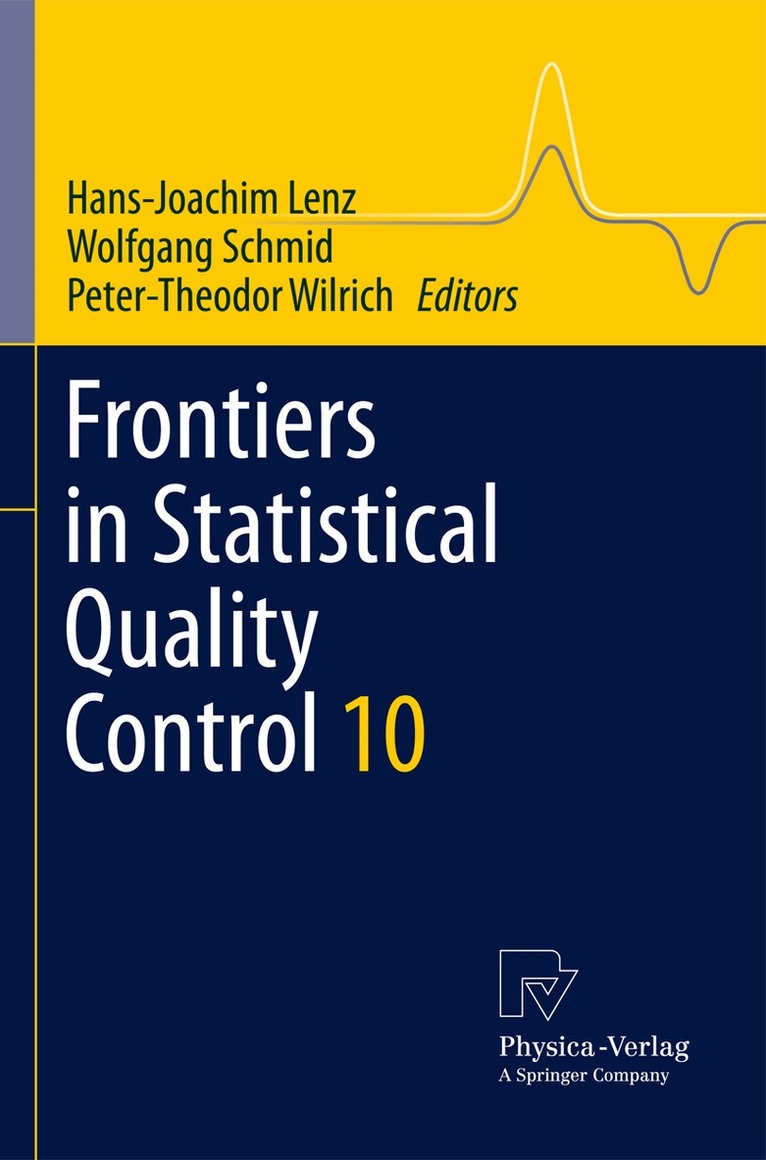
The 10th International Workshop on Intelligent Statistical Quality Control took place in Seattle, USA, Aug 18-20, 2010. It was hosted by Professor C. M. Mastrangelo, Department of Industrial and Systems Engineering, University of Washington, Seattle. The workshop was jointly organized by Professors H. J. Lenz, C. M. Mastrangelo, W. Schmid and P.T. Wilrich. The twenty-seven papers in this volume were carefully selected by the scientific program committee, reviewed by its members, revised by the authors and, finally, adapted for this volume by the editors.The book is divided into two parts: Part I "On-line Control" covers fields like control charting, monitoring and surveillance as well as acceptance sampling. Part II "Off-line Control" is devoted to experimental design, process capability analysis and data quality.The purpose of the book is on the one hand to provide insights into important new developments in the area of statistical quality control – especially surveillance and monitoring – and on the other hand to critically discuss methods used in on-line and off-line statistical quality control.