Peter van Dommelen - Böcker
Visar alla böcker från författaren Peter van Dommelen. Handla med fri frakt och snabb leverans.
6 produkter
6 produkter
Material Connections in the Ancient Mediterranean
Mobility, Materiality and Identity
Inbunden, Engelska, 2010
2 160 kr
Skickas inom 10-15 vardagar
Material Connections eschews outdated theory, tainted by colonialist attitudes, and develops a new cultural and historical understanding of how factors such as mobility, materiality, conflict and co-presence impacted on the formation of identity in the ancient Mediterranean. Fighting against ‘hyper-specialisation’ within the subject area, it explores the multiple ways that material culture was used to establish, maintain and alter identities, especially during periods of transition, culture encounter and change. A new perspective is adopted, one that perceives the use of material culture by prehistoric and historic Mediterranean peoples in formulating and changing their identities. It considers how objects and social identities are entangled in various cultural encounters and interconnections.The movement of people as well as objects has always stood at the heart of attempts to understand the courses and process of human history. The Mediterranean offers a wealth of such information and Material Connections, expanding on this base, offers a dynamic, new subject of enquiry – the social identify of prehistoric and historic Mediterranean people – and considers how migration, colonial encounters, and connectivity or insularity influence social identities. The volume includes a series of innovative, closely related case studies that examine the contacts amongst various Mediterranean islands – Sardinia, Corsica, Sicily, Crete, Cyprus, the Balearics – and the nearby shores of Italy, Greece, North Africa, Spain and the Levant to explore the social and cultural impact of migratory, colonial and exchange encounters. Material Connections forges a new path in understanding the material culture of the Mediterranean and will be essential for those wishing to develop their understanding of material culture and identity in the Mediterranean.
Material Connections in the Ancient Mediterranean
Mobility, Materiality and Identity
Häftad, Engelska, 2010
596 kr
Skickas inom 10-15 vardagar
Material Connections eschews outdated theory, tainted by colonialist attitudes, and develops a new cultural and historical understanding of how factors such as mobility, materiality, conflict and co-presence impacted on the formation of identity in the ancient Mediterranean. Fighting against ‘hyper-specialisation’ within the subject area, it explores the multiple ways that material culture was used to establish, maintain and alter identities, especially during periods of transition, culture encounter and change. A new perspective is adopted, one that perceives the use of material culture by prehistoric and historic Mediterranean peoples in formulating and changing their identities. It considers how objects and social identities are entangled in various cultural encounters and interconnections.The movement of people as well as objects has always stood at the heart of attempts to understand the courses and process of human history. The Mediterranean offers a wealth of such information and Material Connections, expanding on this base, offers a dynamic, new subject of enquiry – the social identify of prehistoric and historic Mediterranean people – and considers how migration, colonial encounters, and connectivity or insularity influence social identities. The volume includes a series of innovative, closely related case studies that examine the contacts amongst various Mediterranean islands – Sardinia, Corsica, Sicily, Crete, Cyprus, the Balearics – and the nearby shores of Italy, Greece, North Africa, Spain and the Levant to explore the social and cultural impact of migratory, colonial and exchange encounters. Material Connections forges a new path in understanding the material culture of the Mediterranean and will be essential for those wishing to develop their understanding of material culture and identity in the Mediterranean.
538 kr
Kommande
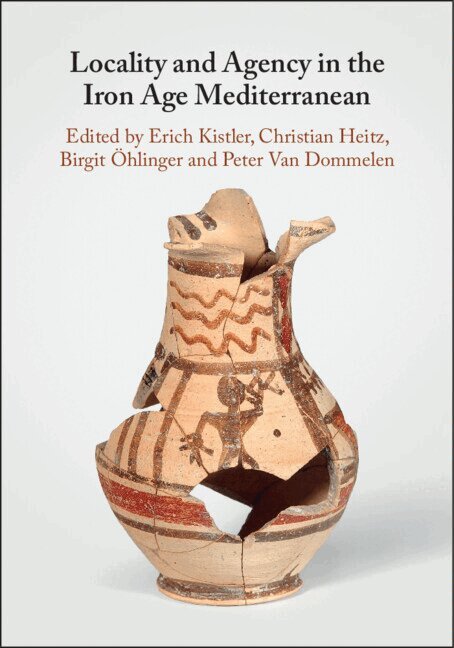
Against the background of the interest in ancient Mediterranean connectivity and globalization, the present volume examines local places and local communities. Exploring the interplay between the local and the global, the focus shifts from long-distance connections and 'global' trends to the local dimensions of Mediterranean interactions, highlighting how local contexts engaged with their long-distance counterparts. Given the transformative nature of this period and region, our focus is firmly on the western Mediterranean during the first half of the first millennium BCE. Discussions of the local places and local communities of the Iron Age West Mediterranean are wrapped around the twin notions of agency and locality. We argue that everyday local agency produces locality in an ongoing dialectic, ranging from collaboration to struggle, with globalizing influences and colonial forces. The eighteen West Mediterranean case studies are organized around the themes of 'Indigeneity and locality', 'agency and empowerment' and 'practice and production'.
1 543 kr
Kommande
Against the background of the interest in ancient Mediterranean connectivity and globalization, the present volume examines local places and local communities. Exploring the interplay between the local and the global, the focus shifts from long-distance connections and 'global' trends to the local dimensions of Mediterranean interactions, highlighting how local contexts engaged with their long-distance counterparts. Given the transformative nature of this period and region, our focus is firmly on the western Mediterranean during the first half of the first millennium BCE. Discussions of the local places and local communities of the Iron Age West Mediterranean are wrapped around the twin notions of agency and locality. We argue that everyday local agency produces locality in an ongoing dialectic, ranging from collaboration to struggle, with globalizing influences and colonial forces. The eighteen West Mediterranean case studies are organized around the themes of 'Indigeneity and locality', 'agency and empowerment' and 'practice and production'.
1 212 kr
Skickas inom 5-8 vardagar
Phoenician and Punic archaeology have long been overlooked by Mediterranean archaeologists, who focused their attention on Greek and Roman cultures. Although the Punic cities and their rural landscapes are to be found along the southern shores and on the islands of the western Mediterranean basin, comprehensive studies of these archaeological remains are virtually non-existent. It is the aim of this book to investigate Punic rural settlement in the western Mediterranean by bringing together and comparing the currently dispersed existing evidence for rural Punic settlement. The core of the volume is accordingly made up by a detailed discussion of the archaeological evidence for Punic rural settlement from Sardinia, Sicily, Ibiza, mainland Spain and North Africa.Because agriculture and agrarian produce have always been assumed to have played a critical role in the Carthaginian colonial expansion, the connections between the various colonial contexts and the local characteristics of rural organisation explored in detail in order to enhance our understanding of these colonial contexts.This in turn provides better insight in Carthaginian colonialism and local Punic rural settlement and their role in the wider Mediterranean context. By publishing this evidence and these interpretations in English, we hope to draw attention to Punic archaeology in general and to these rural studies in particular and to situate them in the wider Mediterranean context of both classical Antiquity and Mediterranean archaeology.
653 kr
Skickas inom 5-8 vardagar
Phoenician and Punic archaeology have long been overlooked by Mediterranean archaeologists, who focused their attention on Greek and Roman cultures. Although the Punic cities and their rural landscapes are to be found along the southern shores and on the islands of the western Mediterranean basin, comprehensive studies of these archaeological remains are virtually non-existent. It is the aim of this book to investigate Punic rural settlement in the western Mediterranean by bringing together and comparing the currently dispersed existing evidence for rural Punic settlement. The core of the volume is accordingly made up by a detailed discussion of the archaeological evidence for Punic rural settlement from Sardinia, Sicily, Ibiza, mainland Spain and North Africa. Because agriculture and agrarian produce have always been assumed to have played a critical role in the Carthaginian colonial expansion, the connections between the various colonial contexts and the local characteristics of rural organisation explored in detail enhances our understanding of these colonial contexts.This in turn provides better insight in Carthaginian colonialism and local Punic rural settlement and their role in the wider Mediterranean context.