Peter Van Elsuwege - Böcker
Visar alla böcker från författaren Peter Van Elsuwege. Handla med fri frakt och snabb leverans.
5 produkter
5 produkter
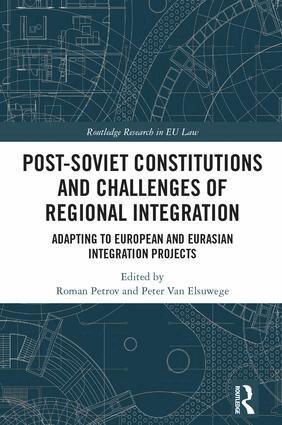
Post-Soviet Constitutions and Challenges of Regional Integration
Adapting to European and Eurasian integration projects
Häftad, Engelska, 2019
568 kr
Skickas inom 10-15 vardagar
This book explores the implications of European and Eurasian integration projects for the constitutional orders of post-Soviet countries. On the one hand, the process of Eurasian integration, culminating in the establishment of the Eurasian Economic Union (EAEU), led to the creation of new institutions and mechanisms influencing the domestic legal order of the participating countries. On the other hand, the process of European integration, epitomised through the European Union (EU), constitutes an important source of reference for domestic constitutional developments in the countries which recently concluded a new generation of Association Agreements with the EU. This book analyses the implications of both processes. The book addresses the relevant experience of the countries from Central and Eastern Europe with transitional constitutionalism, mapping out the significance of European and Eurasian integration for protecting the rule of law in the post-Soviet space and identifying the constitutional implications and challenges of the EAEU and the new generation of Association Agreements. It also provides detailed country reports on national constitutional orders in the post-Soviet space and their adaptability to regional integration projects, authored by leading academics from the countries concerned, providing a number of general reflections about the evolution of post-Soviet constitutions in light of European and Eurasian integration projects.
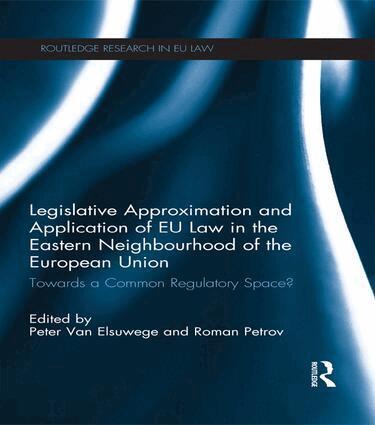
Legislative Approximation and Application of EU Law in the Eastern Neighbourhood of the European Union
Towards a Common Regulatory Space?
Inbunden, Engelska, 2014
1 983 kr
Skickas inom 10-15 vardagar
This book explores the exportation and application of European Union legislation beyond EU borders. It clarifies the means and instruments of the voluntary application of the EU’s norms by third countries and analyses in detail the process of legislative approximation between the EU and its East European neighbours. It also assesses the extent to which the EU is successful in promoting its legal standards abroad.The first part of the book addresses the EU’s mechanisms and instruments promoting the export of its own laws and practices to other countries. Key issues include the post-Lisbon constitutional basis for the EU’s engagement with its Eastern neighbours (Art. 8 TEU); the different methods of acquis export and the impact of a new generation of Association Agreements providing for the establishment of Deep and Comprehensive Free Trade Areas (DCFTAs) and, ultimately, a Neighbourhood Economic Community (NEC) between the EU and its Eastern partners. The second part of the book includes substantive country reports that analyse the process of legislative approximation and application of EU law in the Eastern Partnership countries and Russia, authored by leading academics from the countries concerned. While currently these countries are not working towards full EU membership, the EU encourages them to approximate and converge their legislation with the EU acquis. The book also offers a unique picture of current practice of the application of EU law by judiciaries in the countries of the Eastern Partnership and Russia.The book concludes with reflections on the multi-faceted character of legislative approximation and the challenges surrounding the application of EU law in the EU’s Eastern neighbourhood. The conclusions reached are highly informative as to the effectiveness of present and future EU external regional policies aimed at the promotion of EU common values and EU legislation into the legal orders of third countries.
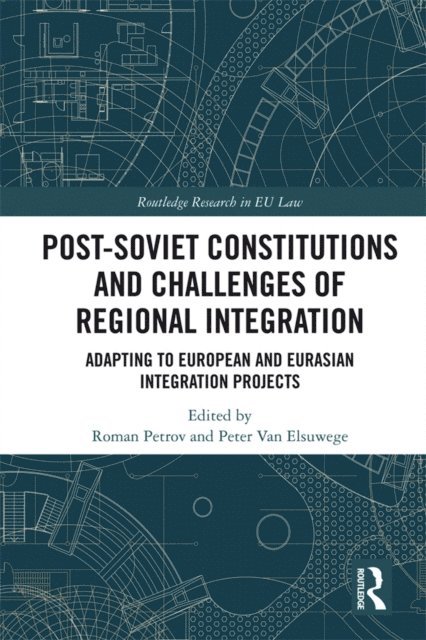
Post-Soviet Constitutions and Challenges of Regional Integration
Adapting to European and Eurasian integration projects
Inbunden, Engelska, 2017
1 921 kr
Skickas inom 10-15 vardagar
This book explores the implications of European and Eurasian integration projects for the constitutional orders of post-Soviet countries. On the one hand, the process of Eurasian integration, culminating in the establishment of the Eurasian Economic Union (EAEU), led to the creation of new institutions and mechanisms influencing the domestic legal order of the participating countries. On the other hand, the process of European integration, epitomised through the European Union (EU), constitutes an important source of reference for domestic constitutional developments in the countries which recently concluded a new generation of Association Agreements with the EU. This book analyses the implications of both processes. The book addresses the relevant experience of the countries from Central and Eastern Europe with transitional constitutionalism, mapping out the significance of European and Eurasian integration for protecting the rule of law in the post-Soviet space and identifying the constitutional implications and challenges of the EAEU and the new generation of Association Agreements. It also provides detailed country reports on national constitutional orders in the post-Soviet space and their adaptability to regional integration projects, authored by leading academics from the countries concerned, providing a number of general reflections about the evolution of post-Soviet constitutions in light of European and Eurasian integration projects.
Legislative Approximation and Application of EU Law in the Eastern Neighbourhood of the European Union
Towards a Common Regulatory Space?
Häftad, Engelska, 2016
618 kr
Skickas inom 10-15 vardagar
This book explores the exportation and application of European Union legislation beyond EU borders. It clarifies the means and instruments of the voluntary application of the EU’s norms by third countries and analyses in detail the process of legislative approximation between the EU and its East European neighbours. It also assesses the extent to which the EU is successful in promoting its legal standards abroad.The first part of the book addresses the EU’s mechanisms and instruments promoting the export of its own laws and practices to other countries. Key issues include the post-Lisbon constitutional basis for the EU’s engagement with its Eastern neighbours (Art. 8 TEU); the different methods of acquis export and the impact of a new generation of Association Agreements providing for the establishment of Deep and Comprehensive Free Trade Areas (DCFTAs) and, ultimately, a Neighbourhood Economic Community (NEC) between the EU and its Eastern partners. The second part of the book includes substantive country reports that analyse the process of legislative approximation and application of EU law in the Eastern Partnership countries and Russia, authored by leading academics from the countries concerned. While currently these countries are not working towards full EU membership, the EU encourages them to approximate and converge their legislation with the EU acquis. The book also offers a unique picture of current practice of the application of EU law by judiciaries in the countries of the Eastern Partnership and Russia.The book concludes with reflections on the multi-faceted character of legislative approximation and the challenges surrounding the application of EU law in the EU’s Eastern neighbourhood. The conclusions reached are highly informative as to the effectiveness of present and future EU external regional policies aimed at the promotion of EU common values and EU legislation into the legal orders of third countries.
Del 19 - Studies in EU External Relations
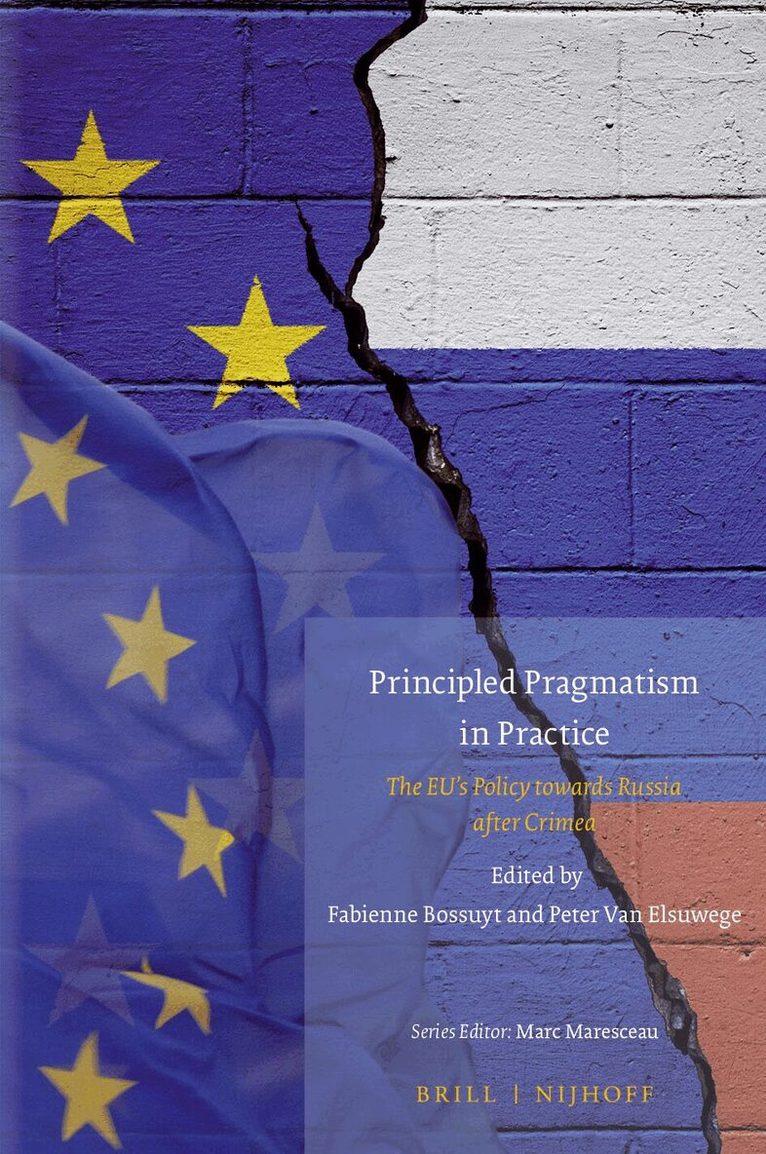
Principled Pragmatism in Practice
The EU’s Policy towards Russia after Crimea
Inbunden, Engelska, 2021
2 719 kr
Skickas inom 5-8 vardagar
As the EU’s relations with Russia remain at an all-time low and continue to be in a state of paralysis, marked by de-institutionalisation, inertia and estrangement, the EU’s policy towards Russia seems up for review. By taking stock of the implementation of the EU’s Global Strategy and the five principles that are guiding EU-Russia relations, this volume provides a forward-looking angle and contributes to a better understanding of the current EU-Russia relationship and the prospects for overcoming the existing deadlock. By bringing together European and Russian scholars and adopting an interdisciplinary perspective that combines insights from EU studies, international relations, and European and international law, the book provides a comprehensive and holistic view on the state of affairs in EU-Russia relations.