Peter Villiers - Böcker
Visar alla böcker från författaren Peter Villiers. Handla med fri frakt och snabb leverans.
7 produkter
7 produkter
206 kr
Tillfälligt slut
"Joseph Conrad: Master Mariner" presents the sailing career of Joseph Conrad.
1 105 kr
Skickas inom 10-15 vardagar
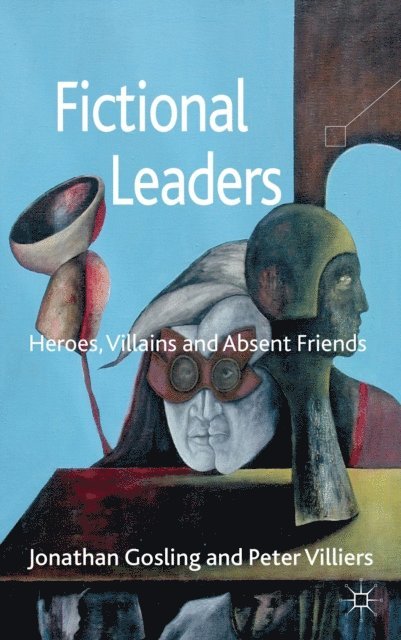
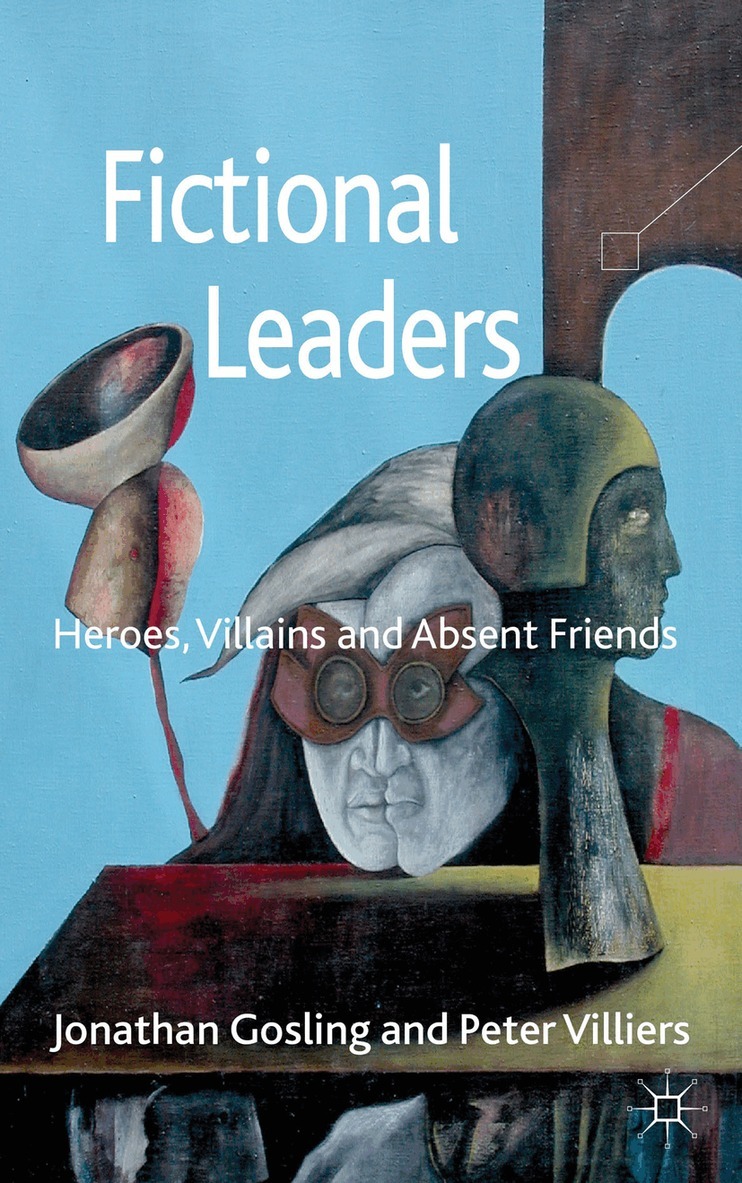
Management theory is vague about the experience of leading. Success, power, achievement are discussed but less focus is given to negative experiences leaders faced such as loneliness or disappointment. This book addresses difficult-to-explore aspects of leadership through well-known works of literature drawing lessons from fictional leaders.
1 095 kr
Skickas inom 10-15 vardagar
Management theory is vague about the experience of leading. Success, power, achievement are discussed but less focus is given to negative experiences leaders faced such as loneliness or disappointment. This book addresses difficult-to-explore aspects of leadership through well-known works of literature drawing lessons from fictional leaders.
Joseph Conrad: Master Mariner
The Novelist's Life At Sea, Based on a Previously Unpublished Study by Alan Villiers
Häftad, Engelska, 2006
262 kr
Skickas inom 5-8 vardagar
363 kr
Skickas inom 5-8 vardagar
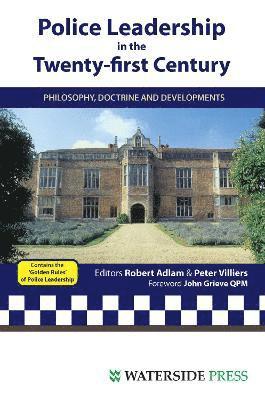
Contains the 'Golden Rules' of Police Leadership. In Police Leadership in the Twenty-first Century the editors bring together a collection of authoritative and innovative contributions to show that: Leadership is less of a mystery than is often supposed; Much mainstream leadership theory can be adapted to police leadership; The qualities required can be developed by education and training; There are certain 'Golden Rules' for police leaders. 'This is an important and timely book, not only because of the depth and breadth of the coverage of the issues but because it addresses the practical challenge of leadership at all levels ...When the challenges come ...an understanding of the underpinning principles and conflicting values of policing is vital for organizational survival': John Grieve QPM (from the Foreword) Contributors: Robert Adlam, John Alderson, Ian Blair, Jennifer Brown, Sir Robert Bunyard, Garry Elliott, John Grieve, William C Heffernan, Seumas Miller, Terry Mitchell, Milan Pagon, Mick Palmer, Robert Panzarella, Neil Richards, Roger Scruton, and Peter Villiers.Editors: Robert Adlam was Reader in the National Police Leadership Faculty at Bramshill and Peter Villiers Head of Human Rights. Through their work at the Police Staff College and beyond, they gained a unique insight into the challenges and demands of police leadership and from the experience and beliefs of an extensive range of experts, including the contributors to this volume. They have been involved in leadership development programmes for senior officers from police forces in the United Kingdom and abroad, including nations seeking to join the European Community. This book is based on that work.
287 kr
Skickas inom 11-20 vardagar
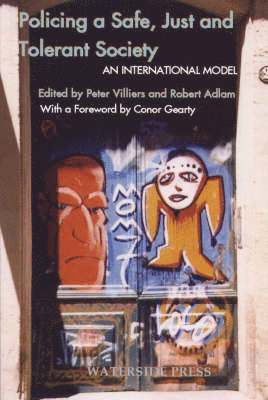
Is public safety a prior requisite for tolerance - and how integral to justice are tolerance and safety? To build and sustain a society that is tolerant safe and respects other fundamental principles is a key challenge of the modern era: and the theme of this book. This title is from the authors of the acclaimed "Police Leadership in the 21st Century" (Waterside Press, 2003). With a Foreword by Conor Gearty plus other expert contributions . In "Police Leadership in the 21st Century", the authors argued that policing by consent and democratic leadership fit together and that autocratic leadership has no place in modern policing. Democratic leadership, however, is a necessary but not sufficient condition for success. The police service of a modernising democracy needs to be sure of its ethos and clear in its social philosophy if it is to assert and retain the operational independence from political direction that is needed for professional excellence.At the same time, a modern police service needs to be able to achieve success in co-operation with other agencies in order to promote and sustain public safety within the context of a just and tolerant society.As Conor Gearty (Professor of Human Rights Law and Rausing Director of the Centre for the Study of Human Rights, London School of Economics) writes in his preface to this volume: the reader will find in these pages an approach to policing that, though it may originate in critical thinking in Britain and the US, goes far beyond both jurisdictions in its implications and application. Such breadth is especially to be welcomed in this age of increased global co-operation in policing. The police officer wherever he or she might be in the world should wear the badge of virtue as well as of authority, and a great strength of this book is that it explains what this means while also showing that it is possible.This title includes work by Edwin Delattre, John Kleinig, Charles Heffernan, Alasdair MacIntyre, Seumas Miller, Milan Pagon and others explores the changing demands on police virtue and identifies the fundamental values that need to be re-appraised and if necessary re-asserted. Satish Kumar would prefer to see a society working towards compassion than one that rested at the half-way stage of tolerance.From another perspective, Sir David Calvert-Smith, the former Director of Public Prosecutions for England and Wales, argues that there must be limits to tolerance: 'No society will wish to tolerate the intolerable'.David Canter compares the work of the police officer and that of the academic and points out how each needs the other, drawing on new and long-established work on the psychology of prejudice to illustrate how the transformation of an organization requires more than good intent, however necessary as an impetus to change. Garry Elliott, a serving police officer, examines the police approach to the sharing of Best Practice within public services, and Robert Panzarella explores the emerging model of public safety policing.
320 kr
Skickas inom 5-8 vardagar
An ideal introduction for police recruits, criminal justice practitioners, criminologists and general readers. Written in a clear style and based on the experiences of author Peter Villiers who was for many years a tutor at the National Police Staff College, Bramshill. A convenient handbook for anyone wanting an accessible yet thought-provoking account of a key public institution. Covers such key topics as The nature and purposes of policing A short history The 'original authority' of police constables Police forces and police authorities Detective work Squads, teams, units and operations Training and leadership Crime prevention and crime reduction Forensics, science and technology Powers of arrest, detention and charge Ethics, discipline and integrity Common standards and values Protection of the public Terrorism (including modern-day powers) The Serious Organized Crime Agency Police community support officers Corruption and the use of 'deception' Policing in the era of human rights Interpol and Europol Examples of policing from abroad Also contains a Glossary of Words, Phrases, Acronyms and Abbreviations and a Timeline.Reviews 'This book will be a valuable text because it covers the broad varying aspects of policing and investigation, providing a very useful insight. The author is certainly not reluctant to state his own views and I am of the view that this will provide a catalyst for productive discussion': Dr Peter Hall, Coventry University. 'An authoritative account of the historical development and contemporary practice of police work. It will provide useful insights into policing to students pursuing academic courses in Higher Education and will be of considerable use and interest to those considering policing as a career as well as to serving practitioners': Policing Today 'A substantial introduction to Policing ...will offer any potential recruit an opportunity to discuss and debate before he/she commences learning Police law with its all-important definitions and Powers of Arrest': Internet Law Book Reviews 'A valuable text because it covers the broad varying aspects of policing and investigation, providing a very useful insight.The author is certainly not reluctant to state his own views and I am of the view that this will provide a catalyst for productive discussion': Dr Peter Hall, Coventry University 'A good informative book, explaining policy to practice': John Rotherham, St Helens College 'Very well structured. Liked the Glossary and Timeline. Excellent historical base': Ann Kneebone, Truro and Penwith College Author Peter Villiers is a police adviser and consultant, editor of the international website journal Ethics in Policing and an occasional columnist for Police Review. He lectured at the Police Staff College, Bramshill from 1986 to 2004 on ethics, leadership and human rights, including to police officers from across the United Kingdom and around the world. He has written two earlier books for Waterside Press: Police Leadership in the 21st Century: Philosophy, Doctrine and Developments (2003) and Policing A Safe, Just and Tolerant Society: An International Model for Policing (2004)(both with Dr. Robert Adlam). He is also the author of a range of further works on policing, ethics, human rights and leadership.