Peter W. Singer – författare
Visar alla böcker från författaren Peter W. Singer. Handla med fri frakt och snabb leverans.
3 produkter
3 produkter
Inbunden, Engelska, 2014
846 kr
Skickas inom 5-8 vardagar
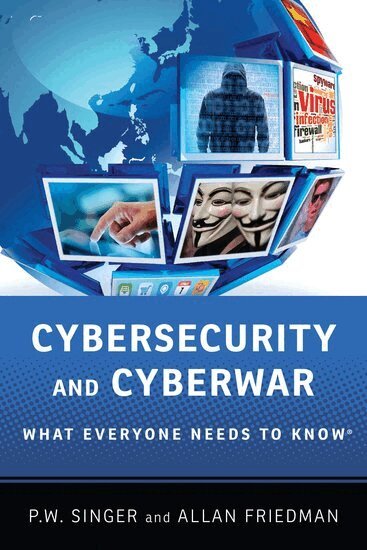
A generation ago, "cyberspace" was just a term from science fiction, used to describe the nascent network of computers linking a few university labs. Today, our entire modern way of life, from communication to commerce to conflict, fundamentally depends on the Internet. And the cybersecurity issues that result challenge literally everyone: politicians wrestling with everything from cybercrime to online freedom; generals protecting the nation from new forms of attack, while planning new cyberwars; business executives defending firms from once unimaginable threats, and looking to make money off of them; lawyers and ethicists building new frameworks for right and wrong. Most of all, cybersecurity issues affect us as individuals. We face new questions in everything from our rights and responsibilities as citizens of both the online and real world to simply how to protect ourselves and our families from a new type of danger. And, yet there is perhaps no issue that has grown so important, so quickly, and that touches so many, that remains so poorly understood. In Cybersecurity and CyberWar: What Everyone Needs to Know, New York Times best-selling author P. W. Singer and noted cyber expert Allan Friedman team up to provide the kind of easy-to-read, yet deeply informative resource book that has been missing on this crucial issue of 21st century life. Written in a lively, accessible style, filled with engaging stories and illustrative anecdotes, the book is structured around the key question areas of cyberspace and its security: how it all works, why it all matters, and what can we do? Along the way, they take readers on a tour of the important (and entertaining) issues and characters of cybersecurity, from the "Anonymous" hacker group and the Stuxnet computer virus to the new cyber units of the Chinese and US militaries. Cybersecurity and CyberWar: What Everyone Needs to Know is the definitive account on the subject for us all, which comes not a moment too soon.
Häftad, Engelska, 2014
124 kr
Skickas
Dependence on computers has had a transformative effect on human society. Cybernetics is now woven into the core functions of virtually every basic institution, including our oldest ones. War is one such institution, and the digital revolution's impact on it has been profound. The American military, which has no peer, is almost completely reliant on high-tech computer systems. Given the Internet's potential for full-spectrum surveillance and information disruption, the marshaling of computer networks represents the next stage of cyberwar. Indeed, it is upon us already. The recent Stuxnet episode, in which Israel fed a malignant computer virus into Iran's nuclear facilities, is one such example. Penetration into US government computer systems by Chinese hackers-presumably sponsored by the Chinese government-is another. Together, they point to a new era in the evolution of human conflict. In Cybersecurity: What Everyone Needs to Know, noted experts Peter W. Singer and Allan Friedman lay out how the revolution in military cybernetics occurred and explain where it is headed. They begin with an explanation of what cyberspace is before moving on to discussions of how it can be exploited and why it is so hard to defend. Throughout, they discuss the latest developments in military and security technology. Singer and Friedman close with a discussion of how people and governments can protect themselves. In sum, Cybersecurity is the definitive account on the subject for the educated layman who wants to know more about the nature of war, conflict, and security in the twenty first century.
E-bok
Engelska, 2015236 kr
Läs direkt efter köp
Children at War is the first comprehensive book to examine the growing and global use of children as soldiers. P.W. Singer, an internationally recognized expert in twenty-first-century warfare, explores how a new strategy of war, utilized by armies and warlords alike, has targeted children, seeking to turn them into soldiers and terrorists. Singer writes about how the first American serviceman killed by hostile fire in Afghanistan—a Green Beret—was shot by a fourteen-year-old Afghan boy; how suspected militants detained by U.S. forces in Iraq included more than one hundred children under the age of seventeen; and how hundreds who were taken hostage in Thailand were held captive by the rebel "God''s Army," led by twelve-year-old twins. Interweaving the voices of child soldiers throughout the book, Singer looks at the ways these children are recruited, abducted, trained, and finally sent off to fight in war-torn hot spots, from Colombia and the Sudan to Kashmir and Sierra Leone. He writes about children who have been indoctrinated to fight U.S. forces in Iraq and Afghanistan; of Iraqui boys between the ages of ten and fifteen who had been trained in military arms and tactics to become Saddam Hussein''s Ashbal Saddam (Lion Cubs); of young refugees from Pakistani madrassahs who were recruited to help bring the Taliban to power in the Afghan civil war. The author, National Security Fellow at the Brookings Institution and director of the Brookings Project on U.S. Policy Towards the Islamic World, explores how this phenomenon has come about, and how social disruptions and failures of development in modern Third World nations have led to greater global conflict and an instability that has spawned a new pool of recruits. He writes about how technology has made today''s weapons smaller and lighter and therefore easier for children to carry and handle; how one billion people in the world live in developing countries where civil war is part of everyday life; and how some children—without food, clothing, or family—have volunteered as soldiers as their only way to survive. Finally, Singer makes clear how the U.S. government and the international community must face this new reality of modern warfare, how those who benefit from the recruitment of children as soldiers must be held accountable, how Western militaries must be prepared to face children in battle, and how rehabilitation programs can undo this horrific phenomenon and turn child soldiers back into children.