Peter Westoby – författare
679 kr
Skickas inom 10-15 vardagar
595 kr
Skickas inom 10-15 vardagar
584 kr
Skickas inom 10-15 vardagar
2 244 kr
Skickas inom 10-15 vardagar
2 249 kr
Skickas inom 10-15 vardagar
188 kr
Skickas inom 5-8 vardagar
148 kr
Skickas inom 5-8 vardagar
668 kr
Läs direkt efter köp
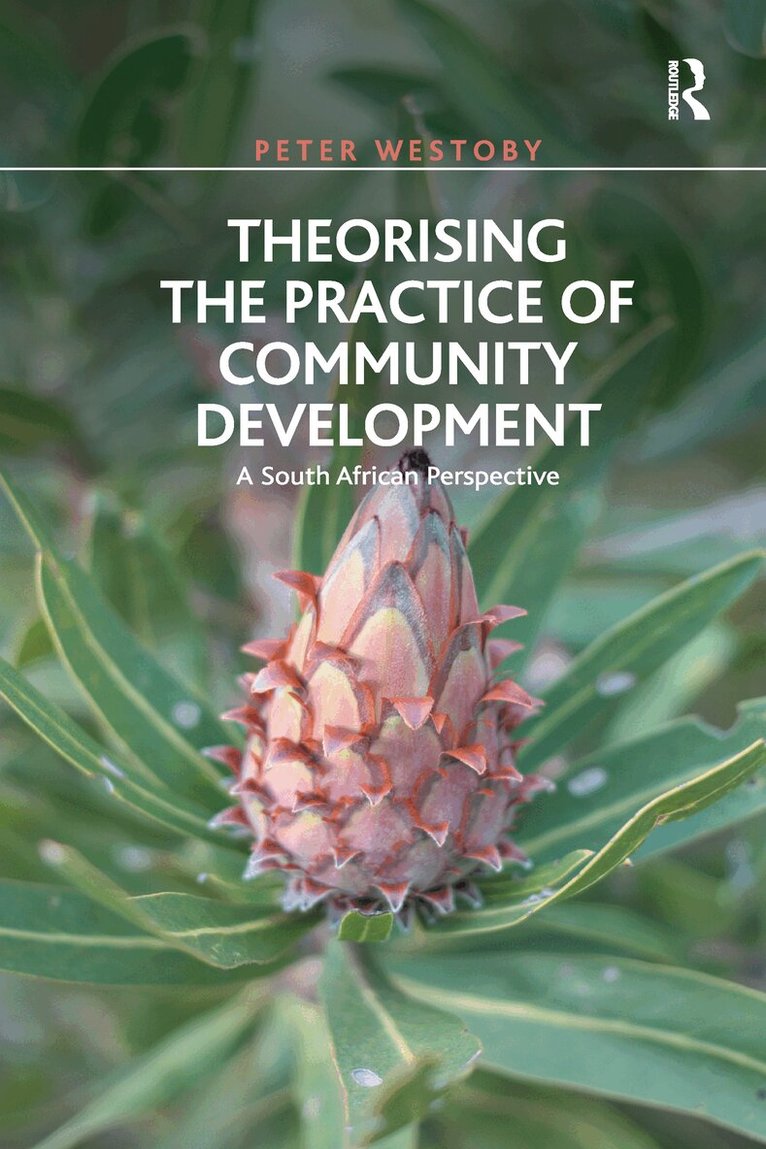
This book introduces social practitioners - community development workers, social workers, organisational change facilitators, social, ecological, cultural and political activists - to a phenomenological tradition of reflective practice.
Critiquing reductionist, linear and ossified thinking in the social and ecological fields, the book offers an exciting new alternative that is honouring of the uncertainty of all living and therefore emergent social processes. Linking phenomenology and Goethe’s ‘delicate empiricism’, the book challenges practitioners to observe and work with living processes.
As such, the book charts two stories, two inquiries. One personal and the other social. The first is the personal phenomenological inquiry into the author’s own practice, a search to make sense of the nuanced and subtle practice that he brings to the social world.
The second journey is the inquiry into how this social practice, shaped as it is by a confluence of three rivers – dialogue and community, soul and depth psychology, Goethe and ‘delicate activism’, along with other thinkers on ‘observation’ and ‘aliveness’ – can be understood in the context of a wider phenomenological reflective practice.
This second journey draws on years of experience and research in Brazil, South Africa, Australia, New Zealand and parts of Europe. Presenting a philosophical, personal and practical analysis, it offers a new approach to observation and action, while working with aliveness and complexity within the social and ecological fields.
It will be of interest to all scholars and students of social work and community development and particularly courses on social complexity.
668 kr
Läs direkt efter köp
This book introduces social practitioners - community development workers, social workers, organisational change facilitators, social, ecological, cultural and political activists - to a phenomenological tradition of reflective practice.
Critiquing reductionist, linear and ossified thinking in the social and ecological fields, the book offers an exciting new alternative that is honouring of the uncertainty of all living and therefore emergent social processes. Linking phenomenology and Goethe’s ‘delicate empiricism’, the book challenges practitioners to observe and work with living processes.
As such, the book charts two stories, two inquiries. One personal and the other social. The first is the personal phenomenological inquiry into the author’s own practice, a search to make sense of the nuanced and subtle practice that he brings to the social world.
The second journey is the inquiry into how this social practice, shaped as it is by a confluence of three rivers – dialogue and community, soul and depth psychology, Goethe and ‘delicate activism’, along with other thinkers on ‘observation’ and ‘aliveness’ – can be understood in the context of a wider phenomenological reflective practice.
This second journey draws on years of experience and research in Brazil, South Africa, Australia, New Zealand and parts of Europe. Presenting a philosophical, personal and practical analysis, it offers a new approach to observation and action, while working with aliveness and complexity within the social and ecological fields.
It will be of interest to all scholars and students of social work and community development and particularly courses on social complexity.
702 kr
Läs direkt efter köp
702 kr
Läs direkt efter köp
688 kr
Läs direkt efter köp
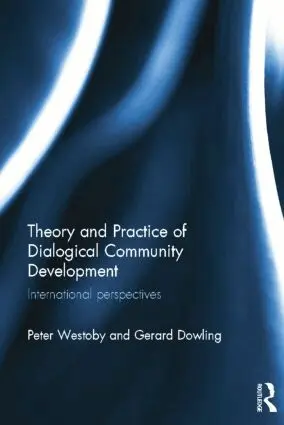
This book proposes that community development has been increasingly influenced and co-opted by a modernist, soulless, rational philosophy - reducing it to a shallow technique for ‘solving community problems’. In contrast, this dialogical approach re-maps the ground of community development practice within a frame of ideas such as dialogue, hospitality and depth. For the first time community development practitioners are provided with an accessible understanding of dialogue and its relevance to their practice, exploring the contributions of internationally significant thinkers such as P. Freire, M. Buber, D. Bohm and H.G Gadamer, J. Derrida, G. Esteva and R. Sennett. What makes the book distinctive is that: first, it identifies a dialogical tradition of community development and considers how such a tradition shapes practice within contemporary contexts and concerns – economic, social, political, cultural and ecological. Second, the book contrasts such an approach with technical and instrumental approaches to development that fail to take complex systems seriously. Third, the approach links theory to practice through a combination of storytelling and theory-reflection – ensuring that readers are drawn into a practice-theory that they feel increasingly confident has been ''tried and tested'' in the world over the past 25 years.
682 kr
Läs direkt efter köp
This book proposes that community development has been increasingly influenced and co-opted by a modernist, soulless, rational philosophy - reducing it to a shallow technique for ‘solving community problems’. In contrast, this dialogical approach re-maps the ground of community development practice within a frame of ideas such as dialogue, hospitality and depth. For the first time community development practitioners are provided with an accessible understanding of dialogue and its relevance to their practice, exploring the contributions of internationally significant thinkers such as P. Freire, M. Buber, D. Bohm and H.G Gadamer, J. Derrida, G. Esteva and R. Sennett. What makes the book distinctive is that: first, it identifies a dialogical tradition of community development and considers how such a tradition shapes practice within contemporary contexts and concerns – economic, social, political, cultural and ecological. Second, the book contrasts such an approach with technical and instrumental approaches to development that fail to take complex systems seriously. Third, the approach links theory to practice through a combination of storytelling and theory-reflection – ensuring that readers are drawn into a practice-theory that they feel increasingly confident has been ''tried and tested'' in the world over the past 25 years.
844 kr
Skickas inom 10-15 vardagar
749 kr
Skickas inom 10-15 vardagar
539 kr
Skickas inom 10-15 vardagar
860 kr
Läs direkt efter köp
860 kr
Läs direkt efter köp
802 kr
Läs direkt efter köp
This handbook sets a new research agenda in community development. The contributors redefine existing areas within the context of interdisciplinary research, highlight emerging areas for community development related research, and provide researchers and post-graduate students with ideas and encouragement for future research activity. To do this, the editors have deliberately chosen to frame this book not through a traditional sociological lens of class, race and gender, but through a "Wicked Problems" framework.
Drawing upon the work of 37 international authors, in diverse settings such as West Papua, Peru, the USA and Australia; and with methodologies equally as diverse, from case studies and interviews to the use of music and story-telling, this handbook focuses upon five Wicked Problems: forced displacement; family, gender and child related violence; indigenous marginalisation; climate change and food security; and human survival in the context of disaster and recovery work.
By drawing together leading scholars from community development, social work and social policy, this handbook provides an up to the minute snapshot of current scholarship as well as signposting several fruitful avenues for future research. This book is both an invaluable resource for both scholars and practitioners and an indispensable teaching tool for use in the classroom and in the field.
802 kr
Läs direkt efter köp
This handbook sets a new research agenda in community development. The contributors redefine existing areas within the context of interdisciplinary research, highlight emerging areas for community development related research, and provide researchers and post-graduate students with ideas and encouragement for future research activity. To do this, the editors have deliberately chosen to frame this book not through a traditional sociological lens of class, race and gender, but through a "Wicked Problems" framework.
Drawing upon the work of 37 international authors, in diverse settings such as West Papua, Peru, the USA and Australia; and with methodologies equally as diverse, from case studies and interviews to the use of music and story-telling, this handbook focuses upon five Wicked Problems: forced displacement; family, gender and child related violence; indigenous marginalisation; climate change and food security; and human survival in the context of disaster and recovery work.
By drawing together leading scholars from community development, social work and social policy, this handbook provides an up to the minute snapshot of current scholarship as well as signposting several fruitful avenues for future research. This book is both an invaluable resource for both scholars and practitioners and an indispensable teaching tool for use in the classroom and in the field.
969 kr
Läs direkt efter köp
969 kr
Läs direkt efter köp
2 249 kr
Skickas inom 10-15 vardagar
1 303 kr
Skickas inom 5-8 vardagar
442 kr
Skickas inom 5-8 vardagar
1 230 kr
Skickas inom 5-8 vardagar
455 kr
Skickas inom 5-8 vardagar
2 252 kr
Skickas inom 10-15 vardagar
2 389 kr
Skickas inom 10-15 vardagar
3 299 kr
Skickas inom 10-15 vardagar