Petersen - Böcker
Visar alla böcker från författaren Petersen. Handla med fri frakt och snabb leverans.
3 produkter
3 produkter
Promoting the Health of Adolescents
New Directions for the Twenty-first Century
Häftad, Engelska, 1994
966 kr
Skickas inom 5-8 vardagar
Adolescents have been recognized as critical targets for health promotion efforts for two reasons. (1) The primary causes of adolescent morbidity and mortality are primarily related to preventable social, environmental, and behavioral factors, and (2)Much adult mortality can be attributed to modifiable factors that have their onset during the adolescent years. Over the past few decades, scientific principles for effectively promoting adolescent health have emerged from a variety of disciplines in the health and social sciences. This volume brings together these diverse literatures, providing an integrative, state-of-the-art review of the cross-cutting, critical issues in promoting adolescent health. With a focus in "what works", the volume addresses a wide array of social, economic, cultural, and developmental influences on adolescent health, as well as a variety of specific health-related behaviors. The volume provides promising solutions to the crisis in adolescent health, with recommendations for action that will be valuable to social and health scientists, health care providers, educators, and those who plan and implement programs for adolescent health.
1 056 kr
Skickas inom 5-8 vardagar
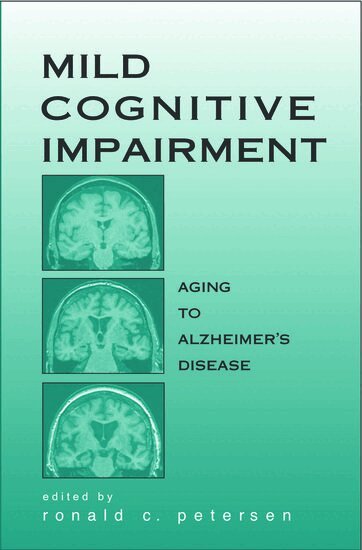
What are the boundary zones between normal aging and Alzheimer's disease (AD)? Are many elderly people whom we regard as normal actually in the early stages of AD? Alzheimer's disease does not develop overnight; the early phases may last for years or even decades. Recently, clinical investigators have identified a transitional condition between normal aging and and very early Alzheimer's disease that they have called mild cognitive impairment, or MCI. This term typically refers to memory impairment beyond what one would expect in individuals of a given age whose other abilities to function in daily life are well preserved. Persons who meet the criteria for mild cognitive impairment have an increased risk of progressing to Alzheimer's disease in the near future. Though many questions about this condition and its underlying neuropathology remain open, full clinical trials are currently underway worldwide aimed at preventing the progression from MCI to Alzheimer's disease. This book addresses the spectrum of issues involved in mild cognitive impairment, and includes chapters on clinical studies, neuropsychology, neuroimaging, neuropathology, biological markers, diagnostic approaches, and treatment. It is intended for clinicians, researchers, and students interested in aging and cognition, among them neurologists, psychiatrists, geriatricians, clinical psychologists, and neuropsychologists.
252 kr
Skickas inom 7-10 vardagar
The financial crisis of 2007-2009 had a deleterious effect on liquidity in the global banking system, resulting in the introduction of the new Basel III liquidity regulation. In this book, we apply such regulation to global liquidity data for 391 hand-selected LIBOR-based banks in 38 countries for the period 2002 to 2012. We show how to develop a framework for proposed Basel III liquidity regulation and demonstrate how to decide on methodologies for studying the aforementioned regulation. Basel III emphasizes both the use of liquidity coverage ratios (LCR) and net stable funding ratios (NSFR) as measures of liquidity risk. We show how these ratios may be approximated to measure risk and how liquidity affects bank insolvency and failure. Using LIBOR-OISS, we also demonstrate how market-wide liquidity risk was a major predictor of bank failures in 2009 and 2010, while idiosyncratic liquidity risk (determined by other liquidity risk measures) was a less reliable predictor. Further, we determine how to analyze the connections between Basel III liquidity regulation and bank capital. Finally, we discuss how the implementation of Basel III liquidity regulation will affect sovereign credit as well as macroeconomic variables such as GDP, investment, inflation, consumption, personal disposable income, personal savings and employment. The book is intended to be used in executive banking courses, advanced undergraduate, Masters and MBA courses in banking; by banking practitioners, consultants and in consulting seminars as well as banking libraries.