Petra Munro Hendry – författare
Visar alla böcker från författaren Petra Munro Hendry. Handla med fri frakt och snabb leverans.
4 produkter
4 produkter
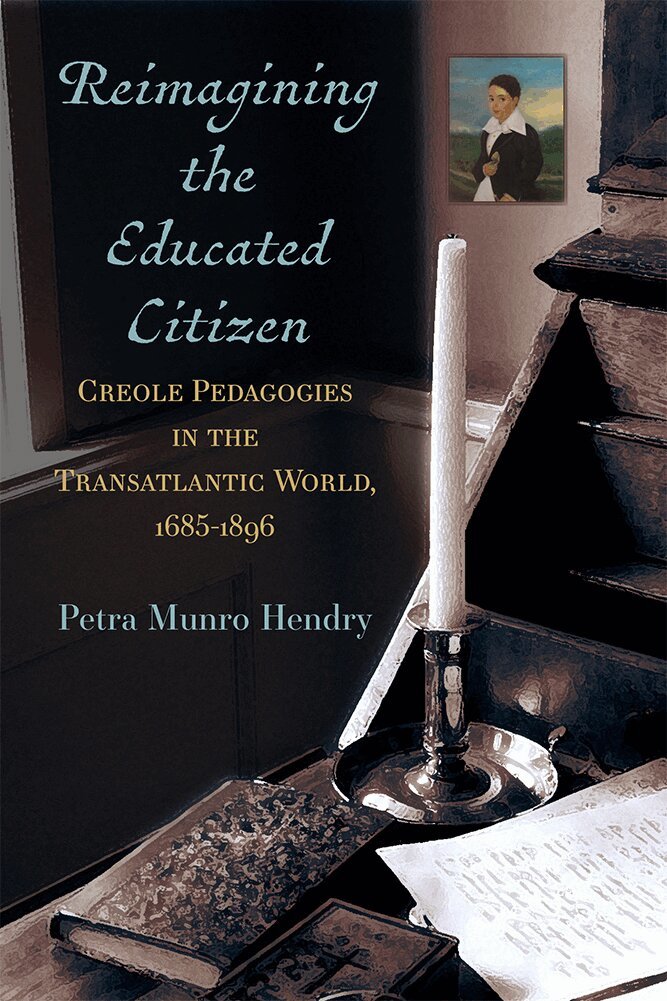
Reimagining the Educated Citizen
Creole Pedagogies in the Transatlantic World, 1685-1896
Häftad, Engelska, 2023
547 kr
Skickas inom 7-10 vardagar
Reimagining the Educated Citizen contends that the constructs of public education and citizenship in the struggle to constitute a U.S. national identity are inseparable from the simultaneous emergence of transatlantic constructs of an educated citizen along transnational and transracial lines. The nineteenth century is commonly understood as the age of nationalism and nation formation in which the Anglo-Protestant Common School movement takes center stage in the production of the American democratic citizen. Ironically, the argument for public, Common Schools privileged whiteness instead of equality. This book suggests that an alternative vision of the relationship between education and citizenship emerged from a larger transatlantic history. Given shape by the movement of people, ideas, commodities, and practices across the Caribbean, Africa, Europe, the Gulf of Mexico and the Mississippi Valley, this radical egalitarian vision emerged at the crossroads of the Atlantic-colonial and antebellum Louisiana.
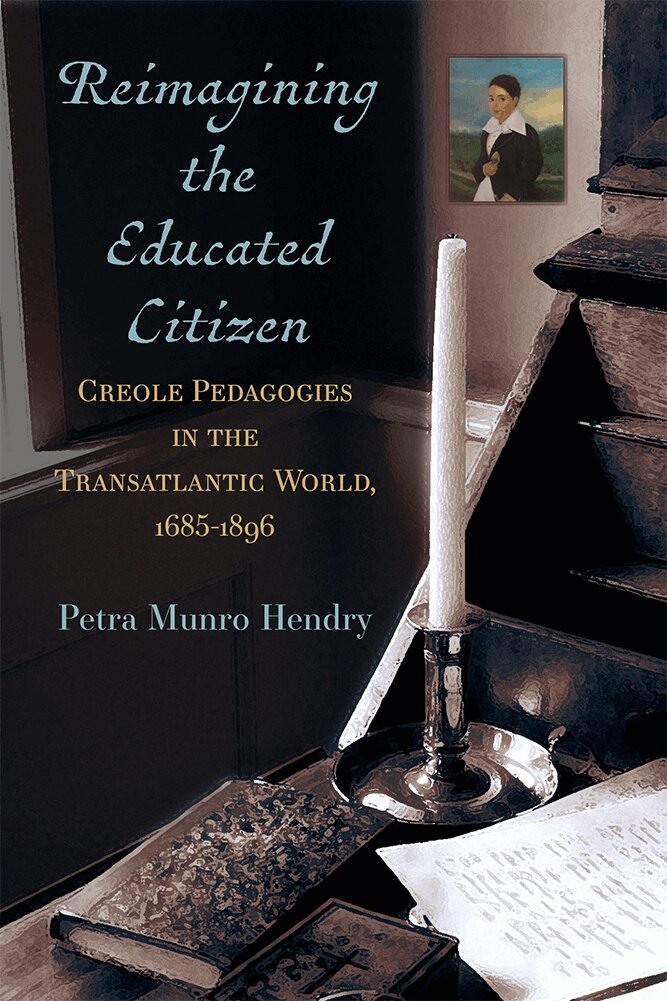
Reimagining the Educated Citizen
Creole Pedagogies in the Transatlantic World, 1685-1896
Inbunden, Engelska, 2023
1 226 kr
Skickas inom 7-10 vardagar
Reimagining the Educated Citizen contends that the constructs of public education and citizenship in the struggle to constitute a U.S. national identity are inseparable from the simultaneous emergence of transatlantic constructs of an educated citizen along transnational and transracial lines. The nineteenth century is commonly understood as the age of nationalism and nation formation in which the Anglo-Protestant Common School movement takes center stage in the production of the American democratic citizen. Ironically, the argument for public, Common Schools privileged whiteness instead of equality. This book suggests that an alternative vision of the relationship between education and citizenship emerged from a larger transatlantic history. Given shape by the movement of people, ideas, commodities, and practices across the Caribbean, Africa, Europe, the Gulf of Mexico and the Mississippi Valley, this radical egalitarian vision emerged at the crossroads of the Atlantic-colonial and antebellum Louisiana.
1 368 kr
Skickas inom 5-8 vardagar
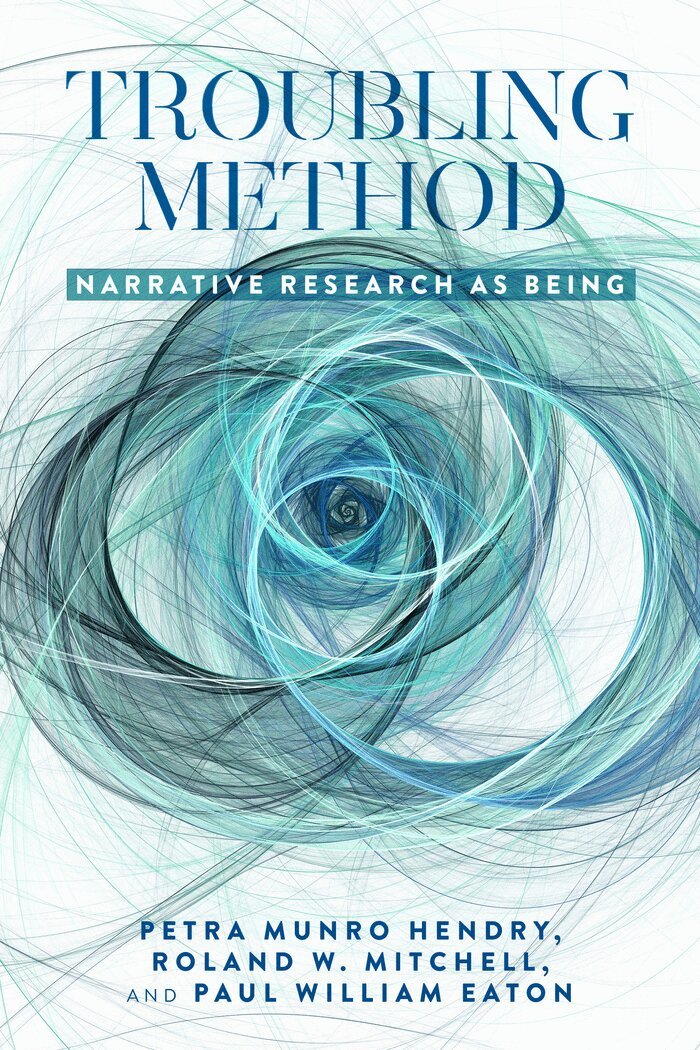
Troubling Method seeks to extract narrative inquiry from method. The shift to a post-humanist, post-qualitative moment is not just another stage in modernism that seeks to "improve" knowledge production, but is a shift to understanding research as an ontology, a way of being in the world, rather than a mode of production. Fundamental assumptions of research: method, data, analysis, and findings are deconstructed and reconfigured as a mode of relational intra-action.Troubling Method is constructed as a dialogue between the three authors, focusing on their work as qualitative, narrative researchers. The authors revisit six previously published works in which they grapple with the contradictions and ironies of engaging in pragmatist, critical, and feminist qualitative research. After a lengthy introduction which problematizes "method," the book is divided into three sections, each with two chapters that are bracketed by an introduction to the issues discussed in the chapters and then a "dialogue interlude" in which the authors deliberate what makes possible the questions they are raising about method and narrative research. The three sections attend to the central premises of "narrative research as being": 1) relationships, 2) listening, and 3) unknowing.Troubling Method is ideal for introductory or advanced courses in qualitative research, narrative inquiry, educational research, and those aimed at employing critical theories in qualitative and narrative inquiry.
530 kr
Skickas inom 5-8 vardagar
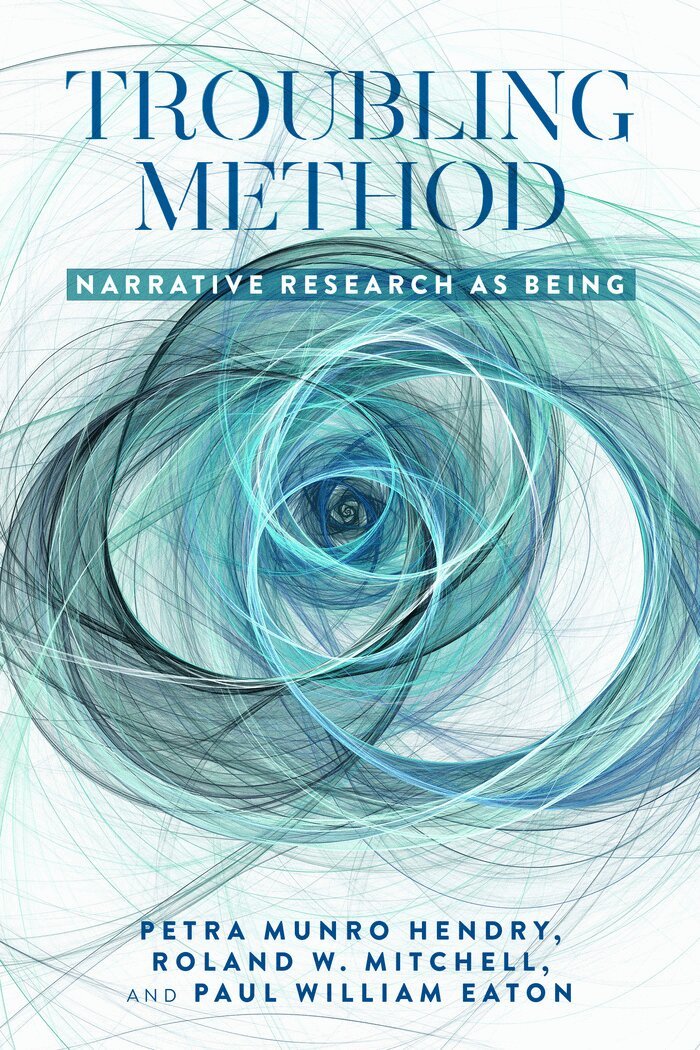
Troubling Method seeks to extract narrative inquiry from method. The shift to a post-humanist, post-qualitative moment is not just another stage in modernism that seeks to "improve" knowledge production, but is a shift to understanding research as an ontology, a way of being in the world, rather than a mode of production. Fundamental assumptions of research: method, data, analysis, and findings are deconstructed and reconfigured as a mode of relational intra-action.Troubling Method is constructed as a dialogue between the three authors, focusing on their work as qualitative, narrative researchers. The authors revisit six previously published works in which they grapple with the contradictions and ironies of engaging in pragmatist, critical, and feminist qualitative research. After a lengthy introduction which problematizes "method," the book is divided into three sections, each with two chapters that are bracketed by an introduction to the issues discussed in the chapters and then a "dialogue interlude" in which the authors deliberate what makes possible the questions they are raising about method and narrative research. The three sections attend to the central premises of "narrative research as being": 1) relationships, 2) listening, and 3) unknowing.Troubling Method is ideal for introductory or advanced courses in qualitative research, narrative inquiry, educational research, and those aimed at employing critical theories in qualitative and narrative inquiry.