Petri Paju – författare
Visar alla böcker från författaren Petri Paju. Handla med fri frakt och snabb leverans.
7 produkter
7 produkter
Inbunden, Engelska, 2009
1 082 kr
Skickas inom 10-15 vardagar
The First Conference on the History of Nordic Computing (HiNC1) was organized in Trondheim, in June 2003. The HiNC1 event focused on the early years of computing, that is the years from the 1940s through the 1960s, although it formally extended to year 1985. In the preface of the proceedings of HiNC1, Janis Bubenko, Jr. , John Impagliazzo, and Arne Sølvberg describe well the peculiarities of early Nordic c- puting [1]. While developing hardware was a necessity for the first professionals, quite soon the computer became an industrial product. Computer scientists, among others, grew increasingly interested in programming and application software. P- gress in these areas from the 1960s to the 1980s was experienced as astonishing. The developments during these decades were taken as the focus of HiNC2. During those decades computers arrived to every branch of large and medium-sized businesses and the users of the computer systems were no longer only computer s- cialists but also people with other main duties. Compared to the early years of comp- ing before 1960, where the number of computer projects and applications was small, capturing a holistic view of the history between the 1960s and the 1980s is conside- bly more difficult. The HiNC2 conference attempted to help in this endeavor.
E-bok
PDF, Engelska, 20091 367 kr
Läs direkt efter köp
The First Conference on the History of Nordic Computing (HiNC1) was organized in Trondheim, in June 2003. The HiNC1 event focused on the early years of computing, that is the years from the 1940s through the 1960s, although it formally extended to year 1985. In the preface of the proceedings of HiNC1, Janis Bubenko, Jr. , John Impagliazzo, and Arne Sølvberg describe well the peculiarities of early Nordic c- puting [1]. While developing hardware was a necessity for the first professionals, quite soon the computer became an industrial product. Computer scientists, among others, grew increasingly interested in programming and application software. P- gress in these areas from the 1960s to the 1980s was experienced as astonishing. The developments during these decades were taken as the focus of HiNC2. During those decades computers arrived to every branch of large and medium-sized businesses and the users of the computer systems were no longer only computer s- cialists but also people with other main duties. Compared to the early years of comp- ing before 1960, where the number of computer projects and applications was small, capturing a holistic view of the history between the 1960s and the 1980s is conside- bly more difficult. The HiNC2 conference attempted to help in this endeavor.
Del 303 - IFIP Advances in Information and Communication Technology
History of Nordic Computing 2
Second IFIP WG 9.7 Conference, HiNC 2, Turku, Finland, August 21-23, 2007, Revised Selected Papers
Häftad, Engelska, 2012
1 082 kr
Skickas inom 10-15 vardagar
The First Conference on the History of Nordic Computing (HiNC1) was organized in Trondheim, in June 2003. The HiNC1 event focused on the early years of computing, that is the years from the 1940s through the 1960s, although it formally extended to year 1985. In the preface of the proceedings of HiNC1, Janis Bubenko, Jr. , John Impagliazzo, and Arne Sølvberg describe well the peculiarities of early Nordic c- puting [1]. While developing hardware was a necessity for the first professionals, quite soon the computer became an industrial product. Computer scientists, among others, grew increasingly interested in programming and application software. P- gress in these areas from the 1960s to the 1980s was experienced as astonishing. The developments during these decades were taken as the focus of HiNC2. During those decades computers arrived to every branch of large and medium-sized businesses and the users of the computer systems were no longer only computer s- cialists but also people with other main duties. Compared to the early years of comp- ing before 1960, where the number of computer projects and applications was small, capturing a holistic view of the history between the 1960s and the 1980s is conside- bly more difficult. The HiNC2 conference attempted to help in this endeavor.
Del 56 - Mediehistoriskt arkiv
Information flows across the Baltic
Kartonnage, Engelska, 2023
299 kr
Skickas inom 5-8 vardagar
Today shared media content and virality represent significant phenomena, but they are not as unique to our current society as commonly assumed. More than a century before the internet, information circulated within a network of newspapers that borrowed texts from both nearby and distant sources. From the late eighteenth century to the early twentieth century, newspapers gradually gained greater significance as a technological medium. However, a fundamental yet often overlooked characteristic of these newspapers was their cut-and-paste nature, which facilitated the widespread dissemination of text items in time and space. Employing a computer-assisted methodology to identify chains of text reuse in over 7.5 million newspaper pages derived from 1629 distinct newspaper titles, Information Flows across the Baltic Sea introduces a comprehensive database of reused texts. It examines the types of content that traversed transnationally and those that remained local. By combining a digitally enhanced bird’s-eye view with meticulous close readings, the book widens our understanding of the cultural relations across the Baltic Sea.
Häftad, Engelska, 2020
542 kr
Skickas inom 5-8 vardagar
E-bok
PDF, Finska, 2019317 kr
Läs direkt efter köp
Mitä kaikkea ihan tavallisella ysiluokalla vuodessa tapahtuu? Tutkijapari Angst B ja Hikari soluttautui osaksi eteläsuomalaista 9C-luokkaa lukuvuoden ajaksi, syksystä kevääseen: istui pulpetissa, kärvisteli kokeissa, osallistui retkille ja liikuntapäiviin sekä vietti mopojuhlaa, ysijuhlaa, kansainvälisyyspäivää ja vappunaamiaisia. Apina pulpetissa kertoo, mitä tutkijat näkivät, havaitsivat ja kuulivat. He pääsivät katsomaan läheltä oppilasarjen pieniin ja isoihin asioihin. Mitä luokkahenki tarkoittaa ja mistä se syntyy? Mitä työrauha on ja miten se muotoutuu? Mikä on oppilaiden oma rooli näissä, entä opettajien? Miten vanhemmat osallistuvat oppilaiden arkeen, ja miten harrastukset ovat kuvassa mukana? Luokan sisäiset jaot ja ryhmittymät sekä näiden keskinäinen tasapaino piirtyvät esille tarkasti: on viihdelinjalaiset ja opiskelulinjalaiset, pissikset, nörtit, yyberjengi, hikkeryhmä, pölisijät ja ryhmärämä II. Angst B:n ja Hikarin lisäksi äänessä ovat ysiluokkalaiset itse mutta myös opettajat, vanhemmat ja terveydenhoitaja.
E-bok
Finska, 2022139 kr
Läs direkt efter köp
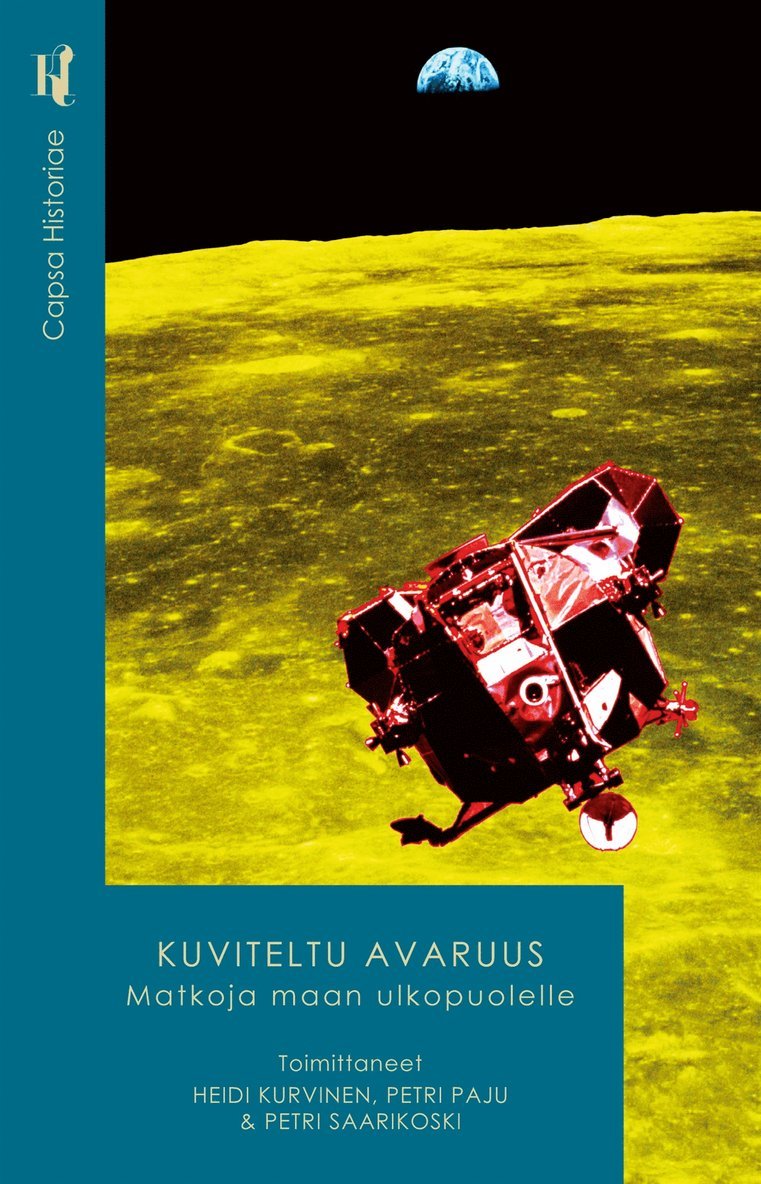
Alkaneesta 2020-luvusta ennakoidaan uutta avaruusaikaa, minkä vuoksi elämme jälleen avaruuden kuvittelun nousukautta. Mielikuvituksessaan ihmiskunta on kuitenkin lentänyt avaruuteen jo ennen 1900-luvun puolimaissa käynnistynyttä avaruuden valloitusta. Kuvittelua on tarvittu teknisten edistysaskeleiden lisäksi kaikissa maailmankaikkeuden tutkimuksen vaiheissa. Kuviteltu avaruus: Matkoja maan ulkopuolelle on kulttuurihistoriallinen avaus näihin fantasian ja vaihtoehtojen pohtimisen muotoihin. Kirjan artikkelit käsittelevät avaruutta koskevaa ajattelua niin kirjallisuudessa, populaarikulttuurissa kuin tieteellisessä tutkimuksessa. Teos keskittyy toisen maailmansodan jälkeen käynnistyneisiin avaruuslentojen vuosiin, mutta luo katsauksia myös avaruuden kuvittelun varhaisempaan historiaan. Artikkelikokoelma sai alkunsa ihmisen Kuuhun astumisen 50-vuotisseminaarista, joka järjestettiin Turun yliopistossa keväällä 2019.