Philip A. Kuhn – författare
Visar alla böcker från författaren Philip A. Kuhn. Handla med fri frakt och snabb leverans.
5 produkter
5 produkter
Häftad, Engelska, 2007
353 kr
Skickas inom 10-15 vardagar
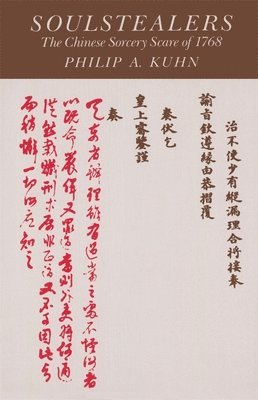
Midway through the reign of the Ch’ien-lung emperor, Hungli, in the most prosperous period of China’s last imperial dynasty, mass hysteria broke out among the common people. It was feared that sorcerers were roaming the land, clipping off the ends of men’s queues (the braids worn by royal decree), and chanting magical incantations over them in order to steal the souls of their owners. In a fascinating chronicle of this epidemic of fear and the official prosecution of soulstealers that ensued, Philip Kuhn provides an intimate glimpse into the world of eighteenth-century China.Kuhn weaves his exploration of the sorcery cases with a survey of the social and economic history of the era. Drawing on a rich repository of documents found in the imperial archives, he presents in detail the harrowing interrogations of the accused—a ragtag assortment of vagabonds, beggars, and roving clergy—conducted under torture by provincial magistrates. In tracing the panic’s spread from peasant hut to imperial court, Kuhn unmasks the political menace lurking behind the queue-clipping scare as well as the complex of folk beliefs that lay beneath popular fears of sorcery.Kuhn shows how the campaign against sorcery provides insight into the period’s social structure and ethnic tensions, the relationship between monarch and bureaucrat, and the inner workings of the state. Whatever its intended purposes, the author argues, the campaign offered Hungli a splendid chance to force his provincial chiefs to crack down on local officials, to reinforce his personal supremacy over top bureaucrats, and to restate the norms of official behavior.This wide-ranging narrative depicts life in imperial China as it was actually lived, often in the participants’ own words. Soulstealers offers a compelling portrait of the Chinese people—from peasant to emperor—and of the human condition.
Häftad, Engelska, 2009
965 kr
Skickas inom 3-6 vardagar
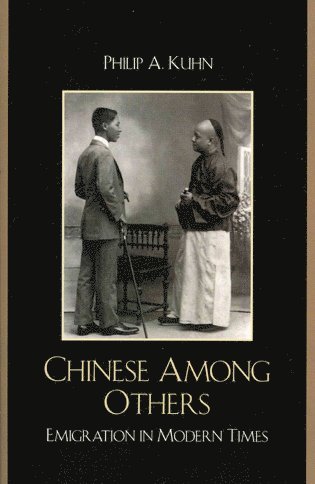
In this book, distinguished historian Philip A. Kuhn tells the remarkable five-century story of Chinese emigration as an integral part of China's modern history. Although emigration has a much longer past, its "modern" phase dates from the sixteenth century, when European colonialists began to collaborate with Chinese emigrants to develop a worldwide trading system. The author explores both internal and external migration, complementary parts of a far-reaching process of adaptation that enabled Chinese families to deal with their changing social environments. Skills and institutions developed in the course of internal migration were creatively modified to serve the needs of emigrants in foreign lands.As emigrants, Chinese inevitably found themselves "among others." The various human ecologies in which they lived have faced Chinese settlers with a diversity of challenges and opportunities in the colonial and postcolonial states of Southeast Asia, in the settler societies of the Americas and Australasia, and in Europe. Kuhn traces their experiences worldwide alongside those of the "others" among whom they settled: the colonial elites, indigenous peoples, and rival immigrant groups that have profited from their Chinese minorities but also have envied, feared, and sometimes persecuted them. A rich selection of primary sources allows these protagonists a personal voice to express their hopes, sorrows, and worldviews.The post-Mao era offers emigrants new opportunities to leverage their expatriate status to do business with a Chinese nation eager for their investments, donations, and technologies. The resulting "new migration," the author argues, is but the latest phase of a centuries-old process by which Chinese have sought livelihoods away from home.
E-bok
Engelska, 2008763 kr
Läs direkt efter köp
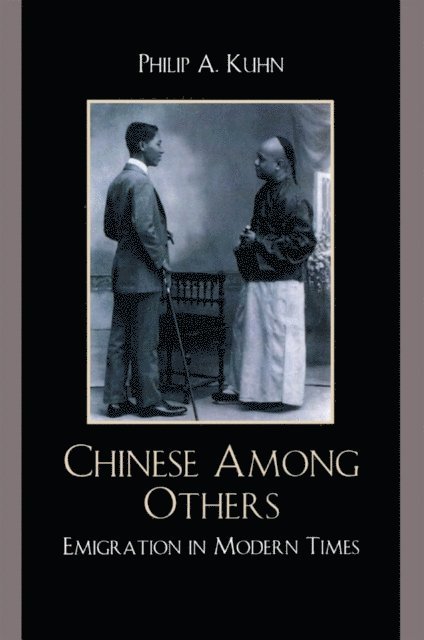
In this book, distinguished historian Philip A. Kuhn tells the remarkable five-century story of Chinese emigration as an integral part of China''s modern history. Although emigration has a much longer past, its "modern" phase dates from the sixteenth century, when European colonialists began to collaborate with Chinese emigrants to develop a worldwide trading system. The author explores both internal and external migration, complementary parts of a far-reaching process of adaptation that enabled Chinese families to deal with their changing social environments. Skills and institutions developed in the course of internal migration were creatively modified to serve the needs of emigrants in foreign lands.As emigrants, Chinese inevitably found themselves "among others." The various human ecologies in which they lived have faced Chinese settlers with a diversity of challenges and opportunities in the colonial and postcolonial states of Southeast Asia, in the settler societies of the Americas and Australasia, and in Europe. Kuhn traces their experiences worldwide alongside those of the "others" among whom they settled: the colonial elites, indigenous peoples, and rival immigrant groups that have profited from their Chinese minorities but also have envied, feared, and sometimes persecuted them. A rich selection of primary sources allows these protagonists a personal voice to express their hopes, sorrows, and worldviews.The post-Mao era offers emigrants new opportunities to leverage their expatriate status to do business with a Chinese nation eager for their investments, donations, and technologies. The resulting "new migration," the author argues, is but the latest phase of a centuries-old process by which Chinese have sought livelihoods away from home.
Häftad, Engelska, 2003
261 kr
Skickas inom 5-8 vardagar
What is "Chinese" about China's modern state? This book proposes that the state we see today has developed over the past two centuries largely as a response to internal challenges emerging from the late empire. Well before the Opium War, Chinese confronted such constitutional questions as: How does the scope of political participation affect state power? How is the state to secure a share of society's wealth? In response to the changing demands of the age, this agenda has been expressed in changing language. Yet, because the underlying pattern remains recognizable, the modernization of the state in response to foreign aggression can be studied in longer perspective.The author offers three concrete studies to illustrate the constitutional agenda in action: how the early nineteenth-century scholar-activist Wei Yuan confronted the relation between broadened political participation and authoritarian state power; how the reformist proposals of the influential scholar Feng Guifen were received by mainstream bureaucrats during the 1898 reform movement; and how fiscal problems of the late empire formed a backdrop to agricultural collectivization in the 1950s. In each case, the author presents the "modern" constitutional solution as only the most recent answer to old Chinese questions. The book concludes by describing the transformation of the constitutional agenda over the course of the modern period.
E-bok
PDF, Engelska, 20201 626 kr
Läs direkt efter köp
Despite efforts to attain a more balanced approach, Western historians have largely interpreted China's modern period in terms of China's "e;response to the West."e; To a surprising extent, this bias has prevailed even among Chinese historians, for whom the reaction to imperialism has remained a dominant concept. This book, by a scholar who is neither Chinese nor Western,goes far to set the balance right. Min Tu-ki, Korea's leading Sinologist, shows how China's own internal agenda has conditioned Chinese political life during the transition to modernity. Min sets the stage with two chapters about Chinese scciety under Ch'ing rule, one on a Korean visitor's reaction to eighteeenth-century China, the other on the social condition of the lower gentry. Each casts new light on the Chinese elite and their relation to state power. The chapters that follow-particularly the discussion of "e;political feudalism"e;-examine the conceptual resources available within the Chinese tradition for coming to terms with modernity. Min's internalist approach provides both a creative new vision of the encounter between two civilizations and a distinguished introduction to Korean Sinology.