Philip Banks - Böcker
Visar alla böcker från författaren Philip Banks. Handla med fri frakt och snabb leverans.
4 produkter
4 produkter
AQA A-level Geography Fifth Edition
Contains all new case studies and 100s of new questions
Häftad, Engelska, 2021
741 kr
Skickas inom 7-10 vardagar
Cramming all new-case studies and 100s of new questions into one book, this new edition of our AQA A-level Geography student book will capture imaginations as it travels around the globe. This book has been written by our expert author team and structured to provide support for learners of all abilities. The book includes:· Activities and regular review questions to reinforce geographical knowledge and build up core geographical skills· Clear explanations to help students to grapple with tricky geographical concepts and grasp links between topics· Case studies from around the world to vividly demonstrate geographical theory in action · Exciting fieldwork projects that meet the fieldwork and investigation requirements· The most up-to-date theory of plate tectonicsThis student book is supported by digital resources on our new digital platform Boost, providing a seamless online and offline teaching experience.
147 kr
Skickas inom 7-10 vardagar
Support and encourage students in their study of AQA A-level Geography with these revised and restructured write-in Workbooks.These new edition Workbooks have been fully updated for 2021 and focused to help students practise their skills and improve their subject knowledge both inside and outside the classroom.- Develop and consolidate understanding using practice questions targeting each Assessment Objective including calculations and worked examples- Build key skills and practise the different question types- Support assessment preparation using exam-style questions on every topic- Use flexibly alongside your existing textbooks and schemes of work as homework, classwork and for intervention- Answers provided online
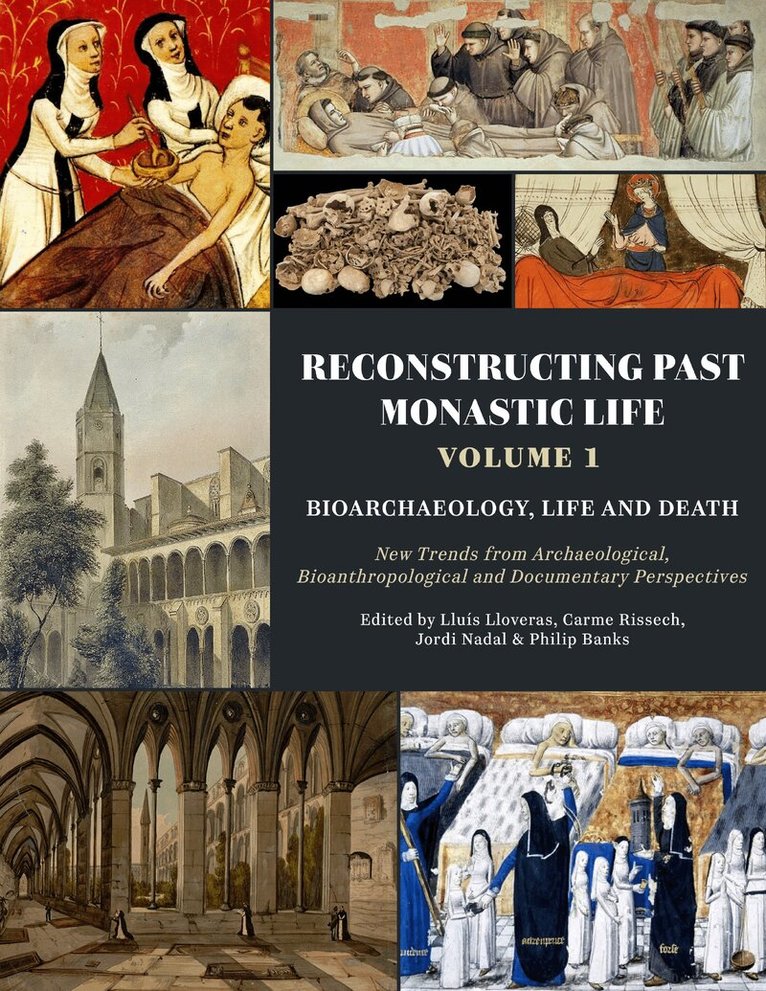
Reconstructing Past Monastic Life: Volume 1: Bioarchaeology, Life and Death
New Trends from Archaeological, Bioanthropological and Documentary Perspectives
Häftad, Engelska, 2025
639 kr
Skickas
Monasticism is a form of religious life in which participants renounce worldly activities to dedicate themselves primarily to spiritual matters, living in small communities subject to a set of rules and isolated from the secular world. Christian monasticism, which originated at the end of the 3rd century in Egypt and North Africa, spread to different parts of Europe in the 6th century. However, it was not until the Middle Ages that monastic communities became one of the most powerful institutions in Europe. Monasteries and convents played a very important role not only as centers of spirituality but also as focal points of economic, technological and cultural activity. This multiplicity of activities carried out alongside their religious, social and political roles make monasteries spaces that can be studied from very different perspectives and that unfailingly provide essential information about our history.This first of two titles originates from an international conference that took place in Barcelona in January 2024, which sought to examine different aspects related to monastic life in the past and to promote and disseminate the results obtained in the latest studies undertaken within the framework of monastic complexes and their environments. These include contributions and multidisciplinary studies from archaeological, bioanthropological and/or documentary perspectives. Specialists from different disciplines present developments on the topic of monasticism from different fields of study, such as zooarchaeology, bioanthropology, palaeopathology, archaeology, history, documentary disciplines, archives, cultural heritage, etc.Volume 1 concentrates on health and lifeways within monastic communities, focusing on palaeopathological information providing insights into physical wellbeing and, in particular, the presence and significance of disabled individuals and evidence for longterm health and dental issues. A variety of scientific methods of analysis are applied to cemetery populations from monasteries and nunneries of different periods to examine both causes of and contributions to the death of individuals, the composition of communities and the treatment of the dead. Studies of assemblages of faunal remains from monastic complexes consider how faunal analysis can help interpret the role of domestic species.
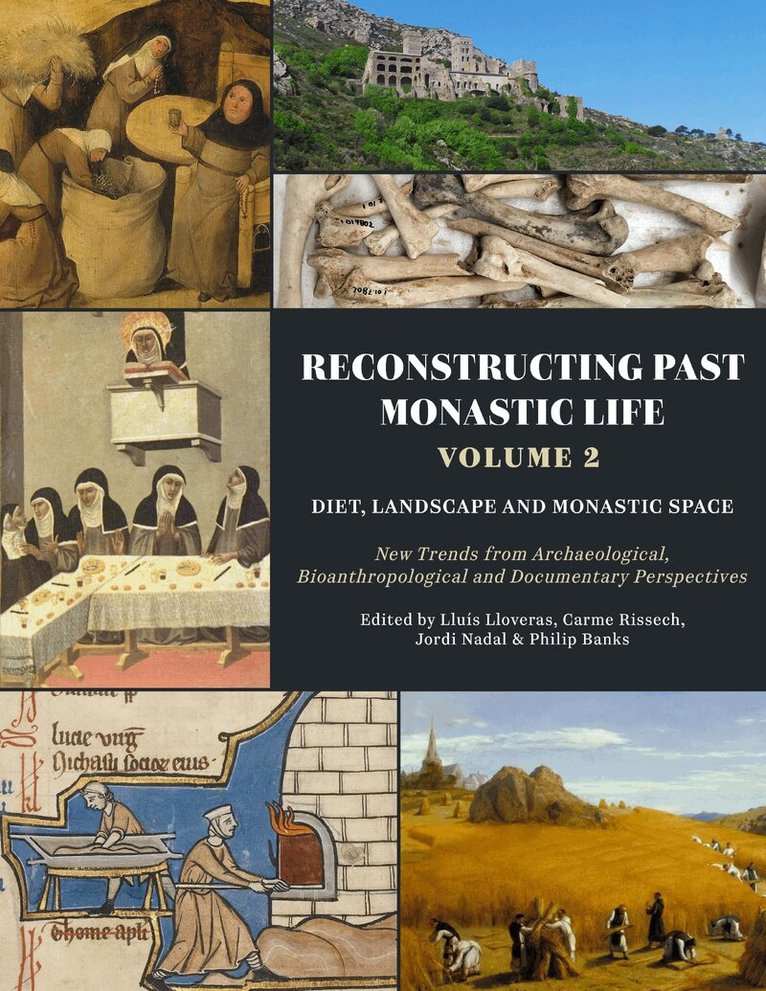
Reconstructing Past Monastic Life: Volume 2: Diet, Landscape and Monastic Space
New Trends from Archaeological, Bioanthropological and Documentary Perspectives
Häftad, Engelska, 2025
639 kr
Skickas
Monasticism is a form of religious life in which participants renounce worldly activities to dedicate themselves primarily to spiritual matters, living in small communities subject to a set of rules and isolated from the secular world. Christian monasticism, which originated at the end of the 3rd century in Egypt and North Africa, spread to different parts of Europe in the 6th century. However, it was not until the Middle Ages that monastic communities became one of the most powerful institutions in Europe. Monasteries and convents played a very important role not only as centers of spirituality but also as focal points of economic, technological and cultural activity. This multiplicity of activities carried out alongside their religious, social and political roles make monasteries spaces that can be studied from very different perspectives and that unfailingly provide essential information about our history.This second of two titles originates from an international conference that took place in Barcelona in January 2024, which sought to examine different aspects related to monastic life in the past and to promote and disseminate the results obtained in the latest studies undertaken within the framework of monastic complexes and their environments. These include contributions and multidisciplinary studies from archaeological, bioanthropological and/or documentary perspectives. Specialists from different disciplines present developments on the topic of monasticism from different fields of study, such as zooarchaeology, bioanthropology, palaeopathology, archaeology, history, documentary disciplines, archives, cultural heritage, etc.Volume 2 focuses on diet, food practices, water management, and the organization and use of space within monastic complexes and landscapes.