Philip Bean – författare
557 kr
Skickas inom 10-15 vardagar
1 084 kr
Skickas inom 10-15 vardagar
546 kr
Skickas inom 10-15 vardagar
2 022 kr
Skickas inom 10-15 vardagar
592 kr
Skickas inom 10-15 vardagar
2 773 kr
Skickas inom 10-15 vardagar
863 kr
Skickas
2 269 kr
Skickas inom 10-15 vardagar
601 kr
Skickas inom 10-15 vardagar
2 834 kr
Skickas inom 10-15 vardagar
841 kr
Skickas inom 10-15 vardagar
665 kr
Läs direkt efter köp
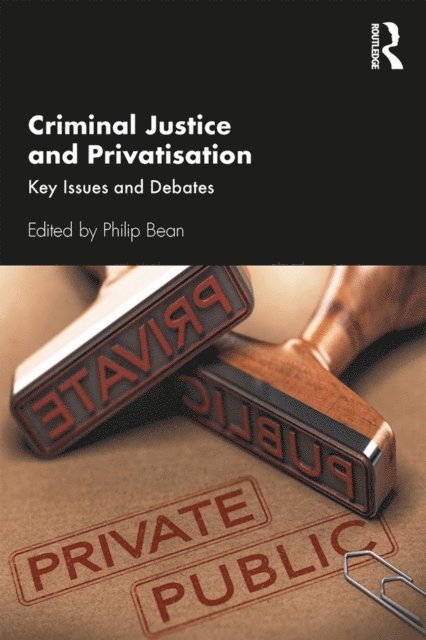
Over the past few years, opposition to the privatisation in public services in the United Kingdom and elsewhere has grown, especially in areas related to criminal justice. Privatisation has existed within the British criminal justice system at least since the early 1990s, but the privatisation of the Probation Service in 2014 was a significant landmark in this process and signalled a larger programme of privatisation to come.
Criminal Justice and Privatisation works to examine the impact of privatisation on the criminal justice system, and to explore the potential effects of privatising other areas including the police and the security industry. By including chapters from practitioners and academics alike, the book offers an expansive overview of the criminal justice system, as well as observations of the effect of privatisation at ground level. By also exploring the way the private companies are paid, how they operate and what private companies do, this book offers an insight into and the future of privatisation within the public sector.
Written in a clear and direct style this book will appeal to students and scholars in criminology, sociology, cultural studies, social theory and those interested in learning about the effects of privatisation.
690 kr
Läs direkt efter köp
Over the past few years, opposition to the privatisation in public services in the United Kingdom and elsewhere has grown, especially in areas related to criminal justice. Privatisation has existed within the British criminal justice system at least since the early 1990s, but the privatisation of the Probation Service in 2014 was a significant landmark in this process and signalled a larger programme of privatisation to come.
Criminal Justice and Privatisation works to examine the impact of privatisation on the criminal justice system, and to explore the potential effects of privatising other areas including the police and the security industry. By including chapters from practitioners and academics alike, the book offers an expansive overview of the criminal justice system, as well as observations of the effect of privatisation at ground level. By also exploring the way the private companies are paid, how they operate and what private companies do, this book offers an insight into and the future of privatisation within the public sector.
Written in a clear and direct style this book will appeal to students and scholars in criminology, sociology, cultural studies, social theory and those interested in learning about the effects of privatisation.
404 kr
Läs direkt efter köp
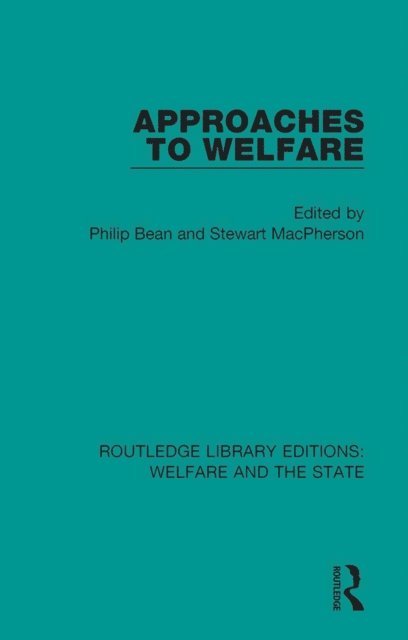
Originally published in 1983 Approaches to Welfare provides a unique introduction to the study of social welfare in Britain. The contributions, by distinguished figures in the field of social welfare and social policy, explore all the dimensions of the study of social welfare demonstrating that not only have social policies changed in the forty years since the establishment of the welfare state, but so too have approaches to their analysis. The contributors consider these changes in relation to a wide range of social welfare issues, illuminating the diversity and variety within the contemporary study of social policy.
390 kr
Läs direkt efter köp
Originally published in 1983 Approaches to Welfare provides a unique introduction to the study of social welfare in Britain. The contributions, by distinguished figures in the field of social welfare and social policy, explore all the dimensions of the study of social welfare demonstrating that not only have social policies changed in the forty years since the establishment of the welfare state, but so too have approaches to their analysis. The contributors consider these changes in relation to a wide range of social welfare issues, illuminating the diversity and variety within the contemporary study of social policy.
537 kr
Skickas inom 7-10 vardagar
2 198 kr
Skickas inom 10-15 vardagar
601 kr
Skickas inom 10-15 vardagar
2 045 kr
Skickas inom 10-15 vardagar
531 kr
Skickas inom 10-15 vardagar
696 kr
Läs direkt efter köp
This book offers an assessment of Barbara Wootton’s legacy as a pioneering public criminologist. Barbara Wootton (1897-1988) was a leading British social scientist, magistrate, academic and public servant. She was also a life peer (Baroness Wootton of Abinger) and the first woman to sit on the Woolsack in the House of Lords as Deputy Speaker. One of the Royal Commissions on which she served was on the Penal System, (1964) and two of the Departmental Committees were on the Business of the Criminal Courts (1958) and Criminal Statistics (1963). Of her written work perhaps the most famous is `Social Science and Social Pathology` (published in 1959) which was an attempt to discover what the social sciences had to say about criminality, its causes and its social effects.
This book examines her career in historical context, and her contribution to thinking and scholarship on a range of topics. These topics range from the courts and the penal system and her report on the Community Service Order, to crime and criminal law and her analysis of the notions of mens rea, to her work on psychiatry and criminal justice. It explores her contribution as a utilitarian critic in Criminology, within the British empiricist tradition.
Written in a clear and direct style, this book will appeal to students and scholars of criminology, sociology, criminal justice, law and all those interested in learning more about Barbara’s life and times.
696 kr
Läs direkt efter köp
This book offers an assessment of Barbara Wootton’s legacy as a pioneering public criminologist. Barbara Wootton (1897-1988) was a leading British social scientist, magistrate, academic and public servant. She was also a life peer (Baroness Wootton of Abinger) and the first woman to sit on the Woolsack in the House of Lords as Deputy Speaker. One of the Royal Commissions on which she served was on the Penal System, (1964) and two of the Departmental Committees were on the Business of the Criminal Courts (1958) and Criminal Statistics (1963). Of her written work perhaps the most famous is `Social Science and Social Pathology` (published in 1959) which was an attempt to discover what the social sciences had to say about criminality, its causes and its social effects.
This book examines her career in historical context, and her contribution to thinking and scholarship on a range of topics. These topics range from the courts and the penal system and her report on the Community Service Order, to crime and criminal law and her analysis of the notions of mens rea, to her work on psychiatry and criminal justice. It explores her contribution as a utilitarian critic in Criminology, within the British empiricist tradition.
Written in a clear and direct style, this book will appeal to students and scholars of criminology, sociology, criminal justice, law and all those interested in learning more about Barbara’s life and times.
824 kr
Läs direkt efter köp
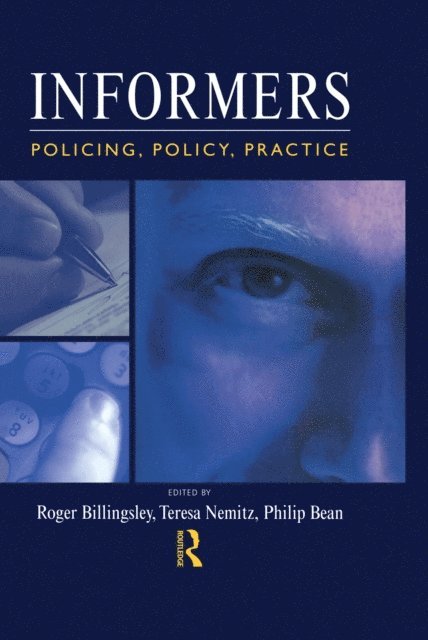
The police rely heavily on paid and unpaid informers: without them clear-up rates would plummet, and many crimes would remain undetected. Yet little is known about the informer system and how it works, for example: who are these informers? how are they recruited? how are they handled? who handles them? what sort of information do they provide?
Recent high profile cases have drawn attention to the use of informers, there has been a growing debate about the subject, and many feel that stricter controls are needed - but how is this to be achieved without undermining the effectiveness of the system? This is the first book of its kind on informers in Britain, providing an invaluable source of information and analysis from key authorities in the field.
824 kr
Läs direkt efter köp
The police rely heavily on paid and unpaid informers: without them clear-up rates would plummet, and many crimes would remain undetected. Yet little is known about the informer system and how it works, for example: who are these informers? how are they recruited? how are they handled? who handles them? what sort of information do they provide?
Recent high profile cases have drawn attention to the use of informers, there has been a growing debate about the subject, and many feel that stricter controls are needed - but how is this to be achieved without undermining the effectiveness of the system? This is the first book of its kind on informers in Britain, providing an invaluable source of information and analysis from key authorities in the field.
554 kr
Läs direkt efter köp
This book provides an authoritative and highly readable review of the relationship between madness and crime by one of the leading authorities in the field. The book is divided into four parts, each essay focusing on selected features of madness which have relevance to contemporary society.
Part 1 is about madness itself, exploring three main models − cognitive, statistical, and emotional. Part 2 is a short discussion on madness, genius and creativity. Part 3 is about the much neglected area of compulsion, an issue that has largely disappeared from public debate. The mad may have moved from victim to violator, yet fundamental questions remain − in particular how to justify compulsory detention, and who should undertake the process? The answers to these questions have sociological, ethical and jurisprudential elements, and cannot just re resolved by reference to medical authorities. Part 4 is about the links between madness and crime − focusing less on the question and nature of criminal responsibility and the various defences that go with this, more on the links between madness and crime and which particular crimes are linked with which types of disorder.
554 kr
Läs direkt efter köp
This book provides an authoritative and highly readable review of the relationship between madness and crime by one of the leading authorities in the field. The book is divided into four parts, each essay focusing on selected features of madness which have relevance to contemporary society.
Part 1 is about madness itself, exploring three main models − cognitive, statistical, and emotional. Part 2 is a short discussion on madness, genius and creativity. Part 3 is about the much neglected area of compulsion, an issue that has largely disappeared from public debate. The mad may have moved from victim to violator, yet fundamental questions remain − in particular how to justify compulsory detention, and who should undertake the process? The answers to these questions have sociological, ethical and jurisprudential elements, and cannot just re resolved by reference to medical authorities. Part 4 is about the links between madness and crime − focusing less on the question and nature of criminal responsibility and the various defences that go with this, more on the links between madness and crime and which particular crimes are linked with which types of disorder.
1 039 kr
Läs direkt efter köp
Britain, like almost everywhere else, has a burgeoning drug problem. Finding ways of dealing with this problem is a major platform of government policy and a great deal has been made of the impact of treatment on drug users. Drug Treatment: What Works? is a cutting edge survey of the latest developments in these treatments, and it sets out to ask some of the crucial questions in the treatment of drug abusers; including:* Which treatments work with what sorts of abusers?* What are the key indicators of likely success?* Does coercion work or must treatment be freely entered into? * Is drug testing an essential backup for successful treatment?Featuring contributions from some the leading figures in this field, Drug Treatment: What Works? will be essential reading for students, academics and professionals studying drug treatment in the areas criminology, social policy and medicine.
1 039 kr
Läs direkt efter köp
Britain, like almost everywhere else, has a burgeoning drug problem. Finding ways of dealing with this problem is a major platform of government policy and a great deal has been made of the impact of treatment on drug users. Drug Treatment: What Works? is a cutting edge survey of the latest developments in these treatments, and it sets out to ask some of the crucial questions in the treatment of drug abusers; including:* Which treatments work with what sorts of abusers?* What are the key indicators of likely success?* Does coercion work or must treatment be freely entered into? * Is drug testing an essential backup for successful treatment?Featuring contributions from some the leading figures in this field, Drug Treatment: What Works? will be essential reading for students, academics and professionals studying drug treatment in the areas criminology, social policy and medicine.
913 kr
Läs direkt efter köp
A high proportion of crimes committed in Britain are drugs-related, with many offenders having a documented history of drug use. However, the direct link between drugs and crime is often less clear than is supposed and this text attempts to achieve a better understanding of these and surrounding issues that have been marred by misunderstanding and a lack of consensus amongst experts.
This text offers a major contribution to existing debates and provides an authoritative and much-needed overview of the range of issues associated with drugs-related crime. Coverage includes:
a discussion on theoretical approaches to drugs and crime, an overview of the legal position on drugs and drug offenders, a critique of the aims and nature of treatment, an examination of trafficking and laundering, an analysis of the policing of drugs markets, a discussion about the legalisation debates.This new edition has been fully updated to include the latest data and recent developments in policy and particular attention is paid to changes in sentencing and treatment, as well as changes to practice in trafficking. An expanded chapter on women, drugs and crime now offers further coverage of drug-taking and prostitution.
This is the only book in Britain which centres on the links between drugs and crime, and deals with the policy implications of that link. It is a comprehensive account of the various aspects of Government policy concerning drugs, and should be particularly useful to academics and students interested in or studying this aspect of criminology.
992 kr
Läs direkt efter köp
A high proportion of crimes committed in Britain are drugs-related, with many offenders having a documented history of drug use. However, the direct link between drugs and crime is often less clear than is supposed and this text attempts to achieve a better understanding of these and surrounding issues that have been marred by misunderstanding and a lack of consensus amongst experts.
This text offers a major contribution to existing debates and provides an authoritative and much-needed overview of the range of issues associated with drugs-related crime. Coverage includes:
a discussion on theoretical approaches to drugs and crime, an overview of the legal position on drugs and drug offenders, a critique of the aims and nature of treatment, an examination of trafficking and laundering, an analysis of the policing of drugs markets, a discussion about the legalisation debates.This new edition has been fully updated to include the latest data and recent developments in policy and particular attention is paid to changes in sentencing and treatment, as well as changes to practice in trafficking. An expanded chapter on women, drugs and crime now offers further coverage of drug-taking and prostitution.
This is the only book in Britain which centres on the links between drugs and crime, and deals with the policy implications of that link. It is a comprehensive account of the various aspects of Government policy concerning drugs, and should be particularly useful to academics and students interested in or studying this aspect of criminology.