Philip Frankel – författare
Visar alla böcker från författaren Philip Frankel. Handla med fri frakt och snabb leverans.
12 produkter
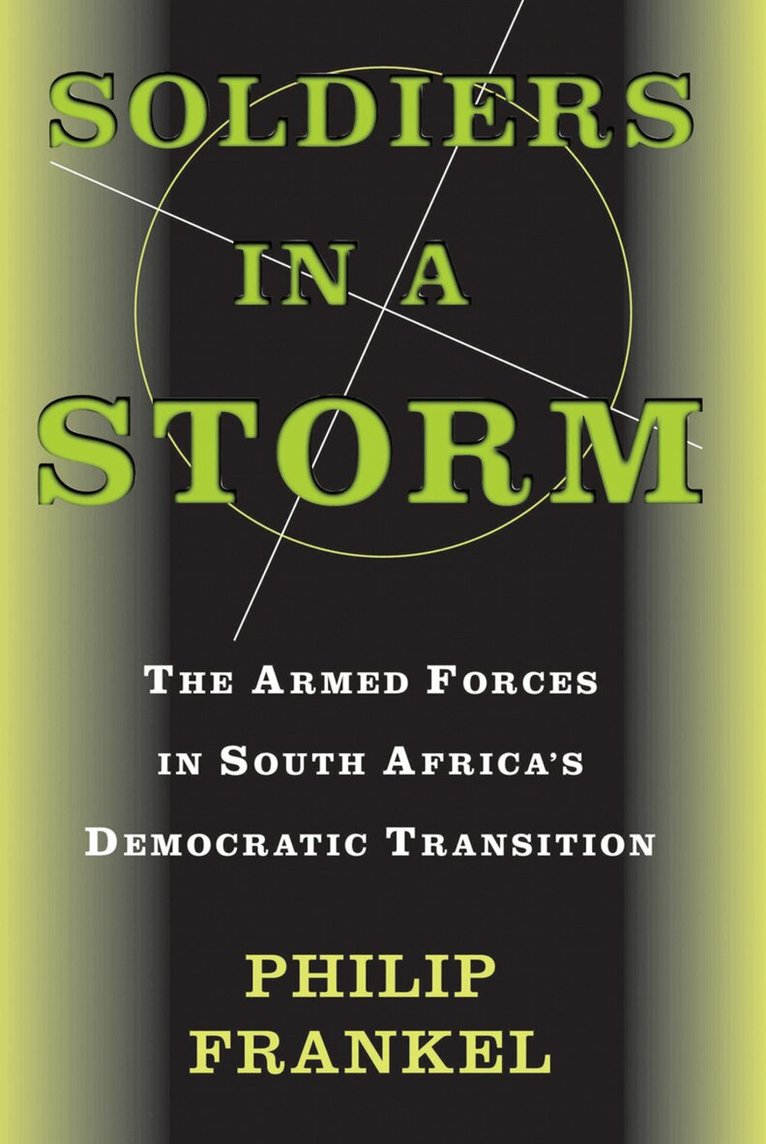
Soldiers In A Storm
The Armed Forces In South Africa's Democratic Transition
Inbunden, 2019
2504 kr
Lägg i varukorg
Soldiers in a Storm: The Armed Forces in South Africa's Democratic Transition is a study of the role of the military in the creation and development of South Africa's new post-apartheid system. Philip Frankel asserts that the armed forces played a far greater role in the end of apartheid than is …
Soldiers In A Storm
The Armed Forces In South Africa''s Democratic Transition
E-bok, 2018
1012 kr
Lägg i varukorg
Soldiers in a Storm: The Armed Forces in South Africa''s Democratic Transition is a study of the role of the military in the creation and development of South Africa''s new post-apartheid system. Philip Frankel asserts that the armed forces played a far greater role in the end of apartheid than is …
Soldiers In A Storm
The Armed Forces In South Africa''s Democratic Transition
E-bok, 2018
1034 kr
Lägg i varukorg
Soldiers in a Storm: The Armed Forces in South Africa''s Democratic Transition is a study of the role of the military in the creation and development of South Africa''s new post-apartheid system. Philip Frankel asserts that the armed forces played a far greater role in the end of apartheid than is …
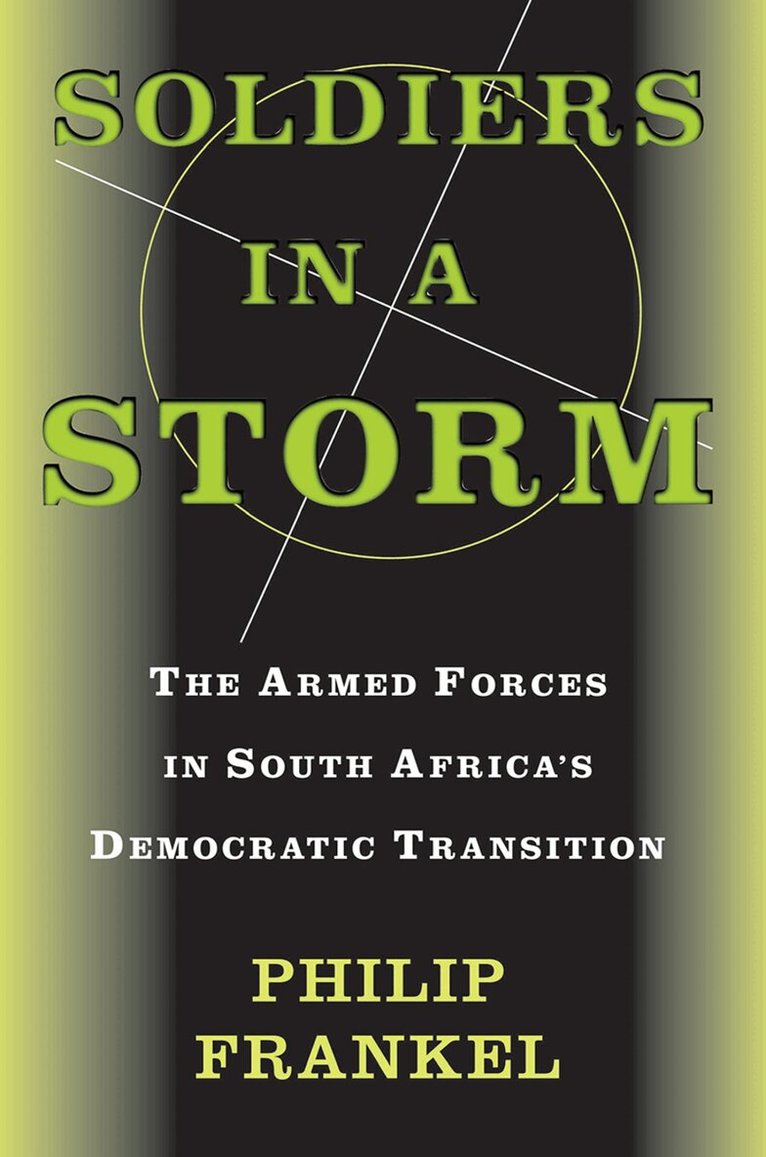
Soldiers In A Storm
The Armed Forces In South Africa's Democratic Transition
Häftad, 2000
877 kr
Lägg i varukorg
Soldiers in a Storm: The Armed Forces in South Africa's Democratic Transition is a study of the role of the military in the creation and development of South Africa's new post-apartheid system. Philip Frankel asserts that the armed forces played a far greater role in the end of apartheid than is …
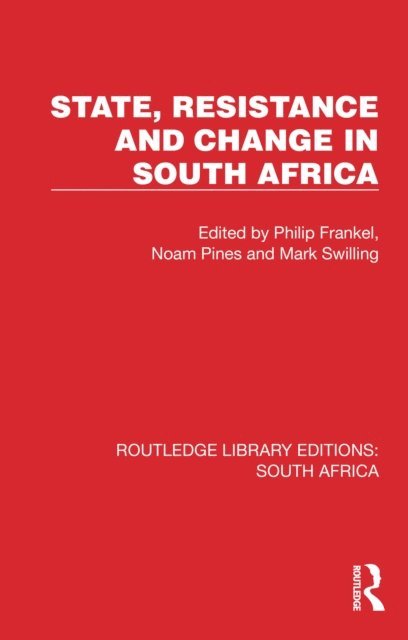
State, Resistance and Change in South Africa
Av Mark Swilling, Noam Pines m. fl.
E-bok, 2022
589 kr
Lägg i varukorg
Originally published in 1988, this book describes and analyses the factors that were operative in South Africa during the 1980s, at a time when Apartheid was under intense pressure. It focuses not only on the central arenas of political action, but also on the non-institutional arenas which were …
State, Resistance and Change in South Africa
Av Mark Swilling, Noam Pines m. fl.
E-bok, 2022
589 kr
Lägg i varukorg
Originally published in 1988, this book describes and analyses the factors that were operative in South Africa during the 1980s, at a time when Apartheid was under intense pressure. It focuses not only on the central arenas of political action, but also on the non-institutional arenas which were …
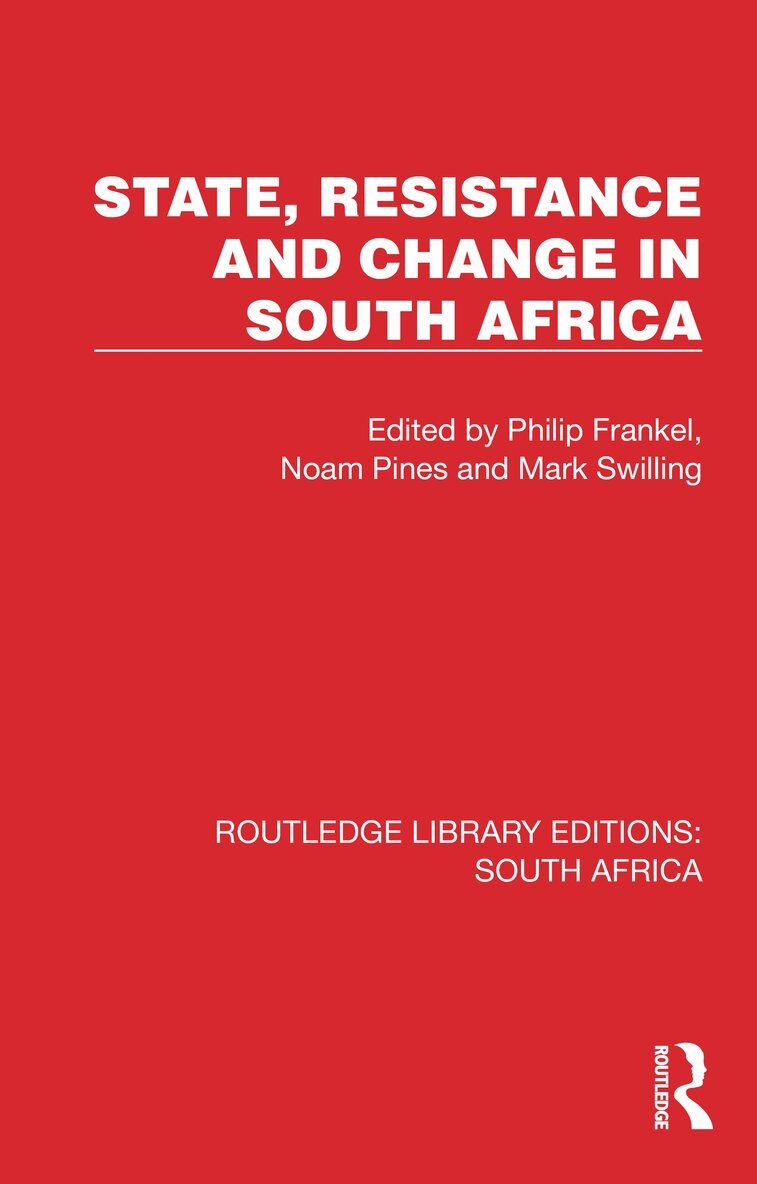
State, Resistance and Change in South Africa
Av Philip Frankel, Noam Pines m. fl.
Inbunden, 2022
2197 kr
Lägg i varukorg
Originally published in 1988, this book describes and analyses the factors that were operative in South Africa during the 1980s, at a time when Apartheid was under intense pressure. It focuses not only on the central arenas of political action, but also on the non-institutional arenas which were …
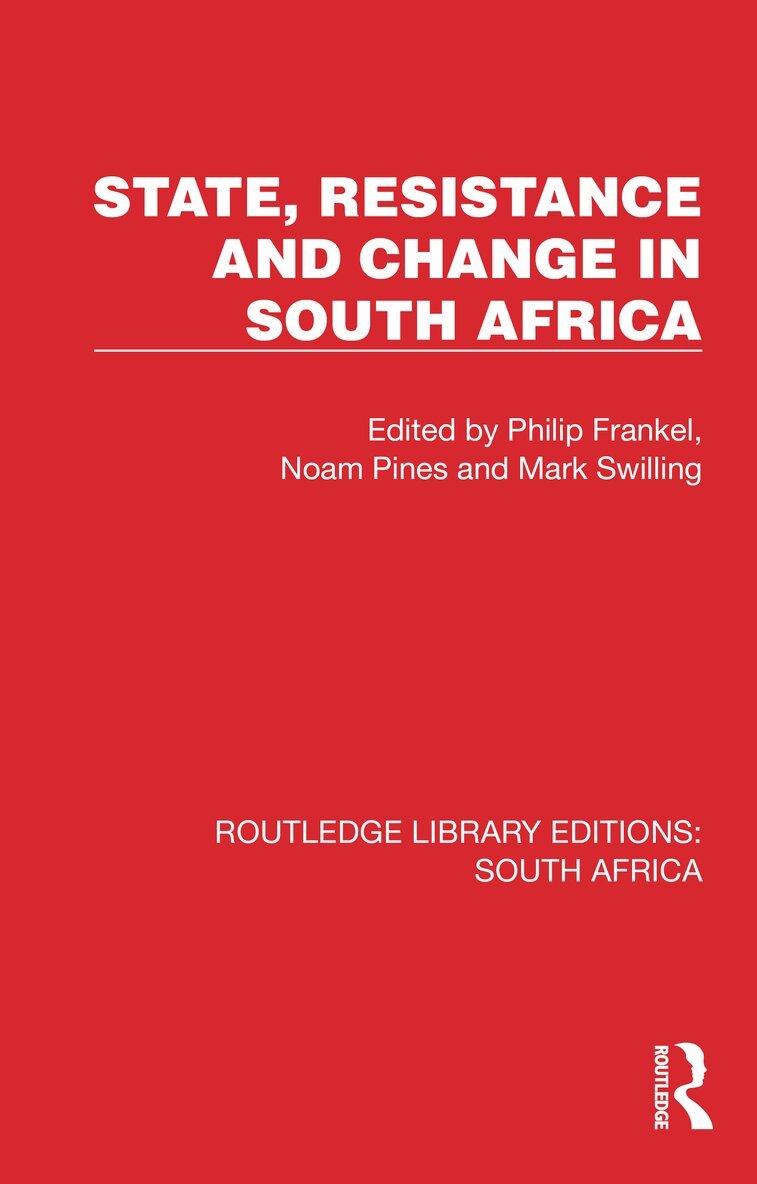
State, Resistance and Change in South Africa
Av Philip Frankel, Noam Pines m. fl.
Häftad, 2024
502 kr
Lägg i varukorg
Originally published in 1988, this book describes and analyses the factors that were operative in South Africa during the 1980s, at a time when Apartheid was under intense pressure. It focuses not only on the central arenas of political action, but also on the non-institutional arenas which were …
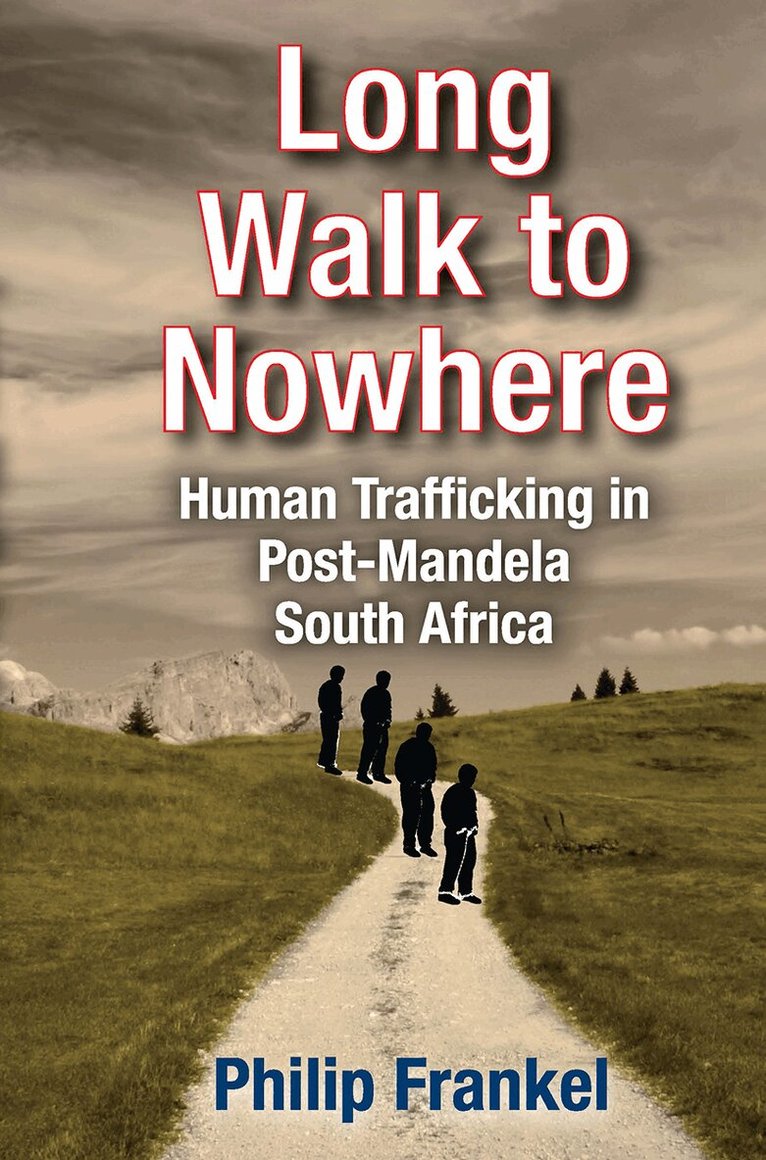
Long Walk to Nowhere
Human Trafficking in Post-Mandela South Africa
Häftad, 2024
667 kr
Lägg i varukorg
The end of apartheid has triggered massive illegal immigration into South Africa from all parts of Africa and beyond. Along with urbanization and internal migration, the end of apartheid has encouraged human smuggling and the trafficking of men, women, and children into the commercial sex market …
Long Walk to Nowhere
Human Trafficking in Post-Mandela South Africa
E-bok, 2017
676 kr
Lägg i varukorg
The end of apartheid has triggered massive illegal immigration into South Africa from all parts of Africa and beyond. Along with urbanization and internal migration, the end of apartheid has encouraged human smuggling and the trafficking of men, women, and children into the commercial sex market …
Long Walk to Nowhere
Human Trafficking in Post-Mandela South Africa
E-bok, 2017
676 kr
Lägg i varukorg
The end of apartheid has triggered massive illegal immigration into South Africa from all parts of Africa and beyond. Along with urbanization and internal migration, the end of apartheid has encouraged human smuggling and the trafficking of men, women, and children into the commercial sex market …
Long Walk to Nowhere
Human Trafficking in Post-Mandela South Africa
Inbunden, 2016
2578 kr
Lägg i varukorg
The end of apartheid has triggered massive illegal immigration into South Africa from all parts of Africa and beyond. Along with urbanization and internal migration, the end of apartheid has encouraged human smuggling and the trafficking of men, women, and children into the commercial sex market …