Investment is no longer a matter of individual savers directly choosing which shares or bonds to buy. Rather, most of their money flows through a ''chain'': an often extended sequence of intermediaries. What goes on in that chain is of huge importance: The world''s investment managers, who are now almost as well paid as top bankers, control assets equivalent in value to around a year of total global economic output.In Chains of Finance, five social scientists discuss the ways in which the intermediaries in the chain influence each other, channel the flows of savers'' money, enhance investment decisions, and form audiences for each other''s performances of financially competent selves. The central argument of the book is that investment management is fashioned profoundly by the opportunities and constraints this chain creates. Whether chains constrain or enable, however, they always entangle, tyingintermediaries to each other - silently and profoundly shaping the investment management industry. Chains of Finance is a novel analysis that will make students, social scientists, financial professionals, and regulators looking at the workings of financial markets in a new light. A must-read for anyonelooking for insights into the decision-making processes of investment managers and those influenced by and working for them.
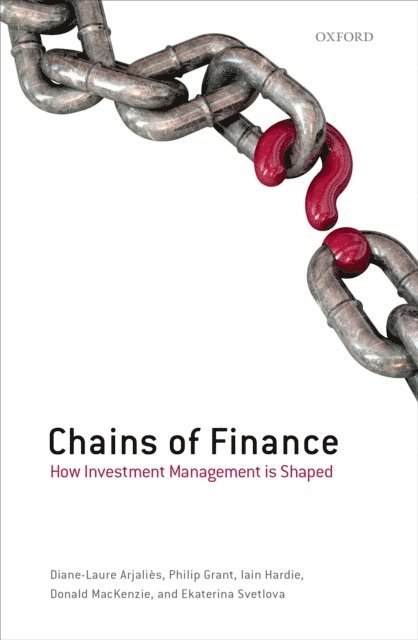
Investment is no longer a matter of individual savers directly choosing which shares or bonds to buy. Rather, most of their money flows through a 'chain': an often extended sequence of intermediaries. What goes on in that chain is of huge importance: The world's investment managers, who are now almost as well paid as top bankers, control assets equivalent in value to around a year of total global economic output. In Chains of Finance, five social scientists discuss the ways in which the intermediaries in the chain influence each other, channel the flows of savers' money, enhance investment decisions, and form audiences for each other's performances of financially competent selves. The central argument of the book is that investment management is fashioned profoundly by the opportunities and constraints this chain creates. Whether chains constrain or enable, however, they always entangle, tying intermediaries to each other - silently and profoundly shaping the investment management industry. Chains of Finance is a novel analysis that will make students, social scientists, financial professionals, and regulators looking at the workings of financial markets in a new light. A must-read for anyone looking for insights into the decision-making processes of investment managers and those influenced by and working for them.
This authoritative biography chronicles the life and achievements of the Victorian era politician and hero of the Napoleonic Wars. Sir Thomas Graham, Lord Lynedoch, is best known for his exceptional military career during the Napoleonic Wars. In the struggle for the Iberian Peninsula, he won a major victory at the Battle of Barrosa, conducted the siege of San Sebastian, and acted as the Duke of Wellington’s second in command. But Graham was much more than a soldier. An innovative Scottish landowner, politician, sportsman, and traveler, he was a remarkable man of his age. In A Peer Among Princes, Philip Grant does justice to his life and reputation. Lord Lynedoch only took up his military career in 1792 when he was outraged by the violation of his wife’s coffin by French revolutionaries. Determined to fight them, he raised his own regiment and soon establishing himself as an outstanding leader and field commander. He saw action at Toulon, made a daring escape from the siege of Mantua, served in Malta and Egypt and with Sir John Moore during the Corunna campaign. With quotes from Graham’s vivid letters and diaries, Grant weaves an absorbing and detailed narrative of his long and varied life.
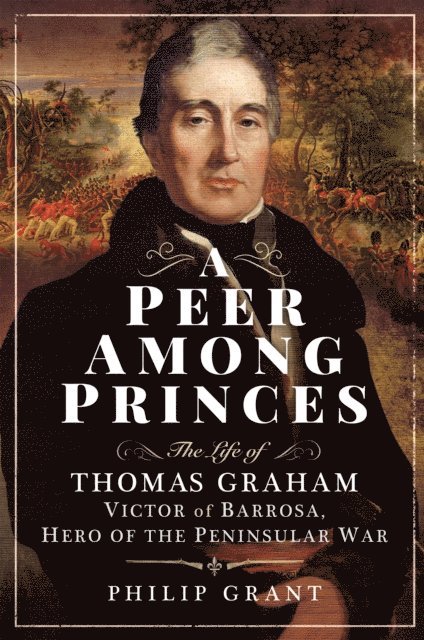
This authoritative biography chronicles the life and achievements of the Victorian era politician and hero of the Napoleonic Wars. Sir Thomas Graham, Lord Lynedoch, is best known for his exceptional military career during the Napoleonic Wars. In the struggle for the Iberian Peninsula, he won a major victory at the Battle of Barrosa, conducted the siege of San Sebastian, and acted as the Duke of Wellington's second in command. But Graham was much more than a soldier. An innovative Scottish landowner, politician, sportsman, and traveler, he was a remarkable man of his age. In A Peer Among Princes, Philip Grant does justice to his life and reputation. Lord Lynedoch only took up his military career in 1792 when he was outraged by the violation of his wife's coffin by French revolutionaries. Determined to fight them, he raised his own regiment and soon establishing himself as an outstanding leader and field commander. He saw action at Toulon, made a daring escape from the siege of Mantua, served in Malta and Egypt and with Sir John Moore during the Corunna campaign. With quotes from Graham's vivid letters and diaries, Grant weaves an absorbing and detailed narrative of his long and varied life.