Philip Harling - Böcker
Visar alla böcker från författaren Philip Harling. Handla med fri frakt och snabb leverans.
6 produkter
6 produkter
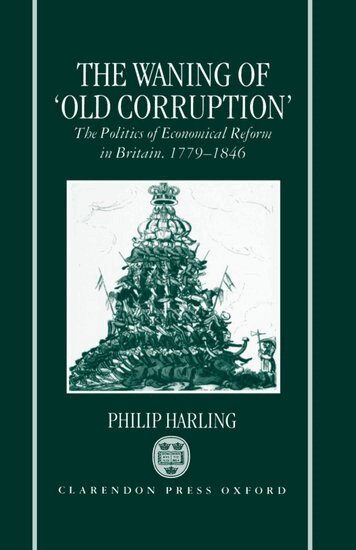
The Waning of `Old Corruption'
The Politics of Economical Reform in Britain, 1779-1846
Inbunden, Engelska, 1996
2 280 kr
Skickas inom 7-10 vardagar
Most historians of Britain now take for granted that a narrow and mostly landed elite managed to retain its social supremacy throughout much of the nineteenth century. But as yet, there is no throrough explanation for the persistence of the old elite's political authority in an age when that authority was seriously questioned by many Britons. In this original study, Philip Harling furnishes an important part of this explanation.He argues that the mostly Pittite governing elite helped to allay the suspicions of parasitism at the root of the familiar critique of 'Old Corruption' by responding to intense pressure to sanitize government. They did this by reducing and redistributing the tax burden; by eliminating serious administrative abuses such as the grant of lucrative sinecures and unmerited pensions; and by ostentatiously dedicating themselves to public business rather than the pursit of wasteful privileges for themselves and their hangers-on. If the frugal, liberal state that partly resulted from these reforms was scarcely capable of ameliorating social injustice, at least it could no longer be seen to contribute to it through favouritism and a heavy and inequitable tax load. Such a state was well-suited for the preservation of a narrow ruling elite.
808 kr
Skickas inom 7-10 vardagar
This book is an unprecedented synthesis of the literature on state development that explains how and why the contours of the British state have changed over the last three centuries. Ranging in scope from the Glorious Revolution to New Labour, it provides a fluent and comprehensive introduction to the changing shape and role of the British state. Philip Harling's main theme is the dramatic broadening of the state's functions and its cost over the last three centuries, and most noticeably over the last one. As late as 1870, most Britons assumed that the only tasks that should be entrusted to the central government were issues such as the defence of the realm, the maintenance of public order, and the provision of basic amenities such as street lighting. Today, they assume that these tasks ought to extend - and of course they do extend - to the provision of education, retirement benefits, unemployment insurance, health care, and a host of other services. Harling takes a number of historical factors into account in his assessment of the broadening trajectory of the state, such as the enormous expansion of the state's traditional war-making role over the eighteenth century, the uneven development of new regulatory duties in the nineteenth century, the impact of the two global wars of the twentieth century, the growth of the postwar welfare state, and the political reaction against it. Engagingly written and persuasively argued, The Modern British State should serve as a core text for a wide variety of courses in modern British history, politics, public policy, and historical sociology.
334 kr
Skickas inom 5-8 vardagar
This book is an unprecedented synthesis of the literature on state development that explains how and why the contours of the British state have changed over the last three centuries. Ranging in scope from the Glorious Revolution to New Labour, it provides a fluent and comprehensive introduction to the changing shape and role of the British state. Philip Harling's main theme is the dramatic broadening of the state's functions and its cost over the last three centuries, and most noticeably over the last one. As late as 1870, most Britons assumed that the only tasks that should be entrusted to the central government were issues such as the defence of the realm, the maintenance of public order, and the provision of basic amenities such as street lighting. Today, they assume that these tasks ought to extend - and of course they do extend - to the provision of education, retirement benefits, unemployment insurance, health care, and a host of other services. Harling takes a number of historical factors into account in his assessment of the broadening trajectory of the state, such as the enormous expansion of the state's traditional war-making role over the eighteenth century, the uneven development of new regulatory duties in the nineteenth century, the impact of the two global wars of the twentieth century, the growth of the postwar welfare state, and the political reaction against it. Engagingly written and persuasively argued, The Modern British State should serve as a core text for a wide variety of courses in modern British history, politics, public policy, and historical sociology.
1 160 kr
Skickas inom 7-10 vardagar
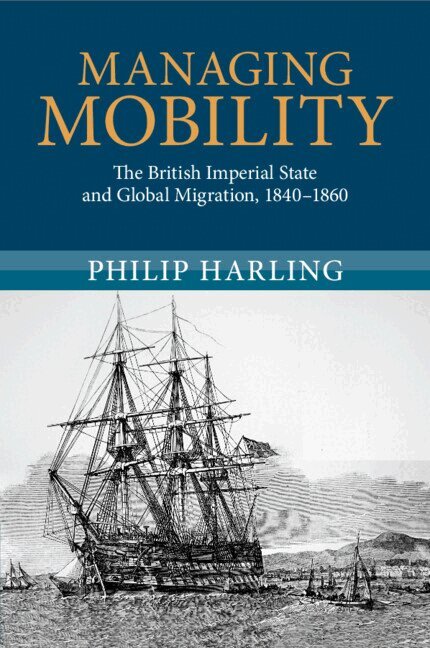
Between 1840 and 1860 the British Empire expanded rapidly in scale, with rampant annexation of territory and ruthless suppression of rebellion. These decades also witnessed an unprecedented movement of people across the Empire and around the world, with over 2.6 million emigrants leaving Britain in the 1850s alone. Managing Mobility examines how the British imperial state facilitated the mass migration of its impoverished subjects as labor assets, shipped across vast expanses of ocean to contribute to the economy of the Empire. Philip Harling analyzes the ideological framework which underpinned these interventions and discusses the journeys taken by emigrants across four continents, considering the varied outcomes of these significant projects of social engineering. In doing so, this study demonstrates how the British imperial state harnessed migration to ensure and maintain a racialised global economic order in the decades after Emancipation.
1 451 kr
Skickas inom 5-8 vardagar
494 kr
Skickas inom 5-8 vardagar