Philip John Koopman – författare
Visar alla böcker från författaren Philip John Koopman. Handla med fri frakt och snabb leverans.
2 produkter
2 produkter
E-bok
PDF, Engelska, 2014756 kr
Läs direkt efter köp
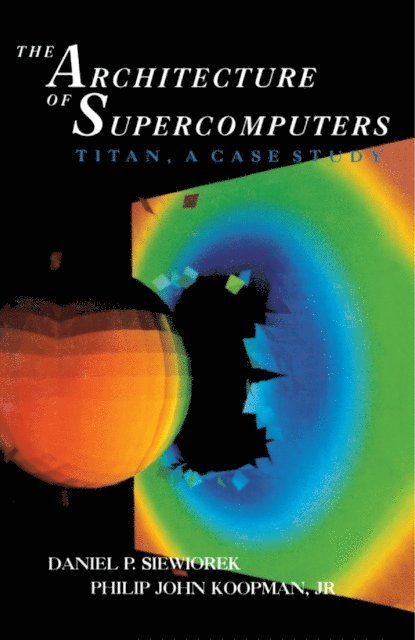
The Architecture of Supercomputers: Titan, A Case Study describes the architecture of the first member of an entirely new computing class, the graphic supercomputing workstation known as Titan. This book is divided into seven chapters. Chapter 1 provides an overview of the Titan architecture, including the motivation, organization, and processes that created it. A survey of all the techniques to speed up computation is presented in Chapter 2. Chapter 3 reviews the issue of particular benchmarks and measures, while Chapter 4 analyzes a model of a concurrency hierarchy extending from the register set to the entire operating system. The architecture of Titan graphics supercomputer and its implementation are considered in Chapter 5. Chapter 6 examines the performance of Titan in terms of the various information flow data rates. The last chapter is devoted to the actual performance on benchmark kernels and how the architecture and implementation affect performance. This publication is recommended for architects and engineers designing processors and systems.
E-bok
PDF, Engelska, 2014354 kr
Läs direkt efter köp
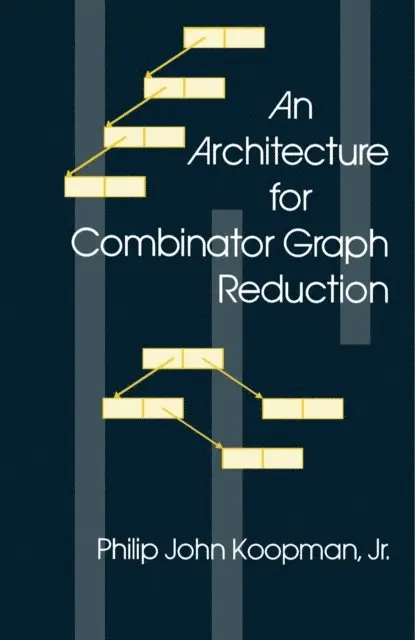
An Architecture for Combinator Graph Reduction examines existing methods of evaluating lazy functional programs using combinator reduction techniques, implementation, and characterization of a means for accomplishing graph reduction on uniprocessors, and analysis of the potential for special-purpose hardware implementations. Comprised of eight chapters, the book begins by providing a background on functional programming languages and existing implementation technology. Subsequent chapters discuss the TIGRE (Threaded Interpretive Graph Reduction Engine) methodology for implementing combinator graph reduction; the TIGRE abstract machine, which is used to implement the graph reduction methodology; the results of performance measurements of TIGRE on a variety of platforms; architectural metrics for TIGRE executing on the MIPS R2000 processor; and the potential for special-purpose hardware to yield further speed improvements. The final chapter summarizes the results of the research, and suggests areas for further investigation. Computer engineers, programmers, and computer scientists will find the book interesting.