Philip M. Soergel – författare
Visar alla böcker från författaren Philip M. Soergel. Handla med fri frakt och snabb leverans.
5 produkter
5 produkter
Inbunden, Engelska, 2012
1 011 kr
Skickas inom 5-8 vardagar
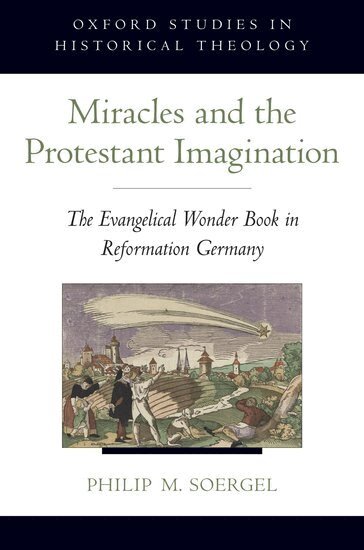
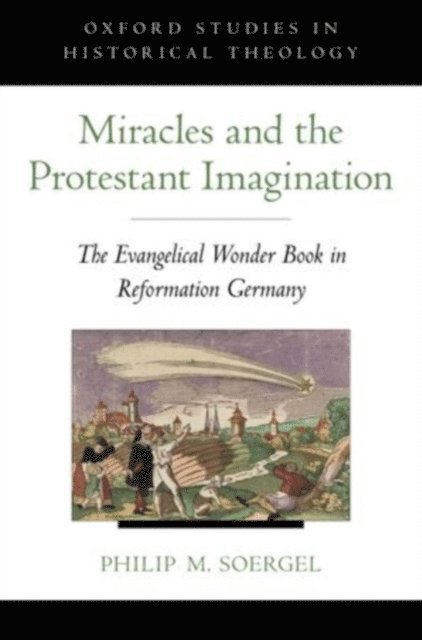
The wonder book was a new genre that appeared in the troubled years following Luther's death in 1546 and the outbreak of religious wars at mid century. Originally conceived as a kind of apocalyptic text intended to interpret the ''signs of the times'' during this uncertain period, these books were filled with accounts of celestial visions, comets, natural disasters, monstrous births, and other seeming signs and portents, events in which the hand of God was revealed. As the genre developed, Philip Soergel shows, its authors, mostly Lutheran divines, came increasingly to delve into the theology of miracles and the supernatural. Writing for a mostly clerical audience, they hoped to encourage the broad revival of a sense of divine presence in everyday life. Thus, in contrast to generations of scholars who have assumed that the Reformation represented a vital step on the way to the ''disenchantment of the world,'' Soergel's groundbreaking study reveals that German evangelicals were themselves active enchanters.
E-bok
PDF, Engelska, 2012962 kr
Läs direkt efter köp
The Reformation''s war against the saints and their miracles is well known. The story of the Protestant Reformers'' embrace of natural wonders as miracles that could similarly spur piety and moral discipline is much less familiar. In Miracles and the Protestant Imagination, Philip M. Soergel examines the sixteenth-century Lutheran wonder books, works filled with accounts of monstrous births, celestial apparitions, natural disasters, plagues, and other seemingly aberrant events occurring in the natural world. Soergel traces the inspiration behind these books to a widespread appropriation of wonders that was taking place throughout late-medieval and early-modern Europe. As sixteenth-century rulers stocked their curiosity cabinets with all manner of strange and confounding bits of nature collected from the far corners of the globe, evangelical theologians, too, compiled enormous compendia filled with accounts of fantastic events long recorded in the natural world. Many embraced such tales to satisfy an innate curiosity about nature and its often incomprehensible processes, but Germany''s devout evangelicals relied upon them to warn of imminent Apocalypse, to drive home the full scope of human depravity, and to encourage the repentant to keep the Law of an angry, Deuteronomic God. Luther had dismissed natural signs as inferior when compared against the testimony of the scriptures. Nevertheless, inspired by Melanchthon and other contemporaries who embraced history, natural philosophy, and rhetoric as proofs for Christian doctrine, the authors of late-Reformation wonder books fashioned natural signs into powerful defenses of treasured evangelical principles. In so doing, their works revealed the tensions as well as fears at play within a maturing Reformation movement as it faced mounting internal dissension and external pressures from Calvinism and resurgent Catholicism.
Del 17 - Studies on the History of Society and Culture
Wondrous in His Saints
Counter-Reformation Propaganda in Bavaria
Häftad, Engelska, 2018
473 kr
Skickas inom 5-8 vardagar
At the close of the sixteenth century, despite Protestant attempts to discourage popular devotion to saints and shrines, the Roman Church in Bavaria initiated a propagandistic campaign through the publishing of pilgrimage books and pamphlets. Philip Soergel's cogent exploration of this little-known pilgrimage literature yields a vivid portrait of religion before, during, and after the Reformation and Counter-Reformation. These "advertisements," combining testimonies of miracles with fantastic legends about shrines, fueled the conflict between Catholics and Protestants and helped shape a distinctive Catholic historical consciousness. Soergel stresses the power of the printed word as a defense of traditional authority, testing other historians' assertions about the neglect of printing and literacy in the Counter-Reformation. This title is part of UC Press's Voices Revived program, which commemorates University of California Press’s mission to seek out and cultivate the brightest minds and give them voice, reach, and impact. Drawing on a backlist dating to 1893, Voices Revived makes high-quality, peer-reviewed scholarship accessible once again using print-on-demand technology. This title was originally published in 1993.
E-bok
PDF, Engelska, 2024325 kr
Läs direkt efter köp
At the close of the sixteenth century, despite Protestant attempts to discourage popular devotion to saints and shrines, the Roman Church in Bavaria initiated a propagandistic campaign through the publishing of pilgrimage books and pamphlets. Philip Soergel's cogent exploration of this little-known pilgrimage literature yields a vivid portrait of religion before, during, and after the Reformation and Counter-Reformation. These "advertisements," combining testimonies of miracles with fantastic legends about shrines, fueled the conflict between Catholics and Protestants and helped shape a distinctive Catholic historical consciousness. Soergel stresses the power of the printed word as a defense of traditional authority, testing other historians' assertions about the neglect of printing and literacy in the Counter-Reformation. This title is part of UC Press's Voices Revived program, which commemorates University of California Press’s mission to seek out and cultivate the brightest minds and give them voice, reach, and impact. Drawing on a backlist dating to 1893, Voices Revived makes high-quality, peer-reviewed scholarship accessible once again using print-on-demand technology. This title was originally published in 1993.
Del 17 - Studies on the History of Society and Culture
Wondrous in His Saints
Counter-Reformation Propaganda in Bavaria
Inbunden, Engelska, 2024
1 431 kr
Skickas inom 3-6 vardagar
At the close of the sixteenth century, despite Protestant attempts to discourage popular devotion to saints and shrines, the Roman Church in Bavaria initiated a propagandistic campaign through the publishing of pilgrimage books and pamphlets. Philip Soergel's cogent exploration of this little-known pilgrimage literature yields a vivid portrait of religion before, during, and after the Reformation and Counter-Reformation. These "advertisements," combining testimonies of miracles with fantastic legends about shrines, fueled the conflict between Catholics and Protestants and helped shape a distinctive Catholic historical consciousness. Soergel stresses the power of the printed word as a defense of traditional authority, testing other historians' assertions about the neglect of printing and literacy in the Counter-Reformation. This title is part of UC Press's Voices Revived program, which commemorates University of California Press’s mission to seek out and cultivate the brightest minds and give them voice, reach, and impact. Drawing on a backlist dating to 1893, Voices Revived makes high-quality, peer-reviewed scholarship accessible once again using print-on-demand technology. This title was originally published in 1993.