222 kr
Philipp Felsch – författare
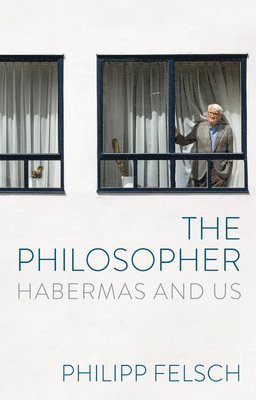
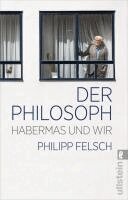
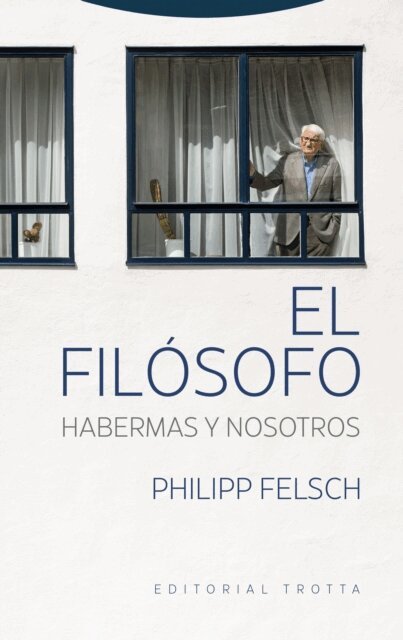
- Inbunden, Engelska, 2025Jürgen Habermas is the voice of a generation. One of the world’s most influential philosophers and Germany’s greatest living intellectual, he has shaped debates, both academic and public, for more than half a century. For as long as the cultural historian Philipp Felsch can remember, Habermas has been around: as an admonishing voice of reason, as the moral conscience of post-Holocaust German society, as the son of his grandparents’ neighbours in Gummersbach. Is the philosopher's intellectual supremacy coming to an end today, or are his ideas gaining new relevance in the crisis times in which we now find ourselves?To answer this question, Felsch plunged anew into Habermas’s voluminous work and travelled to his home to talk with him over tea and cake about the concerns that have motivated him, the people who have influenced him and the controversies in which he has been involved. Can the ideas that the philosopher has championed throughout his career – universalism, reason, dialogue – be of any help to us now as we face the major challenges of the twenty-first century?This compelling account of a strikingly original thinker is also a portrait of an epoch that bears his imprint and a glimpse of a future we could embrace.
- E-bokTyska, 2024
79 kr
Läs direkt efter köp
Das intellektuelle Gesicht einer EpocheSolange Philipp Felsch zurückdenken kann, war Jürgen Habermas around: als mahnende Stimme der Vernunft, als Stichwortgeber der Erinnerungskultur, als Sohn der Nachbarn seiner Großeltern in Gummersbach.Neigt sich die intellektuelle Lufthoheit des Philosophen heute ihrem Ende zu, oder bekommen seine Ideen in der Krise unserer »Zeitenwende« neue Brisanz?Felsch liest in einem kaum zu überblickenden Oeuvre nach, folgt dessen Autor in die intellektuelle Kampfzone der Bundesrepublik und fährt nach Starnberg, um Habermas zum Tee zu treffen. Dabei entsteht nicht nur das Porträt eines faszinierend widersprüchlichen Denkers, sondern auch der Epoche, der er sein Gesicht verliehen hat. - Inbunden, Engelska, 2021
149 kr
Skickas inom 5-8 vardagar
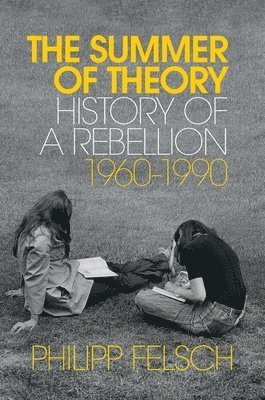
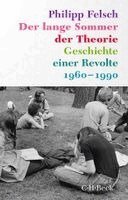
‘Theory’ – a magical glow has emanated from this word since the sixties. Theory was more than just a succession of ideas: it was an article of faith, a claim to truth, a lifestyle. It spread among its adherents in cheap paperbacks and triggered heated debates in seminar rooms and cafés. The Frankfurt School, Structuralism, Post-Structuralism, Adorno, Derrida, Foucault: these and others were the exotic schools and thinkers whose ideas were being devoured by young minds. But where did the fascination for dangerous thoughts come from?In his magnificently written book, Philipp Felsch follows the hopes and dreams of a generation that entered the jungle of difficult texts. His setting is West Germany in the decades from the 1960s to the 1990s: in a world frozen in the Cold War, movement only came from big ideas. It was the time of apocalyptic master thinkers, upsetting reading experiences and glamorous incomprehensibility. As the German publisher Suhrkamp published Adorno’s Minima Moralia and other High Theory works of the Frankfurt School, a small publisher in West Berlin, Merve Verlag, provided readers with a steady stream of the subversive new theory coming out of France.By following the adventures of the publishers who provided the books and the reading communities that consumed and debated them, Philipp Felsch tells the remarkable story of an intellectual revolt when the German Left fell in love with Theory. - E-bokEngelska, 2021
238 kr
Läs direkt efter köp
‘Theory’ – a magical glow has emanated from this word since the sixties. Theory was more than just a succession of ideas: it was an article of faith, a claim to truth, a lifestyle. It spread among its adherents in cheap paperbacks and triggered heated debates in seminar rooms and cafés. The Frankfurt School, Structuralism, Post-Structuralism, Adorno, Derrida, Foucault: these and others were the exotic schools and thinkers whose ideas were being devoured by young minds. But where did the fascination for dangerous thoughts come from?
In his magnificently written book, Philipp Felsch follows the hopes and dreams of a generation that entered the jungle of difficult texts. His setting is West Germany in the decades from the 1960s to the 1990s: in a world frozen in the Cold War, movement only came from big ideas. It was the time of apocalyptic master thinkers, upsetting reading experiences and glamorous incomprehensibility. As the German publisher Suhrkamp published Adorno’s Minima Moralia and other High Theory works of the Frankfurt School, a small publisher in West Berlin, Merve Verlag, provided readers with a steady stream of the subversive new theory coming out of France.
By following the adventures of the publishers who provided the books and the reading communities that consumed and debated them, Philipp Felsch tells the remarkable story of an intellectual revolt when the German Left fell in love with Theory.
- Inbunden, Engelska, 2024
217 kr
Skickas inom 5-8 vardagar
Nietzsche’s reputation, like much of Europe, lay in ruins in 1945. Giving a platform to a philosopher venerated by the Nazis was not an attractive prospect for Germans eager to cast off Hitler’s shadow. It was only when two ambitious antifascist Italians, Giorgio Colli and Mazzino Montinari, began to comb through the archives that anyone warmed to the idea of rehabilitating Nietzsche as a major European philosopher. Their goal was to interpret Nietzsche’s writings in a new way and free them from the posthumous falsification of his work. The problem was that 10,000 barely legible pages were housed behind the Iron Curtain in the German Democratic Republic, where Nietzsche had been officially designated an enemy of the state. In 1961, Montinari moved from Tuscany to the home of actually existing socialism to decode the “real” Nietzsche under the watchful eyes of the Stasi. But he and Colli would soon realize that the French philosophers making use of their edition were questioning the idea of the authentic text and of truth itself.Felsch retraces the journey of the two Italian editors and their edition, telling a gripping and unlikely story of how one of Europe’s most controversial philosophers was resurrected from the baleful clutch of the Nazis and transformed into an icon of postmodern thought. - E-bokEngelska, 2024
408 kr
Läs direkt efter köp
Nietzsche’s reputation, like much of Europe, lay in ruins in 1945. Giving a platform to a philosopher venerated by the Nazis was not an attractive prospect for Germans eager to cast off Hitler’s shadow. It was only when two ambitious antifascist Italians, Giorgio Colli and Mazzino Montinari, began to comb through the archives that anyone warmed to the idea of rehabilitating Nietzsche as a major European philosopher.
Their goal was to interpret Nietzsche’s writings in a new way and free them from the posthumous falsification of his work. The problem was that 10,000 barely legible pages were housed behind the Iron Curtain in the German Democratic Republic, where Nietzsche had been officially designated an enemy of the state. In 1961, Montinari moved from Tuscany to the home of actually existing socialism to decode the “real” Nietzsche under the watchful eyes of the Stasi. But he and Colli would soon realize that the French philosophers making use of their edition were questioning the idea of the authentic text and of truth itself.
Felsch retraces the journey of the two Italian editors and their edition, telling a gripping and unlikely story of how one of Europe’s most controversial philosophers was resurrected from the baleful clutch of the Nazis and transformed into an icon of postmodern thought.
- E-bokEngelska, 2025
317 kr
Läs direkt efter köp
J rgen Habermas is the voice of a generation. One of the world s most influential philosophers and Germany s greatest living intellectual, he has shaped debates, both academic and public, for more than half a century. For as long as the cultural historian Philipp Felsch can remember, Habermas has been around: as an admonishing voice of reason, as the moral conscience of post-Holocaust German society, as the son of his grandparents neighbours in Gummersbach. Is the philosopher's intellectual supremacy coming to an end today, or are his ideas gaining new relevance in the crisis times in which we now find ourselves?To answer this question, Felsch plunged anew into Habermas s voluminous work and travelled to his home to talk with him over tea and cake about the concerns that have motivated him, the people who have influenced him and the controversies in which he has been involved. Can the ideas that the philosopher has championed throughout his career universalism, reason, dialogue be of any help to us now as we face the major challenges of the twenty-first century?This compelling account of a strikingly original thinker is also a portrait of an epoch that bears his imprint and a glimpse of a future we could embrace. - Inbunden, Tyska, 2022
300 kr
Skickas inom 3-6 vardagar
- Del 6589 - Beck Paperback
Der lange Sommer der Theorie
Häftad, Tyska, 2025220 kr
Skickas inom 3-6 vardagar
- Häftad, Tyska, 2025
216 kr
Skickas inom 3-6 vardagar
- Del 87 - Fröhliche Wissenschaft
BRD Noir
Häftad, Tyska, 2016148 kr
Skickas inom 3-6 vardagar
- E-bokTyska, 2016
113 kr
Läs direkt efter köp
Nachdem Frank Witzel und Philipp Felsch im Frühjahr 2015 die wohl originellsten und aufsehenerregendsten Auseinandersetzungen mit der westdeutschen Vergangenheit seit Langem veröffentlichten, blicken sie nun noch einmal gemeinsam auf die alte BRD und das Aroma der Epoche zwischen Nachkriegszeit und Wende. Dabei fällt auf, dass die alte Bundesrepublik angesichts aktueller globaler Unsicherheit und Identitätskrisen mehr und mehr romantisiert und idealisiert wird, es wächst die Sehnsucht nach dem scheinbar heimeligen Rheinischen Kapitalismus und dem Biedermeier von Helmut Schmidt und "Wetten Dass?". In ihrer aus ihren Büchern gespeisten Rückschau erinnern Witzel und Felsch an die untergründige Gewalt und die Düsternis der alten BRD , die ihr ideales Aushängeschild eher in Eduard Zimmermann als in Frank Elstner fand. - E-bokSpanska, 2025
148 kr
Läs direkt efter köp
Un testimonio único acerca de Jürgen Habermas, el destino de su legado filosófico y la crisis de nuestra época.Jürgen Habermas es el rostro intelectual de una época. Desde la revuelta estudiantil hasta la reunificación alemana, desde la disputa de los historiadores hasta los conflictos del presente, su figura ha determinado como ninguna los debates de ideas y políticos en Alemania y en Europa. La crisis actual, ¿hace obsoleto su pensamiento o le otorga una nueva relevancia?Habermas declara su temor de que todo aquello a lo que ha dedicado su vida se esté perdiendo paso a paso. Un temor que no es solo una constatación sobre sí mismo, sino un diagnóstico del presente. Construido a partir del legado del filósofo, en especial de su correspondencia, este ensayo-relato permite medir su figura en la encrucijada de teoría, historia y memoria.«Felsch logra la hazaña de escribir sobre un pensador de una manera cautivadoramente accesible sin traicionar su pensamiento». (Jens-Christian Rabe, Süddeutsche Zeitung)