Philipp Oswalt - Böcker
Visar alla böcker från författaren Philipp Oswalt. Handla med fri frakt och snabb leverans.
4 produkter
4 produkter
307 kr
Skickas inom 3-6 vardagar
426 kr
Skickas inom 7-10 vardagar
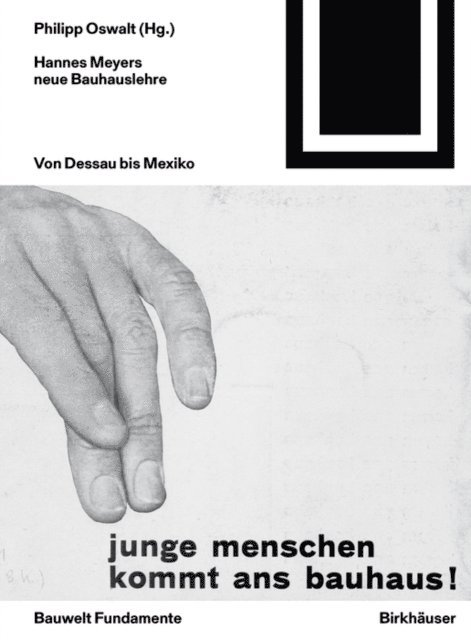
The Bauhaus was distinguished neither by function nor by use but rather by symbolism. Whether square, triangle, or circle; whether Wilhelm Wagenfeld's lamp, Oskar Schlemmer's'Kopf' (head), or white cubes with flat roofs: the Bauhaus created iconic visual symbols and a style that is neither functional nor social but visually striking.Walter Gropius, founder of the Bauhaus, from the outset sought to develop the school into a brand - and he succeeded. More than eight decades after its forced closure, the Bauhausis more present than ever before in consumerism, politics, and culture alike. It has become a participative brand that escapes centralised control entirely. It has been, and continues to be, forged collectively by countless designers, manufacturers, and consumers. Yet its founders' initial pledge for functionality and social commitment remains unfulfilled.In this book, Philipp Oswalt, former director of Foundation Bauhaus Dessau, explores the development of the Bauhaus brandand its use around the world, illustrated with some 950 images that highlight the vast range of Bauhaus appearances from a century.
341 kr
Skickas inom 3-6 vardagar
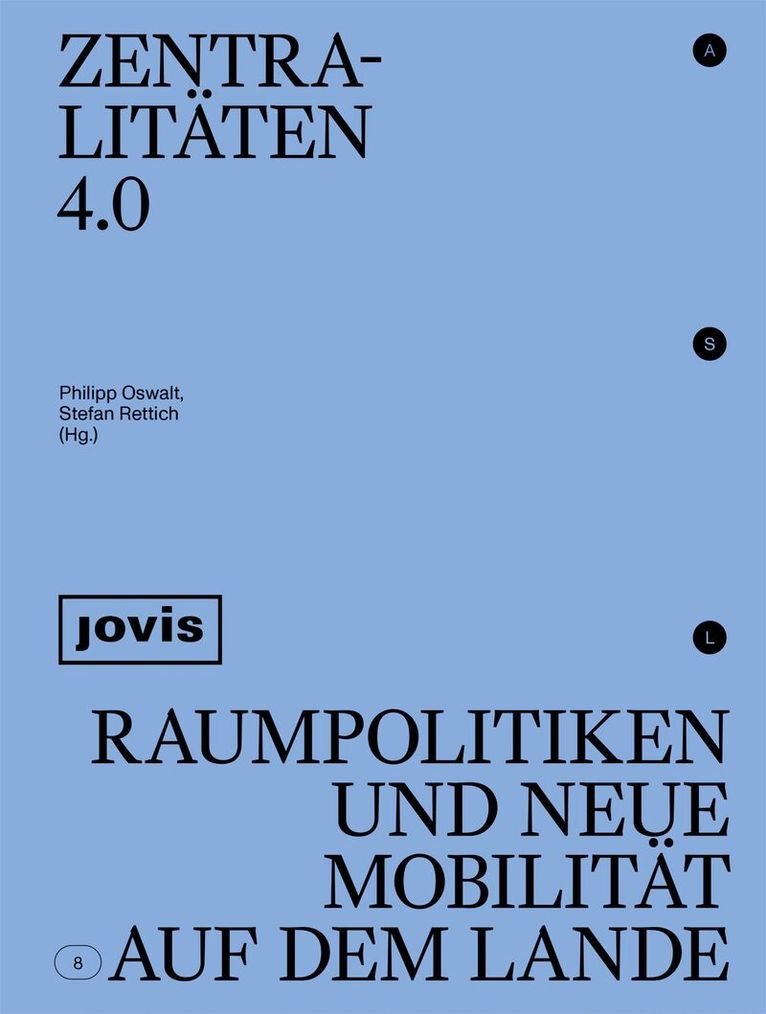
In the 1930s, Walter Christaller used new media to work out his central place theory by counting telephone lines to identify centralities that connected multiple spaces: Today, digitization has a formative effect on space—on cities, the countryside, and mobility. Or when it is lacking, disruptions are the result. The contributions to the book offer an introductory examination of the effects of digitization on space and deal with the topicality of Christaller’s central place theory. The book does so both theoretically and practically, by examining spatial policies of current regional development programs, different conceptions of public services, and the tasks medium-sized centers in urban and rural areas. The second part of the book discusses which structural changes are to be expected in the course of digitization, especially through new mobility, and how this might affect the attractiveness of rural areas and the tasks of medium-sized towns. Finally, it examines the causes of populist tendencies and experiences of loss produced by processes of globalization and social division, as well as right-wing extremist developments in rural areas.
359 kr
Skickas inom 5-8 vardagar
Bilingual edition (English/Arabic) / Zweisprachige Ausgabe (englisch/arabisch) Designing Modernity: Architecture in the Arab World 1945–1973 is the result of a fascinating investigation by international experts into the influences of modernist architecture in the Arab world. Ten case studies provide the foundation for a thorough exploration of the relevant cultural-historical, sociopolitical, climatic and demographic aspects. Questions concerning the region’s reciprocal relationship with modernist architecture in the period from 1945 to 1973 are investigated through the biographies of selected buildings and building complexes from Iraq, Lebanon, Kuwait, Syria, Palestine, Jordan, Egypt and Morocco. Texts, contemporary images, architectural drawings and archival material are used to document the process from commissioning and design through to completion and building use.