Philippe Trompette – författare
Visar alla böcker från författaren Philippe Trompette. Handla med fri frakt och snabb leverans.
3 produkter
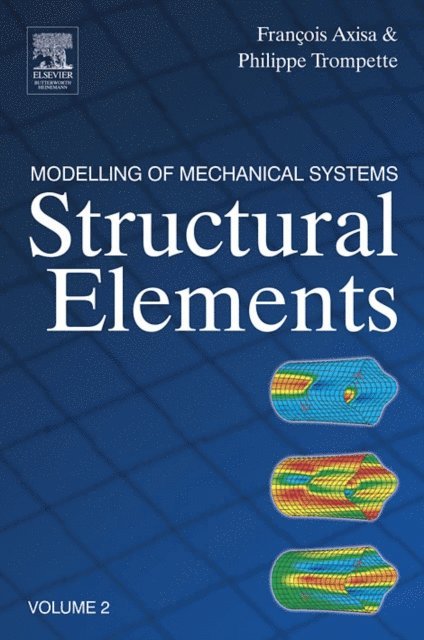
Modelling of Mechanical Systems: Structural Elements
Av Philippe Trompette, Francois Axisa
E-bok, 2005
1434 kr
Lägg i varukorg
The modelling of mechanical systems provides engineers and students with the methods to model and understand mechanical systems by using both mathematical and computer-based tools. Written by an eminent authority in the field, this is the second of four volumes which provide engineers with a …
Modelling of Mechanical Systems: Structural Elements
Av Francois Axisa, Philippe Trompette
Inbunden, 2005
1380 kr
Lägg i varukorg
The modelling of mechanical systems provides engineers and students with the methods to model and understand mechanical systems by using both mathematical and computer-based tools. Written by an eminent authority in the field, this is the second of four volumes which provide engineers with a …
Solid Mechanics using the Finte Element Method
Av Alain Berlioz, Philippe Trompette
Inbunden, 2009
1988 kr
Lägg i varukorg
Today the fundamentals of solid mechanics may be explained by "numerical" experiments using the finite element method. The explanation is detailed in this book using many examples. After a short review of how the finite element method works (in Chapter 1), Chapter 2 develops some key points of …