Phillip Lapsansky – författare
Visar alla böcker från författaren Phillip Lapsansky. Handla med fri frakt och snabb leverans.
4 produkter
4 produkter
Inbunden, Engelska, 2000
2 505 kr
Skickas inom 10-15 vardagar
Between the Revolution and the Civil War, African-American writing became a prominent feature of both black protest culture and American public life. Although denied a political voice in national affairs, black authors produced a wide range of literature to project their views into the public sphere. Autobiographies and personal narratives told of slavery's horrors, newspapers railed against racism in its various forms, and poetry, novellas, reprinted sermons and speeches told tales of racial uplift and redemption. The editors examine the important and previously overlooked pamphleteering tradition and offer new insights into how and why the printed word became so important to black activists during this critical period. An introduction by the editors situates the pamphlets in their various social, economic and political contexts. This is the first book to capture the depth of black print culture before the Civil War by examining perhaps its most important form, the pamphlet.
Häftad, Engelska, 2000
685 kr
Skickas inom 10-15 vardagar
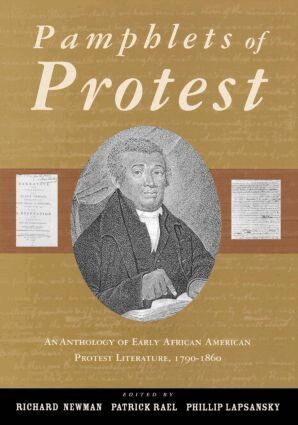
Between the Revolution and the Civil War, African-American writing became a prominent feature of both black protest culture and American public life. Although denied a political voice in national affairs, black authors produced a wide range of literature to project their views into the public sphere. Autobiographies and personal narratives told of slavery's horrors, newspapers railed against racism in its various forms, and poetry, novellas, reprinted sermons and speeches told tales of racial uplift and redemption. The editors examine the important and previously overlooked pamphleteering tradition and offer new insights into how and why the printed word became so important to black activists during this critical period. An introduction by the editors situates the pamphlets in their various social, economic and political contexts. This is the first book to capture the depth of black print culture before the Civil War by examining perhaps its most important form, the pamphlet.
E-bok
PDF, Engelska, 2013702 kr
Läs direkt efter köp
Between the Revolution and the Civil War, African-American writing became a prominent feature of both black protest culture and American public life. Although denied a political voice in national affairs, black authors produced a wide range of literature to project their views into the public sphere. Autobiographies and personal narratives told of slavery''s horrors, newspapers railed against racism in its various forms, and poetry, novellas, reprinted sermons and speeches told tales of racial uplift and redemption. The editors examine the important and previously overlooked pamphleteering tradition and offer new insights into how and why the printed word became so important to black activists during this critical period. An introduction by the editors situates the pamphlets in their various social, economic and political contexts. This is the first book to capture the depth of black print culture before the Civil War by examining perhaps its most important form, the pamphlet.
E-bok
Engelska, 2013702 kr
Läs direkt efter köp
Between the Revolution and the Civil War, African-American writing became a prominent feature of both black protest culture and American public life. Although denied a political voice in national affairs, black authors produced a wide range of literature to project their views into the public sphere. Autobiographies and personal narratives told of slavery''s horrors, newspapers railed against racism in its various forms, and poetry, novellas, reprinted sermons and speeches told tales of racial uplift and redemption. The editors examine the important and previously overlooked pamphleteering tradition and offer new insights into how and why the printed word became so important to black activists during this critical period. An introduction by the editors situates the pamphlets in their various social, economic and political contexts. This is the first book to capture the depth of black print culture before the Civil War by examining perhaps its most important form, the pamphlet.